Blown Plaster and Damp Patches: Is It Rising Damp or Condensation?
Blown plaster, tide marks or salts on the wall? How to tell rising damp from condensation, and how damp course injection and re-plastering put it right.

Blown plaster, tide marks and a musty smell
Plaster coming away from the wall. White, powdery patches just above the skirting. A faint, musty smell that no amount of airing out quite shifts. These are some of the most common signs of damp in older homes, and they are worth taking seriously, because the damage tends to spread if the cause is left alone.
Some of it is damp. Some of it is salt damage. Often it is both, and they need treating in the right order. Getting that diagnosis right before any work starts is the most important step of all.
What actually causes rising damp
Rising damp happens when moisture from the ground travels upward through the masonry of a wall by capillary action. It is real, but it is also frequently misdiagnosed. The classic signs are tide-mark staining on internal walls, usually somewhere between floor level and about a metre up, along with salts on the surface, blown plaster and damp readings that are consistently higher at the base of a wall than near the top.
As groundwater rises through the wall, it carries dissolved salts with it. When the moisture evaporates at the surface, those salts are left behind. Some appear as a white, fluffy deposit on the face of the wall. Others crystallise just beneath the surface, where they can physically push the plaster away from the masonry. The same salts also attract moisture from the air, which is why a wall can still look damp after the source of the water has been dealt with.
That is why the replastering matters as much as the treatment itself. If a new damp proof course is installed and the wall is simply skimmed again with an ordinary finish plaster, the salts left in the masonry can spoil the new plaster within months. The wall has to be replastered with a suitable, salt-resistant system, or the problem comes straight back.
Older properties are most at risk. Many have a damp proof course that has failed over time, or one that has been bridged by a raised outside ground level, a new path or patio, or render that has been taken down below the damp proof course line.
Rising damp versus condensation: not always easy to tell apart
Rising damp and condensation can look similar on the surface, but they have very different causes and very different fixes.
Condensation tends to appear higher up the walls, around cold spots, on window reveals, in corners and on ceilings. It is usually worse in winter and in rooms with poor ventilation. Black mould is a strong sign of condensation rather than rising damp.
Rising damp, by contrast, stays low. It follows a tide-mark pattern, is present whatever the season, and may be worse after long wet spells. The plaster damage tends to be more severe.
In practice, a property can have both: rising damp at the base of a wall where the damp proof course has failed, and condensation mould higher up in a kitchen or bathroom with poor ventilation. Each needs its own fix, so it pays to look at the whole picture before choosing a treatment.
How rising damp is treated
Where rising damp is confirmed, the usual treatment is a damp course injection. A row of holes is drilled along a mortar course at the base of the wall and a water-repellent cream is injected. The cream spreads through the masonry and cures to form a continuous barrier that stops moisture travelling upward. It does not need major structural work, and it suits most brick and block walls.
Once the new damp course is in, the salt-contaminated plaster is removed and the wall is given time to dry before it is replastered. Rushing this stage is one of the most common reasons treatments appear to fail.
When the wall is replastered, a salt-resistant backing coat goes onto the affected areas before the finish. This acts as a buffer against any salts still in the wall. An ordinary gypsum finish applied straight onto a previously damp wall will not last. Getting this right is not complicated, but the damp treatment and the plastering need to be done to the same standard, which is why we carry out both stages ourselves.
Blown plaster: why a patch is not enough
Where plaster has been pushed off the wall by damp and salts, tapping it produces a hollow sound and it often comes away in sheets. In these cases the answer is not a patch repair. The affected plaster needs to come off completely, the cause needs to be treated, and the wall needs to be replastered with the right materials. A patch over blown plaster will not bond properly and will fail again quickly.
If you are seeing this in a property you own or manage, it is worth getting the wall looked at properly before deciding what to do.
A note on old textured coatings
When damaged plaster is stripped back in older properties, textured coatings or Artex sometimes turn up underneath. Coatings applied before 2000 can contain asbestos, so they should be tested before any sanding or scraping. We do not carry out asbestos testing or removal. Our article on plastering over Artex ceilings and why testing matters explains more.
Landlords and developers
Rising damp affects rental properties and development projects as well as family homes. Damp-damaged walls hold up lettings and sales, and they come back if they are only covered over. Having one contractor carry out the damp treatment and the plastering finish in one sequence avoids the delays that come from coordinating separate trades, and leaves a clean, paint-ready wall. Our damp proofing page has more detail on what we cover, from damp course injections to tanking and mould removal.
A note on newer buildings and extensions
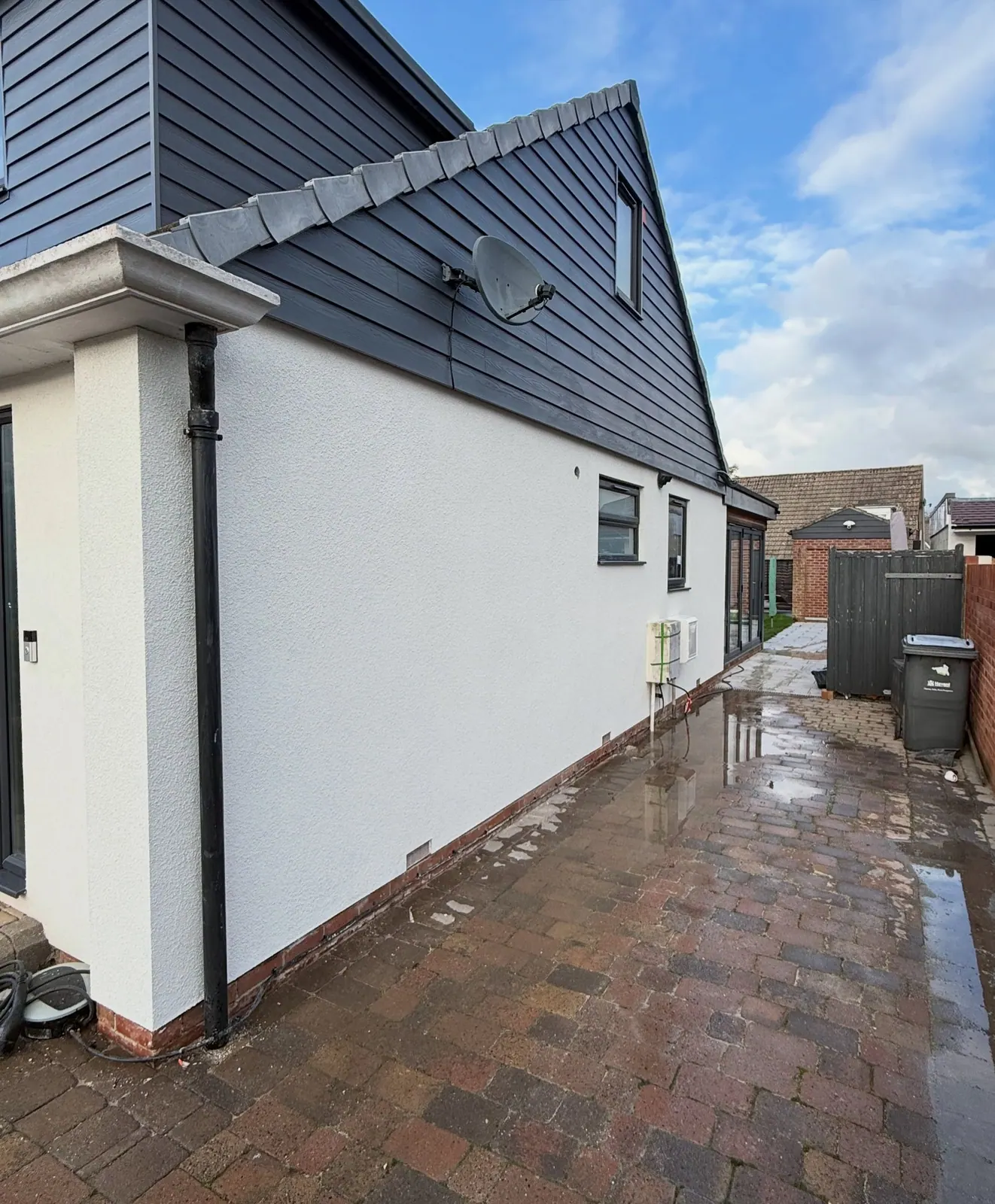
Rising damp is not only a problem in old houses. An extension built without a properly positioned damp proof course, or where it has been bridged during the build, can develop damp at low level quite quickly. If a newer extension is showing damp near the floor, a bridged damp proof course is one of the first things to check.
Frequently asked questions
How do I know if I have rising damp or just condensation?
Rising damp tends to appear as a tide-mark stain at low level, usually no higher than about a metre above the floor, with blown or salt-damaged plaster. Condensation usually appears higher up, in corners, around cold spots and on window reveals, and goes hand in hand with black mould. Both can be present in the same property. If you are not sure, we are happy to take a look.
Can rising damp come back after treatment?
It can, if the treatment is not done thoroughly or the replastering is carried out with the wrong materials. A common reason a treated wall shows problems again is that ordinary plaster was applied over masonry that still contained salts. A salt-resistant backing coat and proper drying time before finishing make the difference.
Will a damp course injection cure condensation?
No. A damp course injection stops moisture rising from the ground. Condensation comes from moisture in the air inside the house, so it is dealt with through better ventilation, mould removal and, where cold walls are part of the problem, insulation or dry lining.
What is damp course injection and how disruptive is it?
It involves drilling a row of small holes along a mortar course and injecting a water-repellent cream into the masonry. It is a relatively straightforward process. The more involved part is removing the damaged plaster and replastering once the wall has dried out enough.
Rising damp is a fixable problem, but it does need fixing properly. If you are seeing the signs in a property in Worthing, Shoreham-by-Sea, Arundel, Chichester or anywhere else across West Sussex, call us on 07824 165672, Monday to Friday, 08:00 to 17:00, or send us a message for free, no-obligation advice.