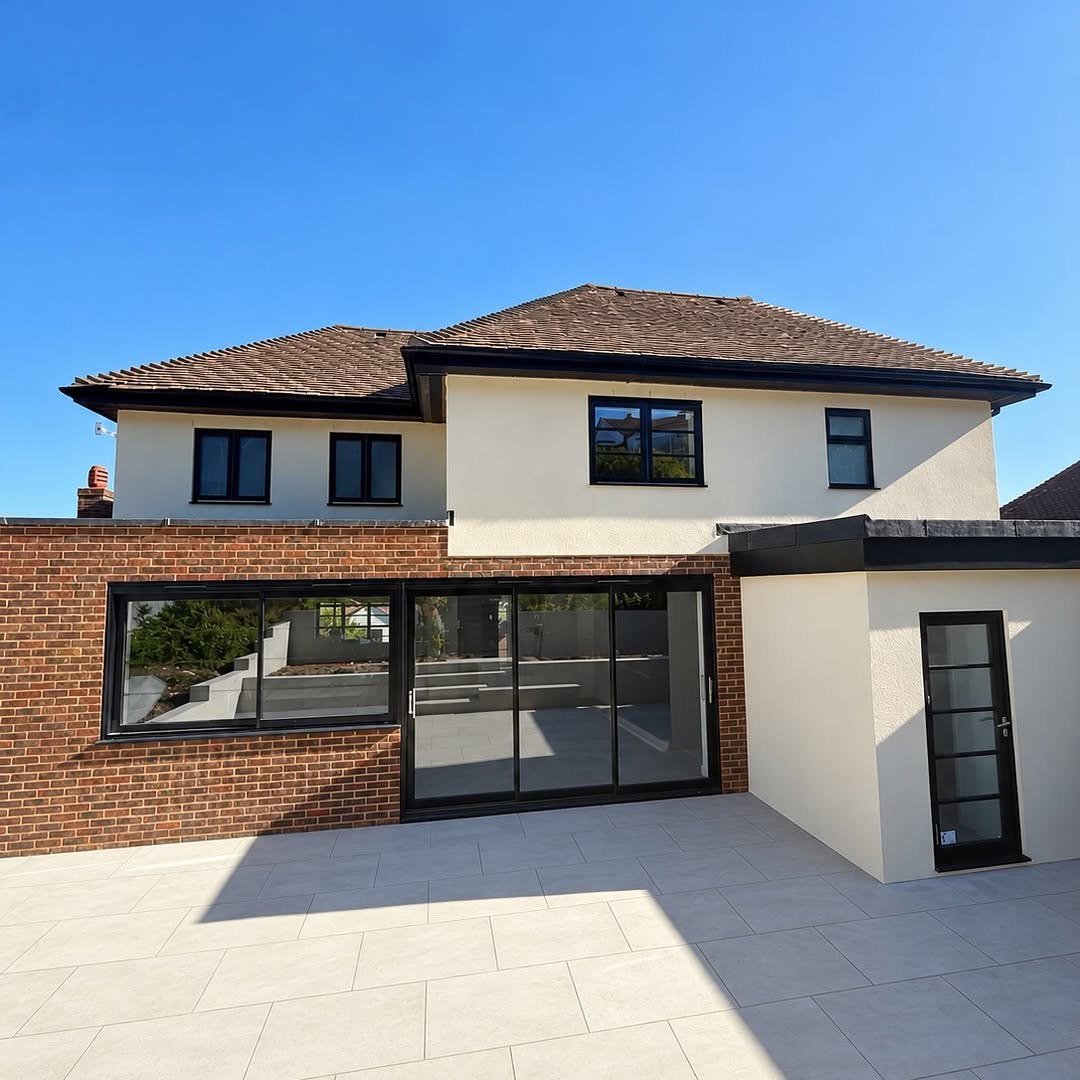
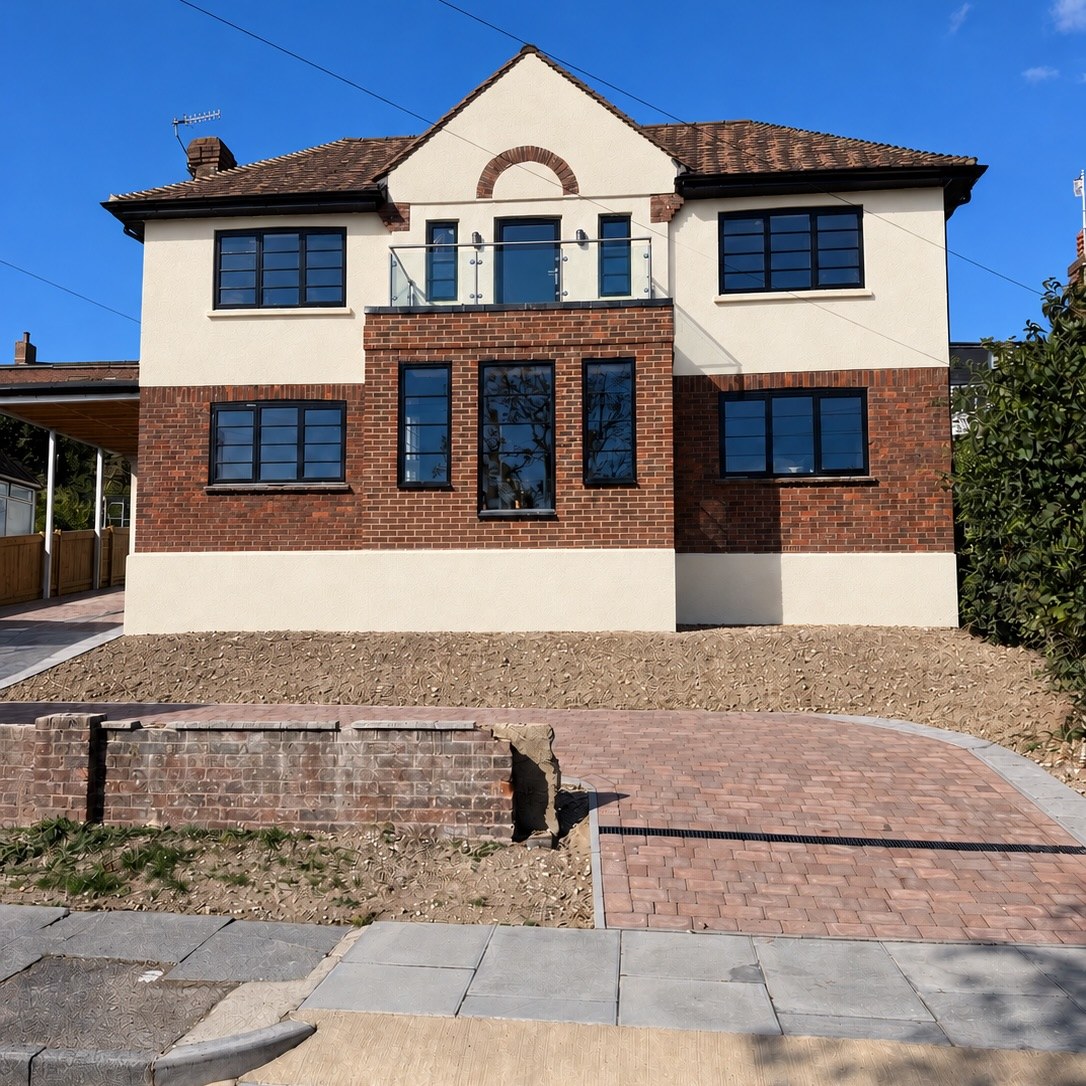
Shoreham Beach is a shingle spit built up by the sea, separating the River Adur from the Channel, and the houses on it stand directly in the coastal weather. Most of them are modern, built after the earlier bungalows and railway-carriage homes of what was once called Bungalow Town were largely cleared during the Second World War. That combination, exposed sites and post-war or recent construction, is where a silicone render system earns its place. The same goes for many of the houses and bungalows north of the railway and around Upper Shoreham Road, where an older painted render or pebble dash finish may be due for a change.
Less maintenance on an exposed wall
Masonry paint on a sea-facing elevation has a hard life. Driving rain, salt carried on the wind and long hours of sun wear it down until it powders and peels, and on a two-storey house every repaint means another scaffold. With silicone render the pigment is mixed into the material itself, so the colour you see is the colour all the way through and nothing sits on the surface waiting to flake. Silicone resins in that final layer shed water like a waxed jacket, yet moisture inside the wall can still escape as vapour. An occasional gentle wash is usually all it needs to look fresh.
Choosing a colour in Shoreham
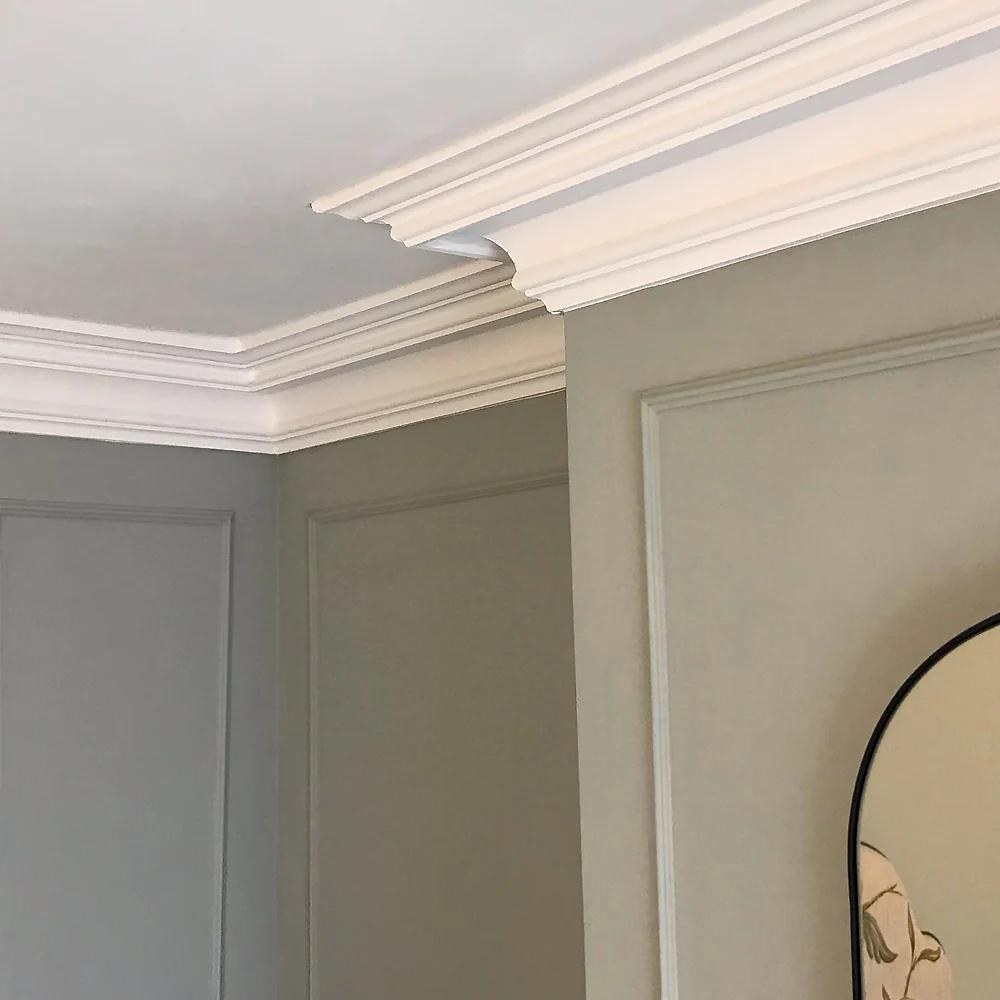
The palette for these systems runs to dozens of shades, and Shoreham is a town where colour matters. In the conservation area, the council's appraisal welcomes the bright stucco terraces of Queens Place while noting that a small number of buildings would sit better in different colours, and that the buildings nearer the town centre are mostly whites, creams and browns. Beyond its boundary you can usually pick freely, though it pays to look along the street first. Within it, and on any listed property, switching to a new material or shade may require consent, and a thin modern system may not be suitable at all on a historic stucco front, where a traditional rendering approach in Shoreham is usually expected.
Going over what is already there
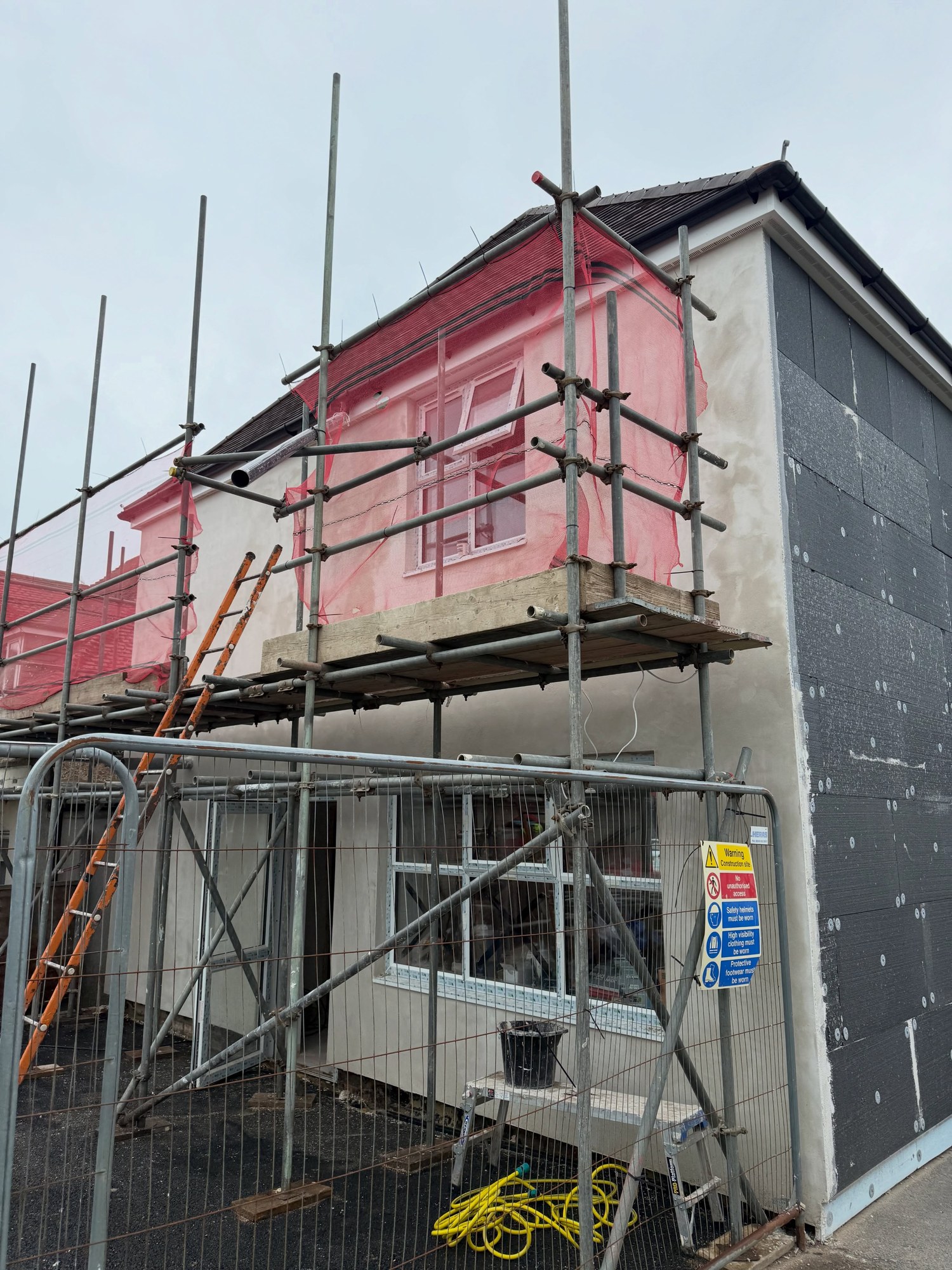
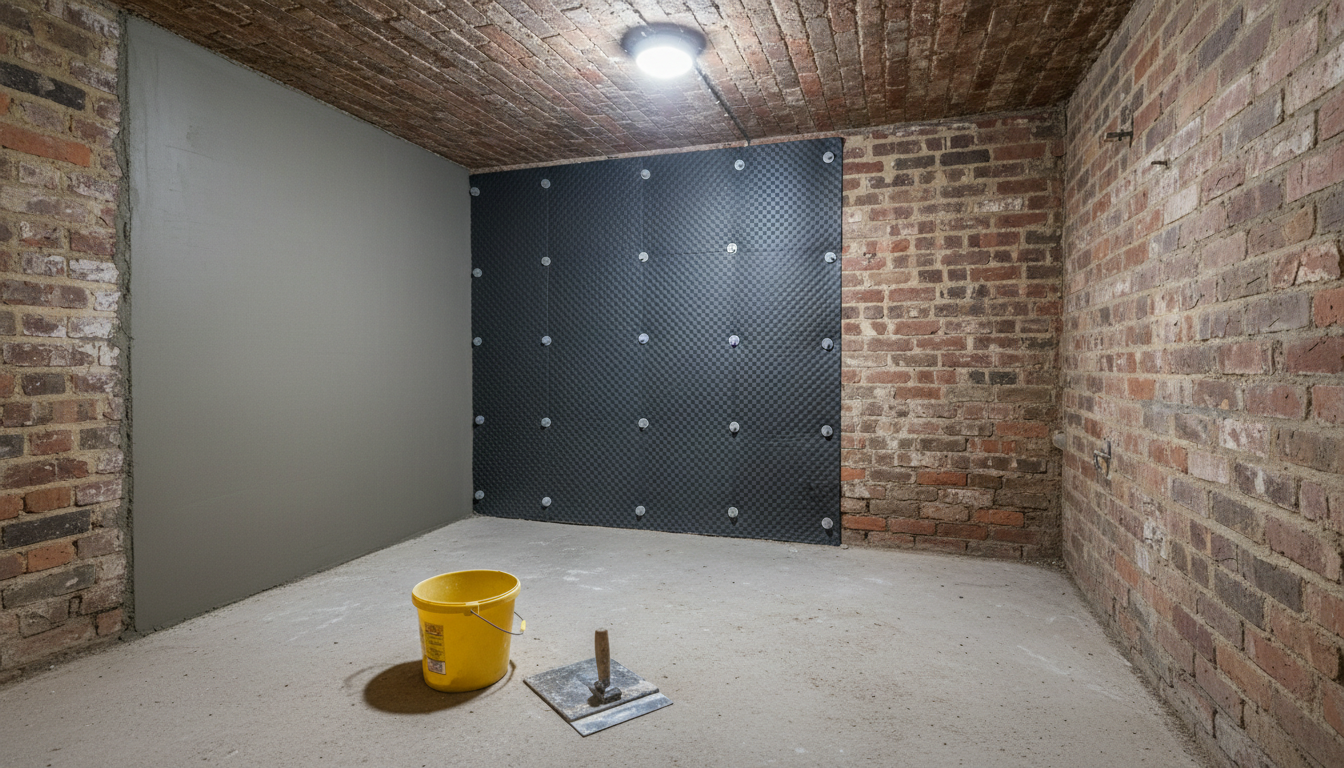
Stripping a house back to brick is not always necessary. Old render or pebble dash that still grips the wall can stay: a hammer tapped across it finds the drummy spots, which are cut out and made up. Corner, stop and bell-cast beads go on to give crisp edges and a drip above the damp course. Next comes a levelling coat with glass-fibre mesh embedded in it, then a primer tinted to the chosen shade, and finally the thin silicone layer, floated to an even grain. Where the old coat has let go over a wide area, it comes off before anything else. If the walls would also benefit from insulation, the same finish can be laid over boards; see external wall insulation in Shoreham.
Planning around the weather
Manufacturers set temperature and weather limits for their systems, and a coastal site adds wind to the list, because a thin coat that dries too quickly can craze. Work is planned for dry, frost-free and reasonably calm days between spring and autumn, with the scaffold sheeted on exposed elevations. Booking early gives the widest choice of dates.
Read more about silicone rendering, or see the rest of our work in Shoreham-by-Sea. Call 07824 165672 for a free, no-obligation quote.