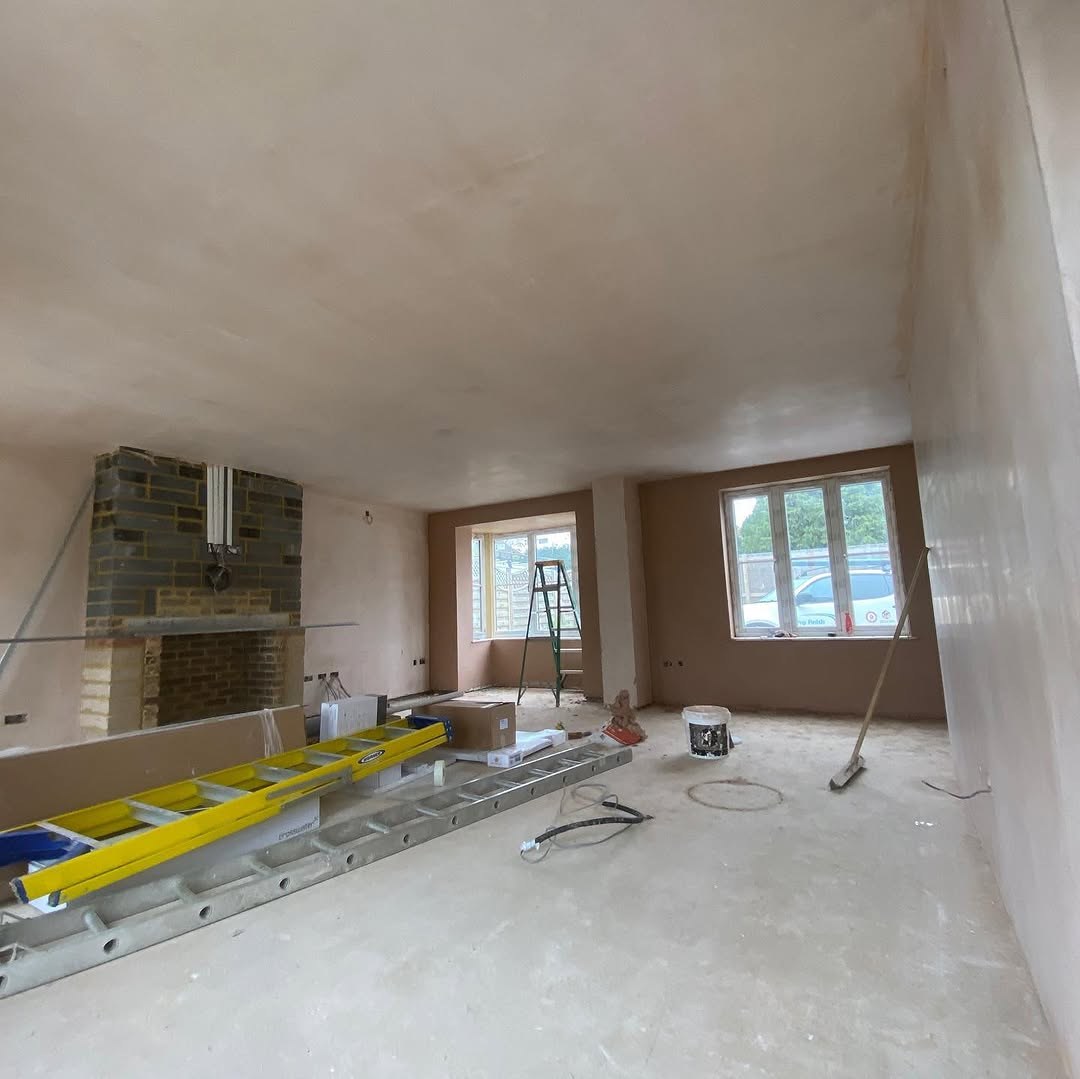
Out with the swirls
Artex, the name almost everyone uses for textured coatings, was the finish of choice for ceilings and walls for decades: swirls, stipples, fans, peaks and combed patterns. Plenty of homes in West Sussex still have it, and it is usually the first thing people want gone when they refurbish. It collects dust, it makes a room feel dated, and it fights with modern downlights, which pick out every ridge in the pattern.
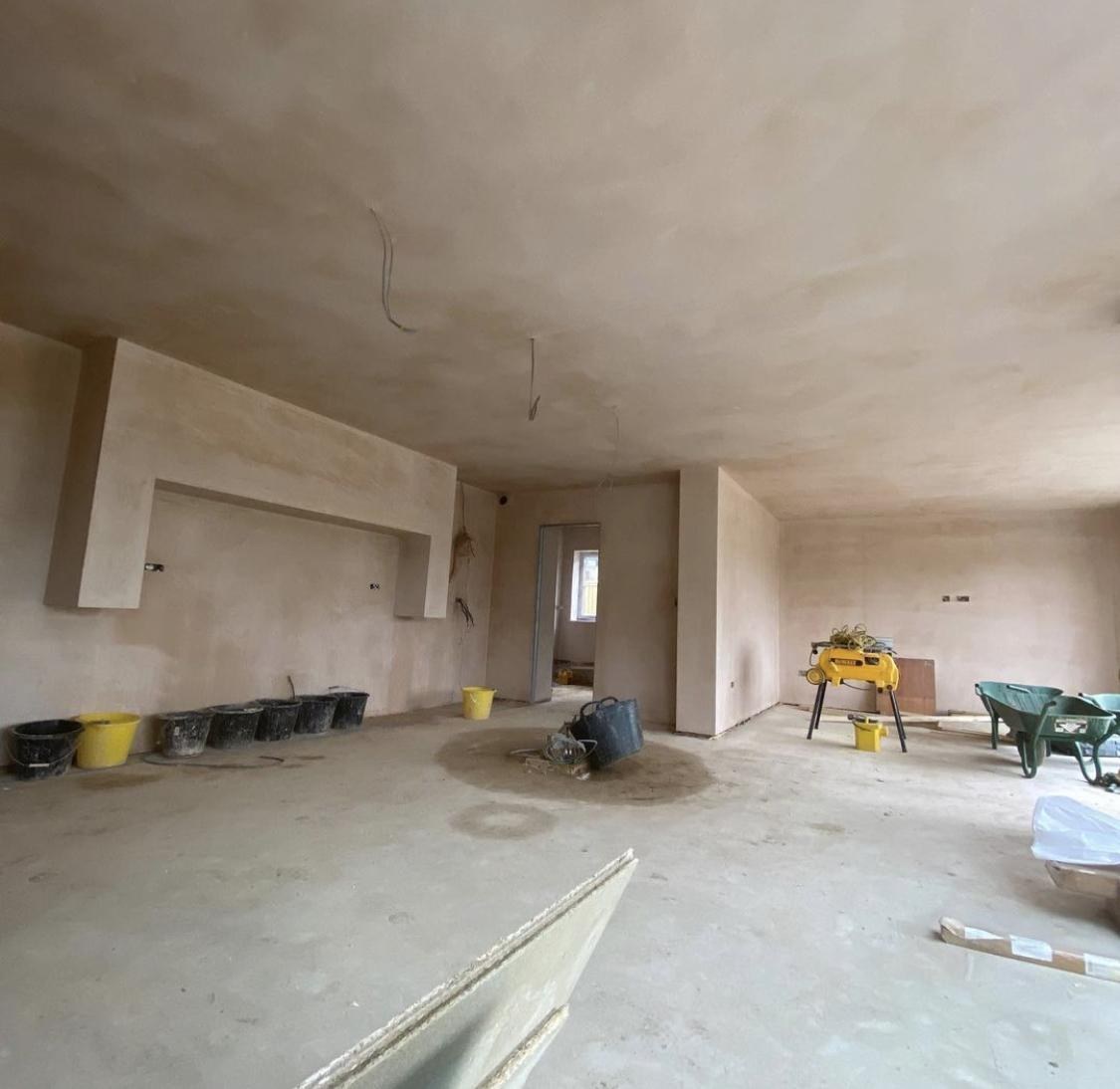
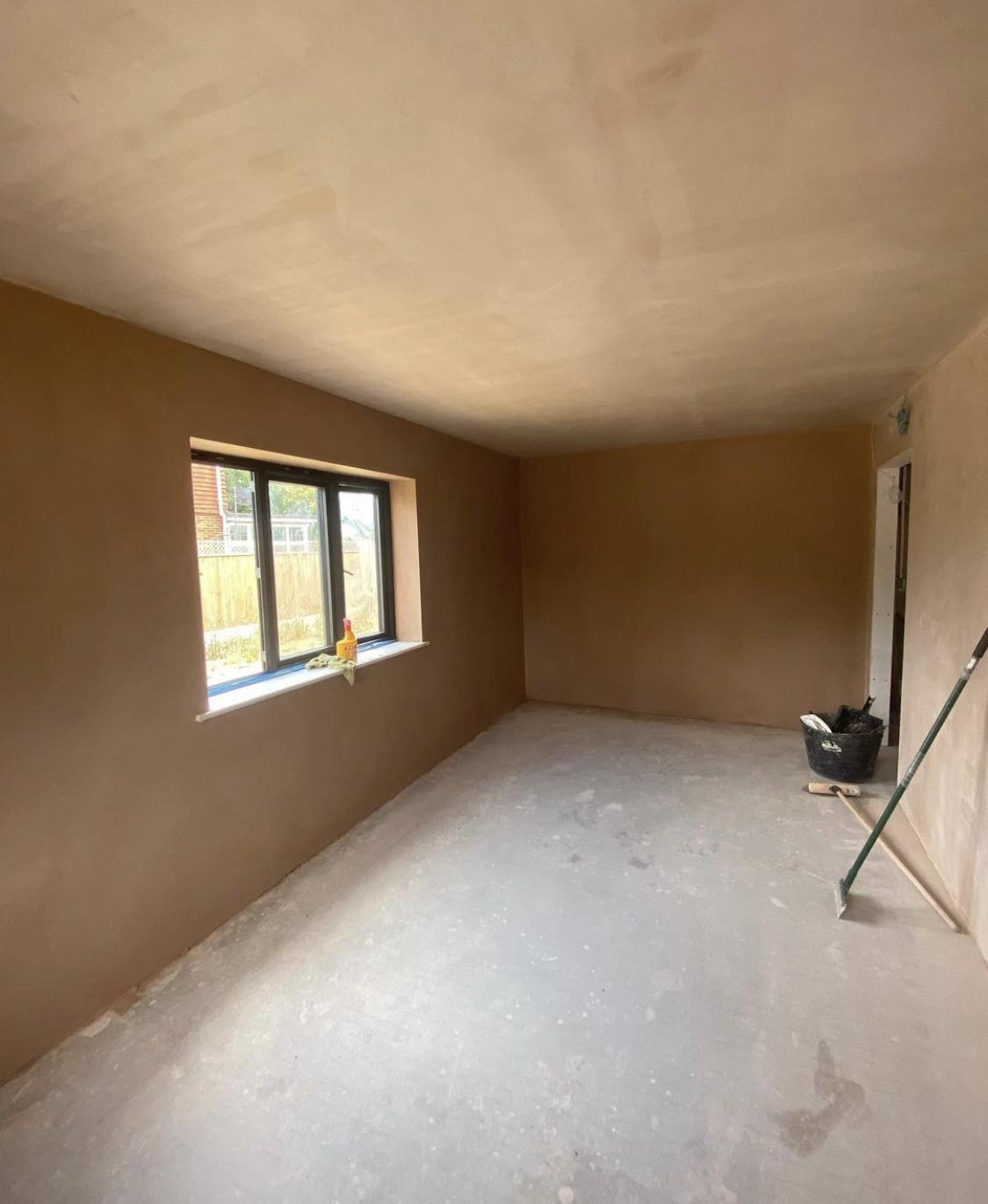
Pro Finish Plastering plasters Artex ceilings and walls back to flat for homeowners, landlords and builders across Worthing, Littlehampton and the rest of West Sussex. The result is a smooth, modern surface that is ready to decorate, with no trace of the pattern underneath.
Covering is usually better than removing
We are often asked for "Artex removal". In most homes the better answer is to leave the textured coating where it is and plaster over it. Scraping a textured ceiling back to the board is slow and messy, it can damage the plasterboard behind, and with older coatings it can be hazardous. Plastering over a sound textured surface seals it in place and gives you a brand new finish without disturbing what is there.
A word on asbestos
Textured coatings applied before 2000 can contain a small amount of asbestos. It is only a risk when the material is disturbed: sanded, scraped, drilled or broken up. You cannot tell by looking, so if your ceiling is old and you are not sure, have a sample tested by an asbestos surveyor before anyone works on it in a way that disturbs it, and never sand it. Plastering over a sound coating does not involve removing it.
How we plaster over Artex
- Look at the surface. We check the ceiling or wall is sound, with no loose, flaking or hollow areas, and note any cracks, coving or ceiling roses.
- Protect the room. Floors and fittings are covered before any work starts.
- Seal and bond. The textured surface is treated with a bonding coat so the new plaster grips it, without sanding the pattern.
- Fill the pattern. The first coat fills the peaks and troughs so the surface is flat.
- Finish. The second coat is trowelled to a smooth, polished surface. Our plaster finish is completed in two coats using British Gypsum products.
- Dry and decorate. Once the plaster has dried through, it takes a thinned mist coat and then your chosen paint.
Walls as well as ceilings
Textured finishes were not only used on ceilings. Hallways, stairwells, chimney breasts and feature walls were often given a pattern too, and they are treated in the same way: sealed, filled and skimmed, with corners beaded so the edges come out crisp and straight.
When a skim is not enough
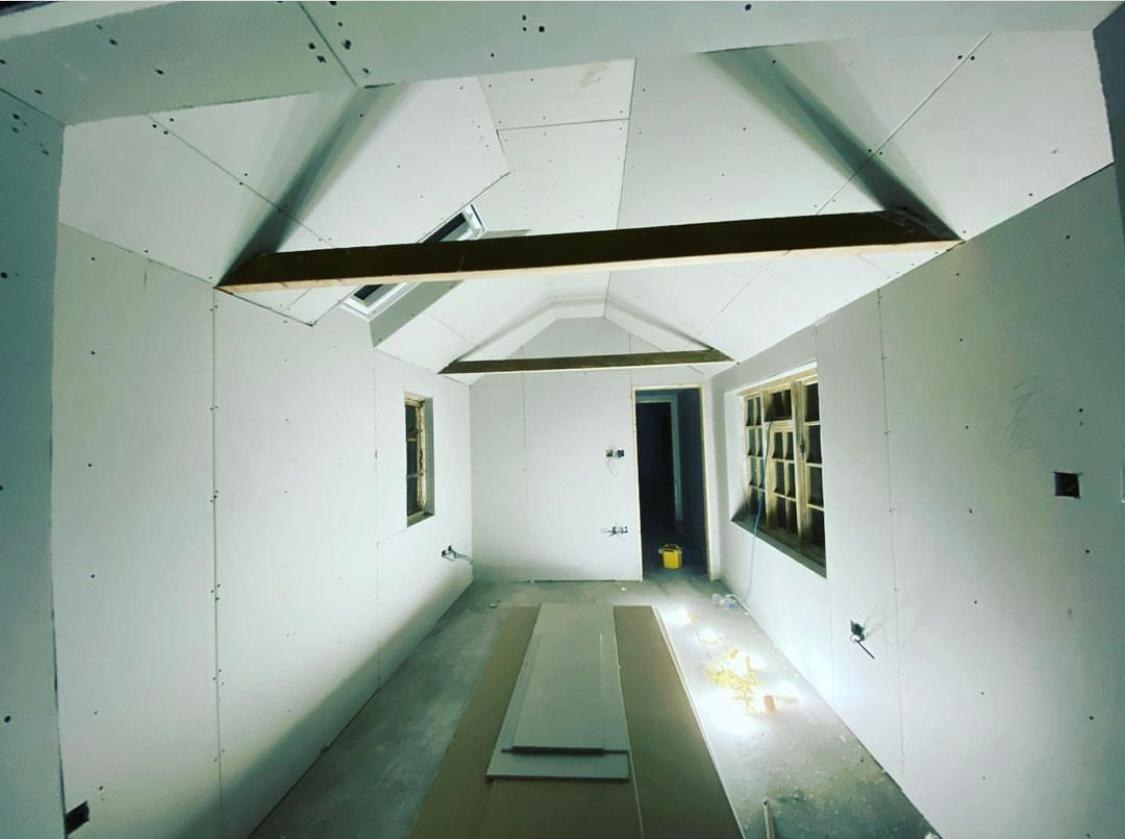
If a textured ceiling is cracked, sagging or coming away from the boards, plastering over it will not fix the problem. In that case the answer is usually new plasterboard, either fixed over the old ceiling or in place of it, followed by a skim. We do both, see our plasterboarding and dry lining page. Walls in poor condition underneath the pattern may need taking back and replastering with a traditional float and set.
Finishing the room
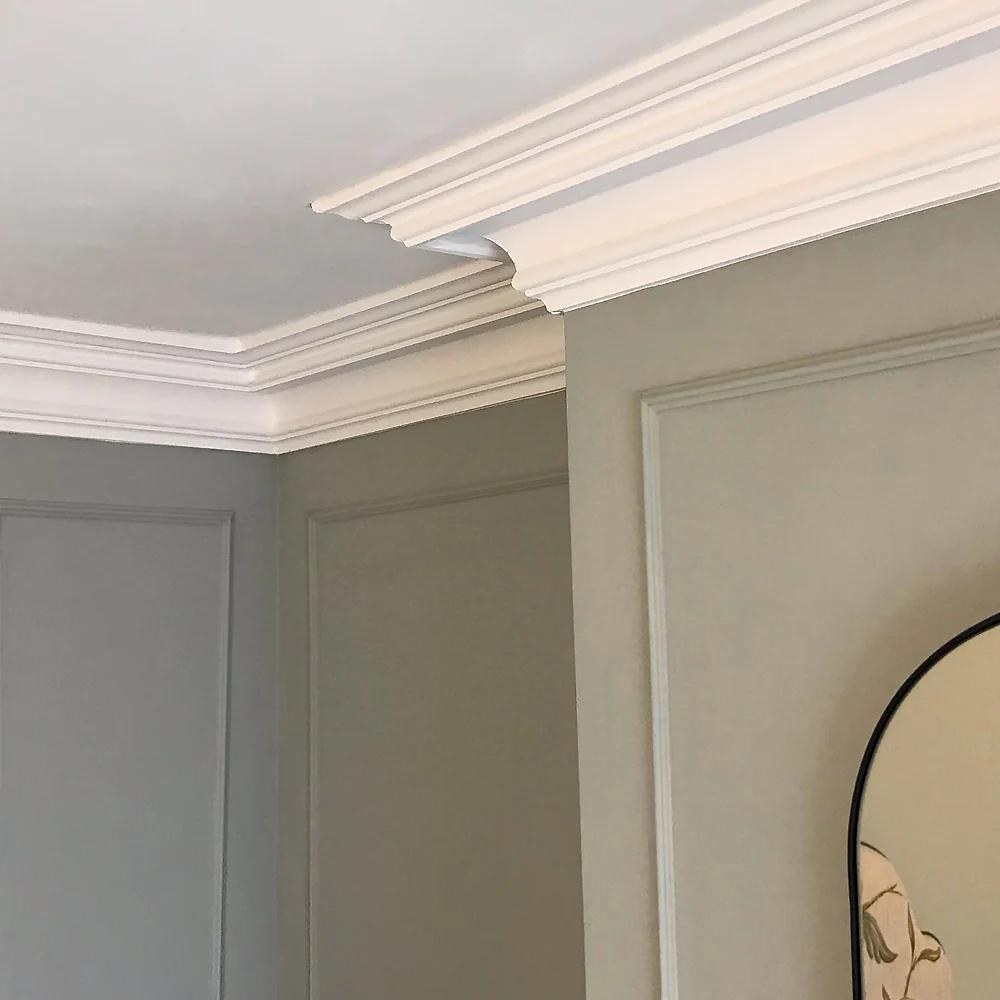
A flat ceiling is the moment to add the details that textured ceilings never suited: new coving and cornice, a ceiling rose or crisp new lighting positions. If you would like a quote for plastering over Artex in your home, call 07824 165672 or send us a message with a couple of photos. Quotes and advice are free and without obligation.