Textured ceilings follow the building booms, and Worthing had big ones. Around 4,000 dwellings were added between 1921 and 1931 and roughly 10,000 more between 1931 and 1951, then Goring and the land around Durrington station were built up from the 1950s to the 1970s with private and council housing side by side. Patterned coatings were the fashionable ceiling finish through much of that later period, and many of those homes are now on their second or third owner. When a kitchen is opened up or a bungalow gets new lighting, the swirls are usually the first thing to go.
Where the patterns tend to turn up
The obvious places are ceilings in the post-war houses of Durrington, West Durrington and Goring, and the bungalows that went up in Findon Valley in the 1930s, where long, low ceilings run through hallways and lounges. Patterns also appear on walls: stairwells, chimney breasts and feature walls in living rooms. Older properties are not immune either. A Victorian terrace off Tarring Road or a villa in Heene may have had a textured coating added in a 1970s makeover to hide cracked lath and plaster, and that changes how the job is approached, because a coating can only be skimmed if the ceiling behind it is still sound.
Get an old coating tested before anyone disturbs it
Textured coatings put on before 2000 can contain asbestos. It is not a hazard while it sits undisturbed, but sanding, scraping or drilling can release fibres, and you cannot tell by looking. If your ceiling dates from before then, ask an asbestos surveyor to take a sample and test it before any work that would break into the surface. Skimming over a sound coating seals it in without disturbing it, but it does not remove it, so keep the test result with your house papers. Pro Finish Plastering does not test for or remove asbestos; the plastering only starts once you know what you are dealing with.
How a patterned ceiling becomes flat
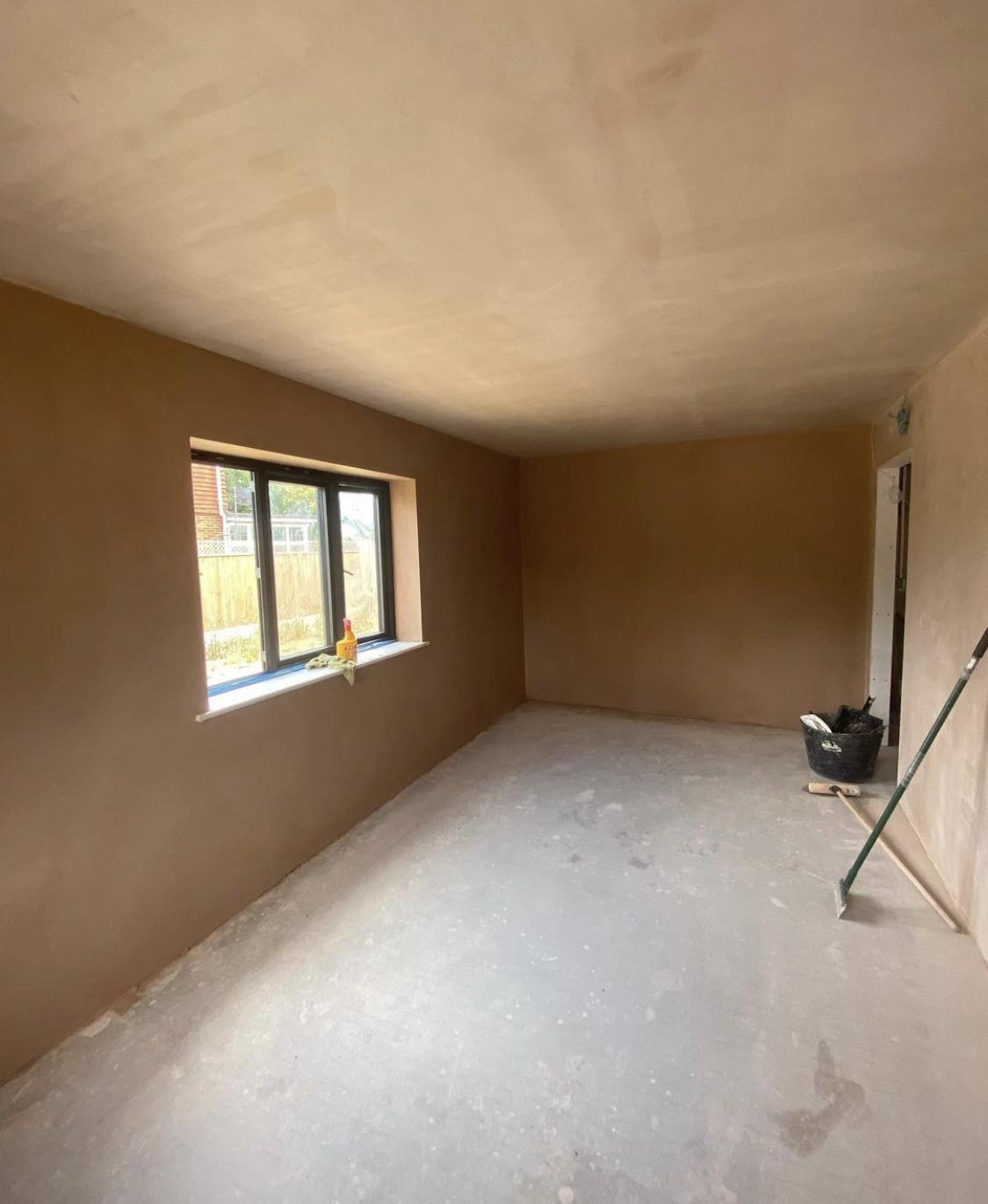
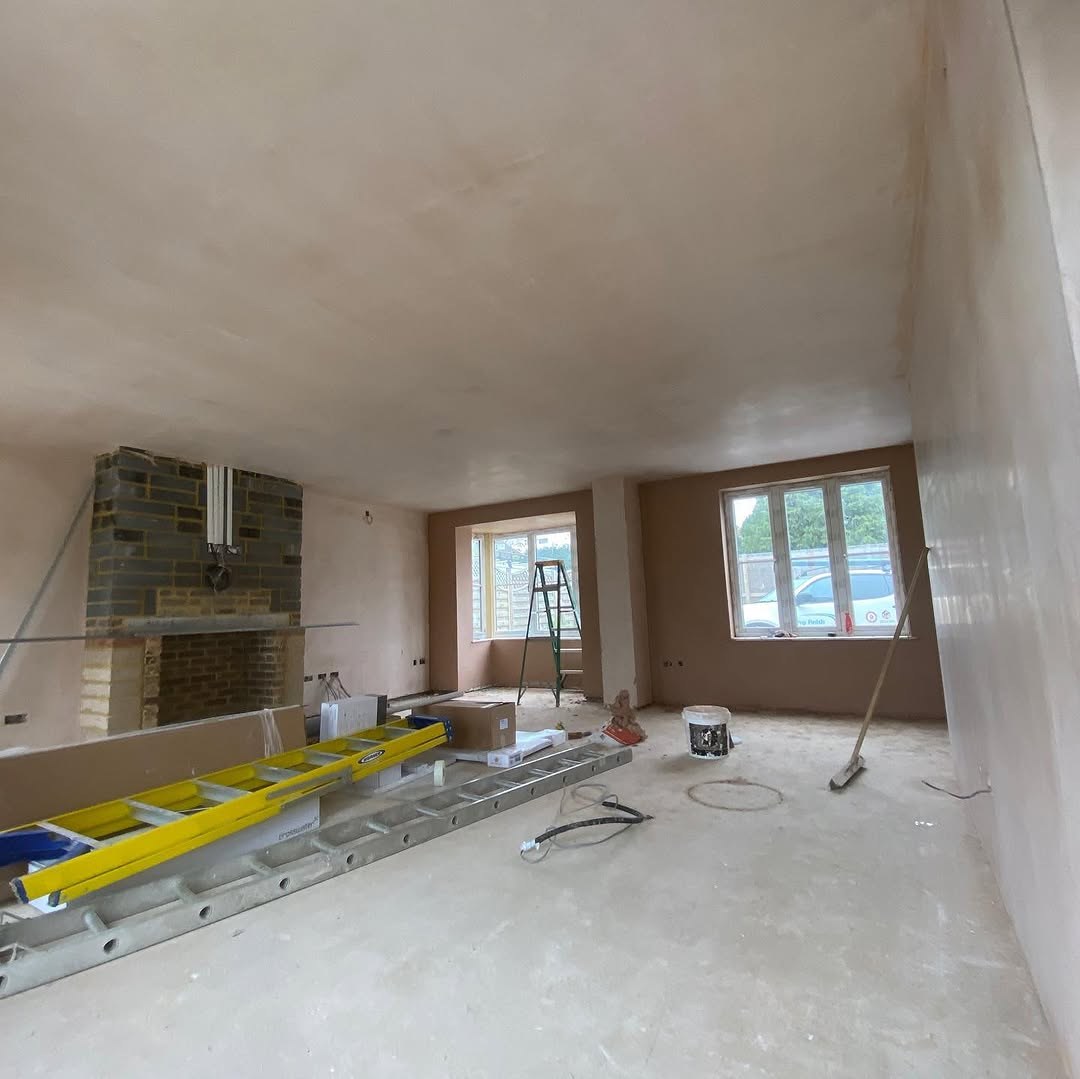
The surface is checked first for loose, flaking or hollow areas and for any cracks running along board joints. A bonding treatment is then brushed on so new plaster grips the texture without anyone rubbing it down. The first coat is pushed into the troughs and over the peaks until the plane is level, and a second coat is trowelled on top and polished smooth. Both coats are British Gypsum plasters. Once it is dry, a mist coat goes on and then your chosen emulsion. In a bungalow with a long hall ceiling, the work is planned so each ceiling is finished in one go, avoiding a visible join halfway along.
When skimming is the wrong answer
If the ceiling sags, has wide cracks or moves when pressed, the coating is not the real problem. That ceiling needs new plasterboard, either fixed over the old one or in its place, before any finish goes on; our plasterboarding and dry lining work in Worthing covers that. A flat ceiling is also the moment to think about a new cove, since a textured ceiling and a crisp cornice never really suited each other. Our coving and cornice page for Worthing has more on choosing a profile.
For the full method, see Artex ceilings and walls plastered flat, or browse everything we cover in Worthing. Call 07824 165672 with a couple of photos for free, no-obligation advice and a quote.