Where textured ceilings turn up in Hassocks
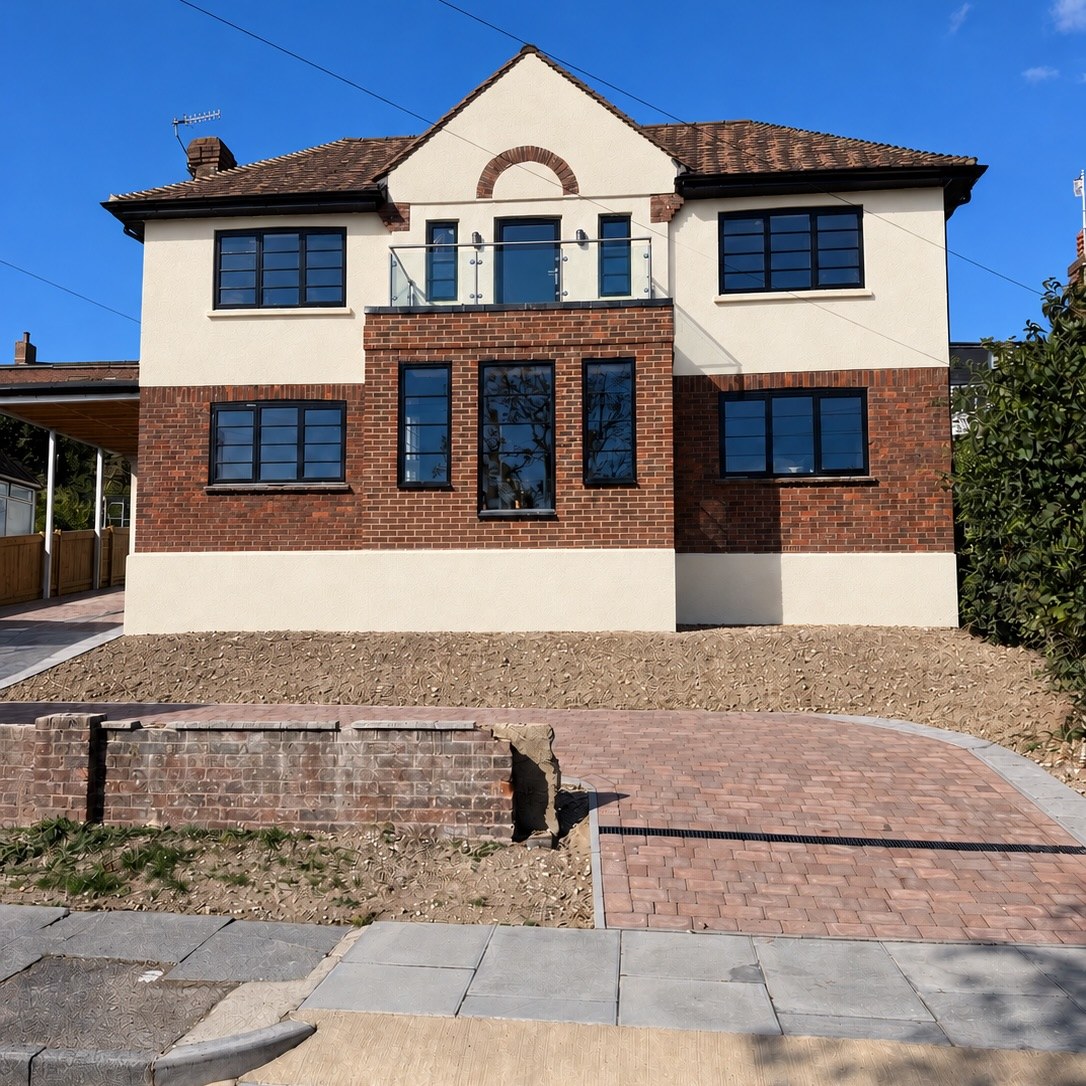
The parish townscape appraisal describes most of Hassocks as having a mid-twentieth century character. Textured ceilings were a common choice for much of that century and into the 1990s, either when a house was built or at its first big makeover. So if you live on the 1930s Home Estate, in the 1950s avenues around Dale Avenue and Windmill Avenue, at Wilmington Close, completed in 1963, or in one of the later infill houses on roads such as Stafford Way, a swirl or stipple overhead would be no surprise. Bungalows are a big part of the picture too. The appraisal picks out the soft red brick bungalows at the southern end of the Butchers Wood area, and says Church Mead is mostly bungalows. A low ceiling with a heavy pattern sits close to eye level, and modern LED downlights throw a shadow off every ridge.
Asbestos: check before anything is disturbed
Any textured coating put on before 2000 may contain asbestos, and in a village where so much of the housing is mid-twentieth century that is worth taking seriously. It only becomes a risk when the coating is broken up by sanding, scraping or drilling, and nobody can tell by looking. If the ceiling is old and you are unsure, ask an asbestos surveyor to test a sample before any work that would disturb it. Skimming over a coating in good condition leaves it sealed in place rather than taking it away. We do not test for or remove asbestos, and we never sand textured finishes.
How we flatten a patterned ceiling
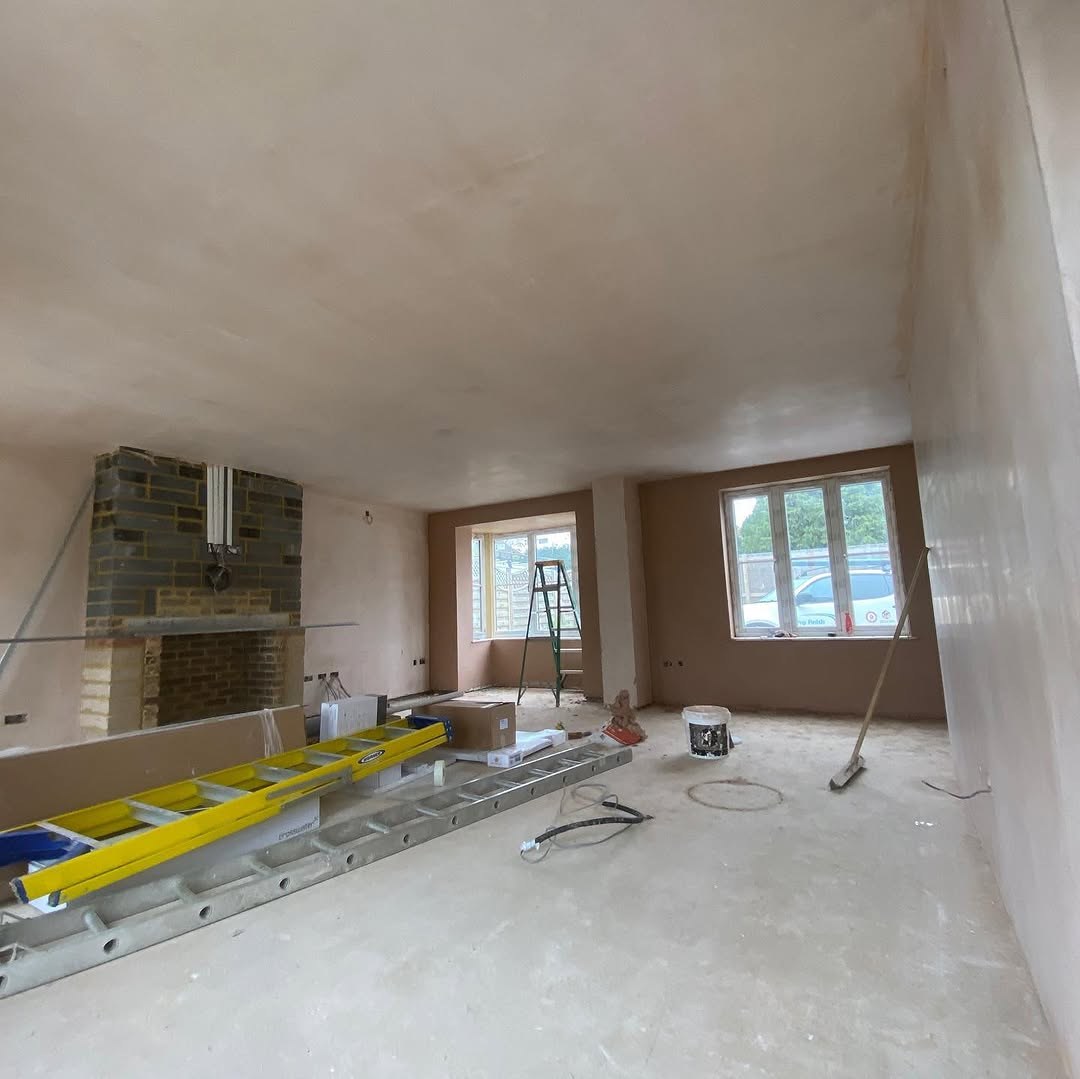
First we check the ceiling is firm, with no flaking, loose or drummy areas, and note any cracks, existing coving or a ceiling rose that is staying. The room is sheeted, and the pattern is treated with a bonding coat so the new plaster grips without anyone sanding it. A first coat fills the ridges and hollows until the surface is level, and a second coat is trowelled to a smooth, closed finish, both in British Gypsum plaster. Edges at the walls are cut in cleanly. Once it has dried through, the ceiling takes a thinned mist coat and then paint like any new plaster.
Hallways, chimney breasts and the next step
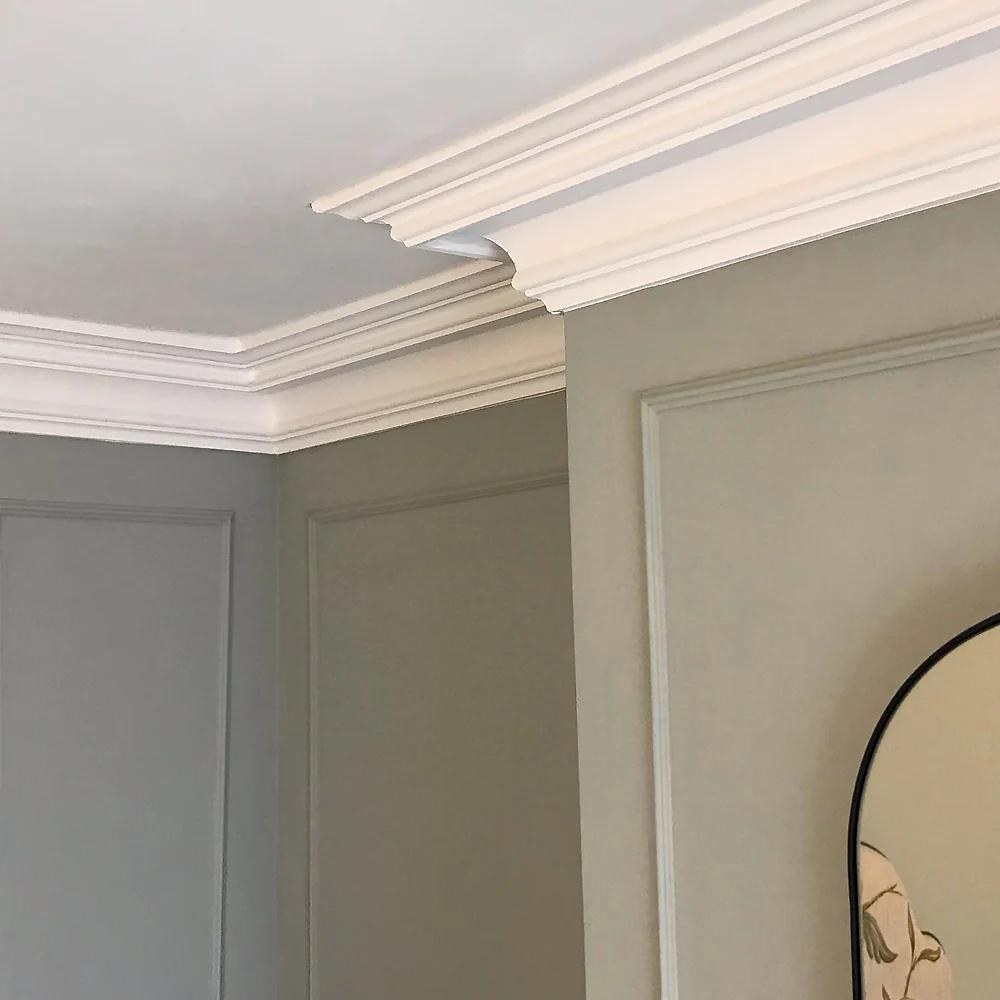
Patterns were not only applied to ceilings. Stairwells, hall walls and chimney breasts in Hassocks homes were often textured as well, and they are treated the same way, with corners beaded so the edges come out sharp. If a ceiling is cracked, sagging or parting from the joists, plastering over it will not last, and new plasterboard is the better route before the skim; our plastering and skimming in Hassocks page covers that kind of work. Once a ceiling is flat, many people take the chance to add a crisp cove or a cornice that suits the age of the house, as described on our coving and cornice in Hassocks page.
Before you call
It helps to know roughly when the coating went up, whether it has been painted many times, and whether anyone has drilled or cut into it recently. A few photos of each ceiling, taken with the lights on and from a low angle, show the depth of the pattern well. For more on the method, see our main Artex plastering page, or browse the rest of our services in Hassocks.