Stucco: Brighton's signature finish
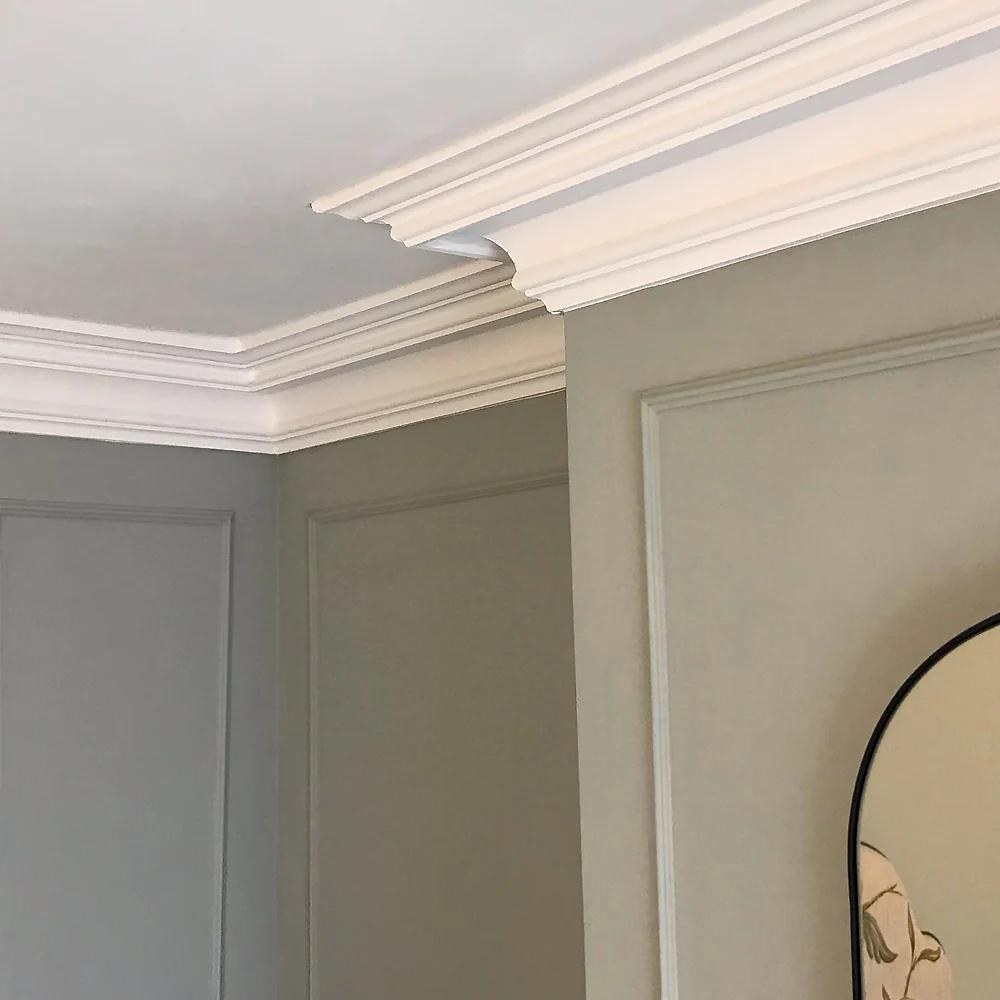
Rendered stucco fronts are one of the defining features of the city. Stucco gave Regency builders the look of stone, a smooth face and a material that could be run into cornices and mouldings, and it was used along entire terraces. On the East Cliff, the houses and hotels of Marine Parade form a stuccoed façade that has been described as unsurpassed anywhere in Britain. Montpelier and Clifton Hill, built up between the 1820s and the 1860s, are dominated by stucco-clad terraces and villas. At Regency Square, the original covenants required stucco below the balcony line, none above it, and repainting at least every three years.
What sits behind the stucco
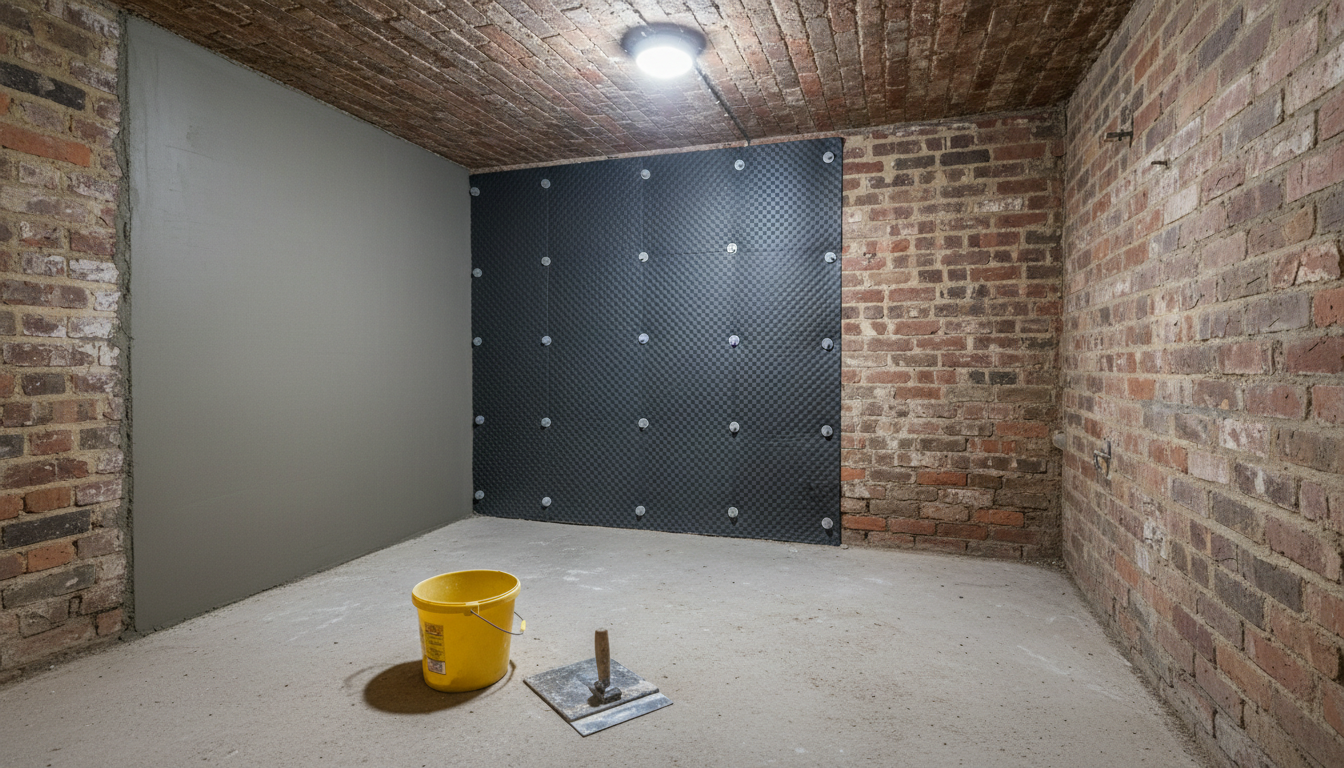
Many of those fronts hide bungaroosh, a rubble and lime walling material that is particularly vulnerable to water getting in. That changes how a crack should be treated. A hairline fault in render over brick may be cosmetic for a while, but over bungaroosh it lets rain into a wall that weakens as it gets wet and dries. Repairs start by sounding the render with a hammer, cutting hollow sections back to firm edges, and patching with a mix soft and breathable enough to suit the old wall. A patch that is harder than the render around it tends to crack at its edges and push water into the gap.
Kemp Town and other controlled façades
The Kemp Town estate, built between 1823 and 1855 around Sussex Square, Lewes Crescent, Arundel Terrace and Chichester Terrace, is covered by an Article 4 direction. On elevations visible from Marine Parade, the gardens and Eastern Road, external walls and render must be white, in a gloss or smooth masonry paint finish, and repainting needs planning permission. A through-coloured or silicone finish is not an option there: the job is a careful like-for-like repair, then paint to the specified colour. Across the city there are 34 conservation areas and more than 1,200 listed structures, so check before changing the finish on any older front.
Salt air, wind and timing
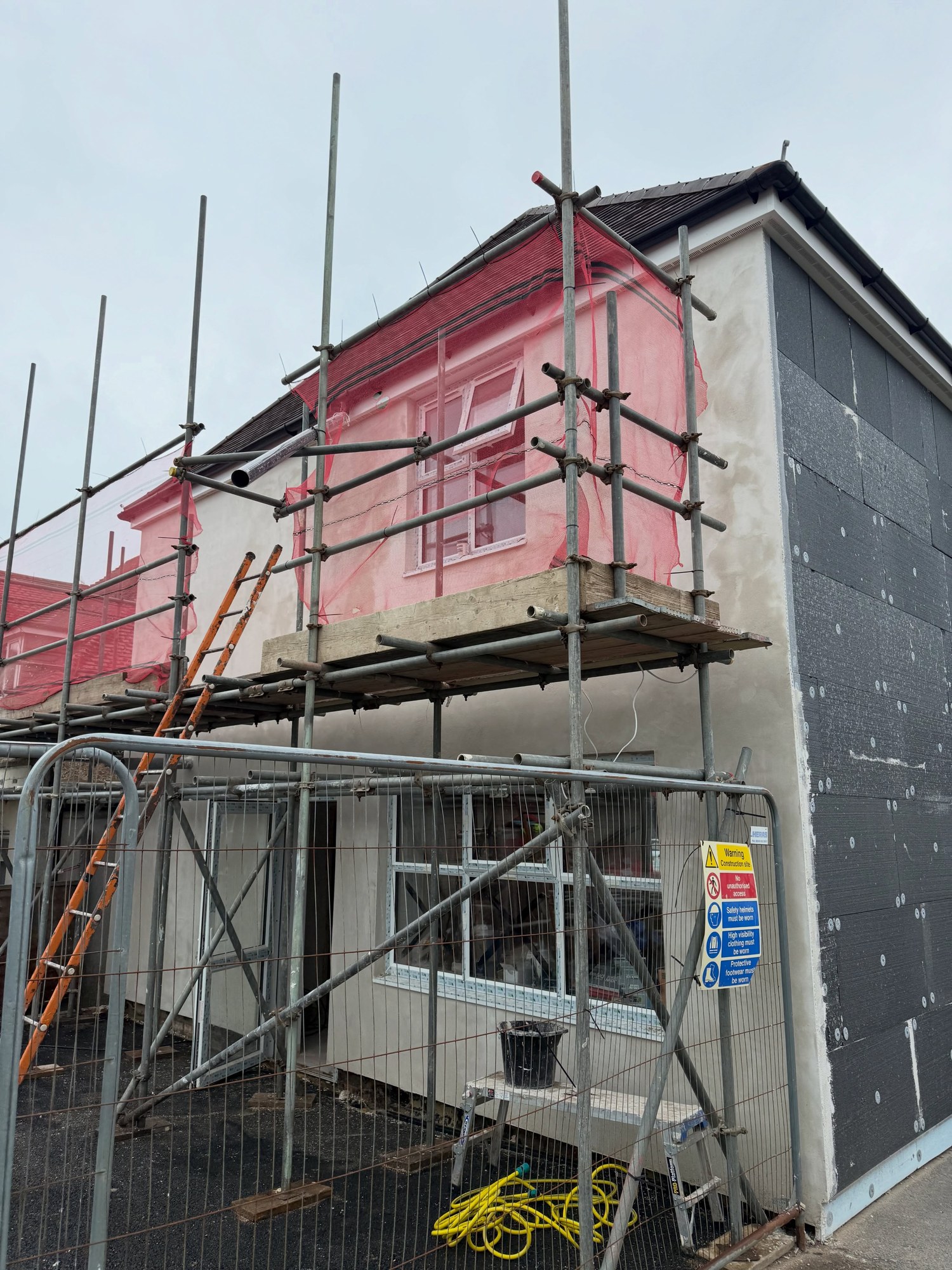
Brighton's chalky soil and salt-laden air are kind to elm trees but hard on render and paint. Sea-facing walls dry quickly in the wind, which can make fresh render cure too fast, and winter storms test every joint. Look closely at the base of the wall, too: render carried down over the damp proof course or into a raised pavement can wick moisture up behind it, and a bell-cast bead just above the DPC usually solves that. External work is planned for settled spells, out of frost and heavy rain, with protection on the scaffold where a wall faces the sea.
Newer houses and our Saltdean job
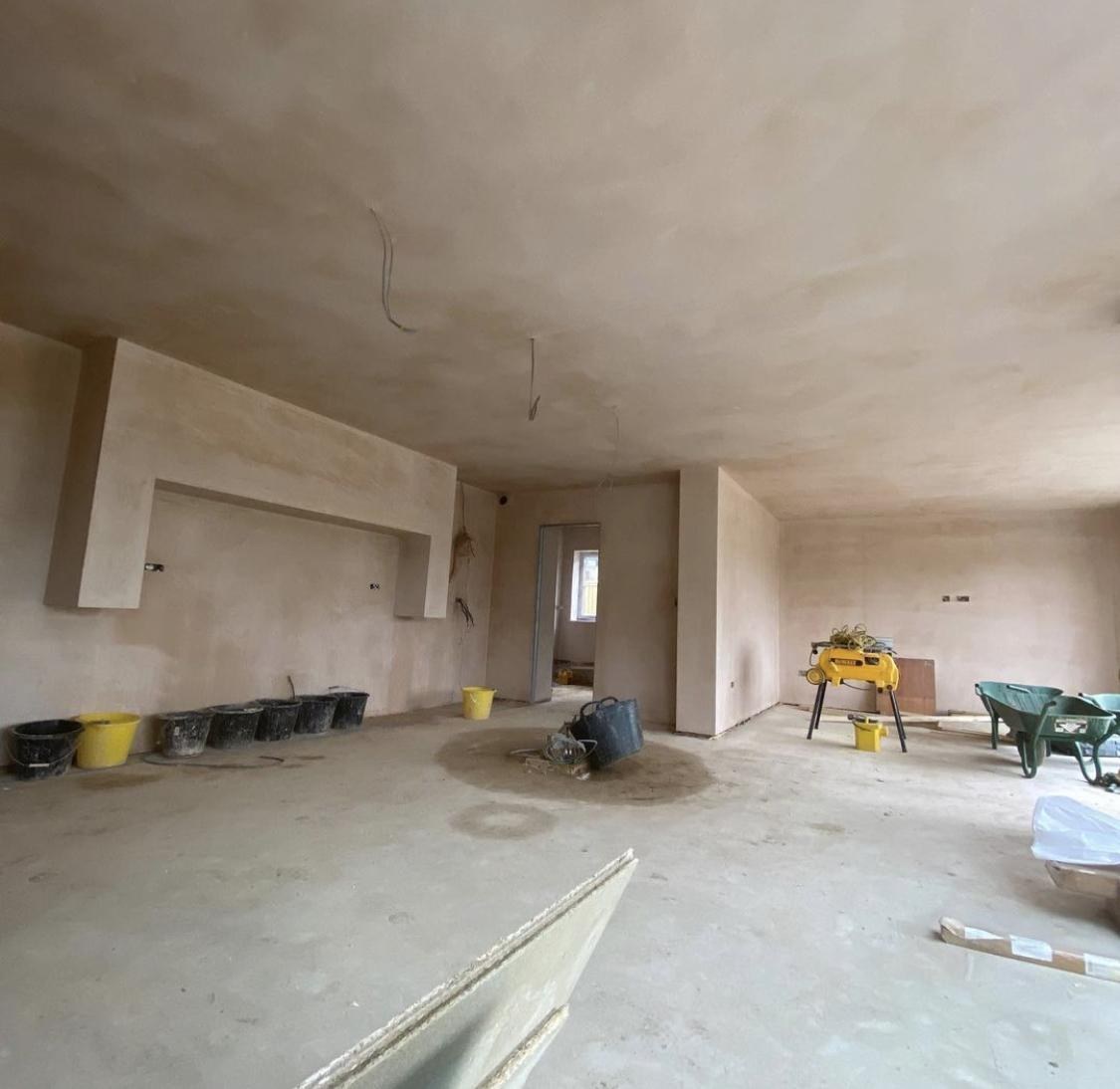
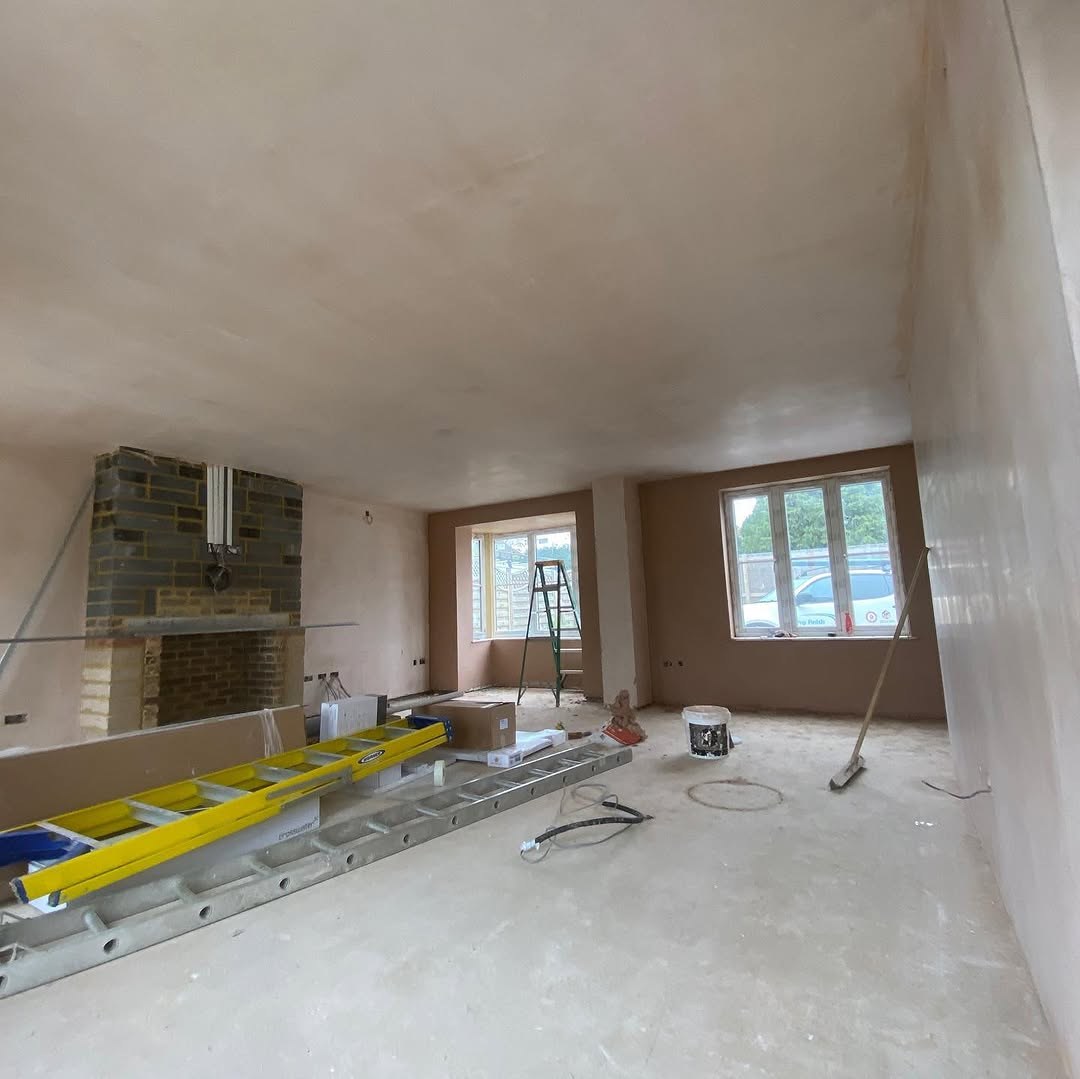
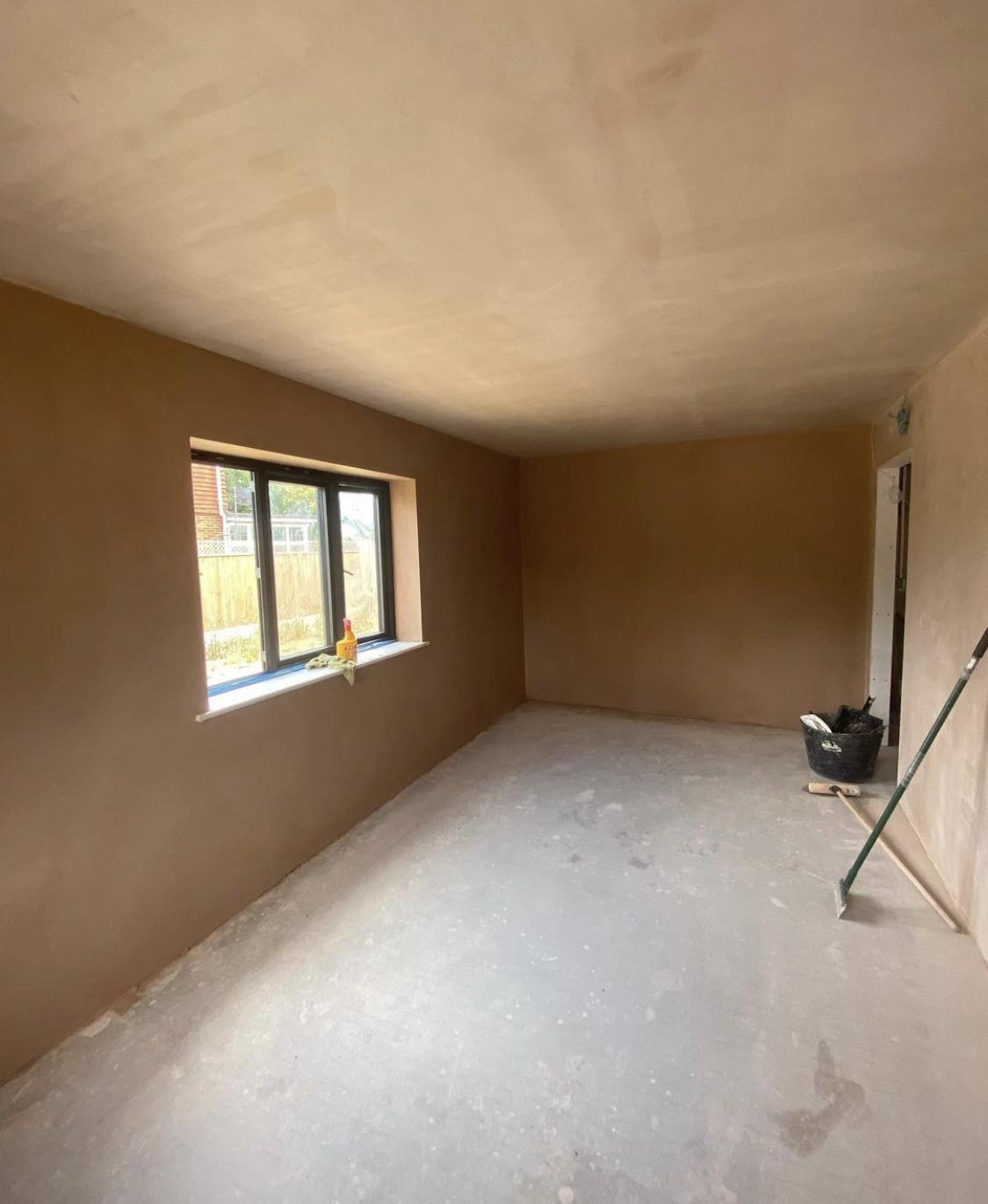
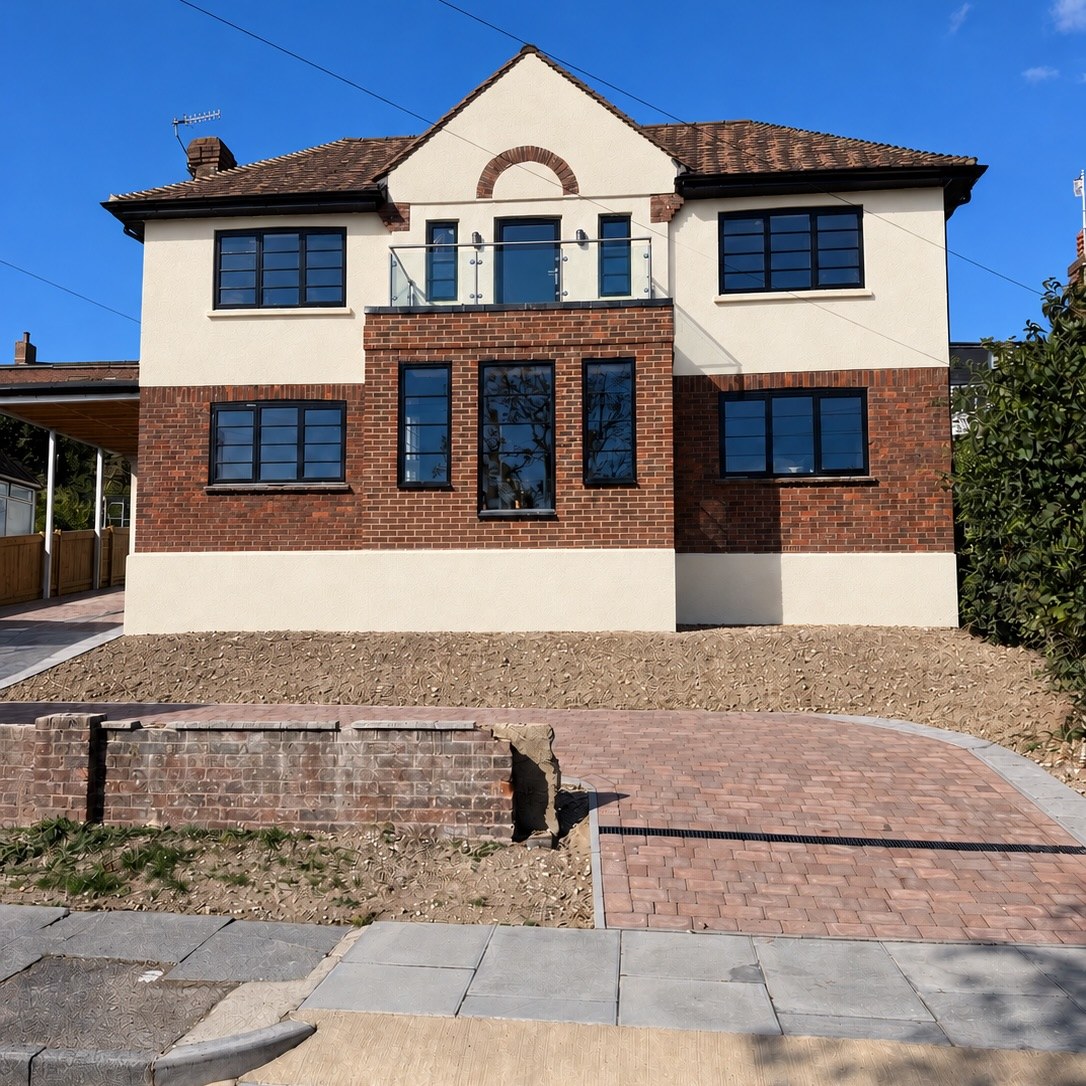
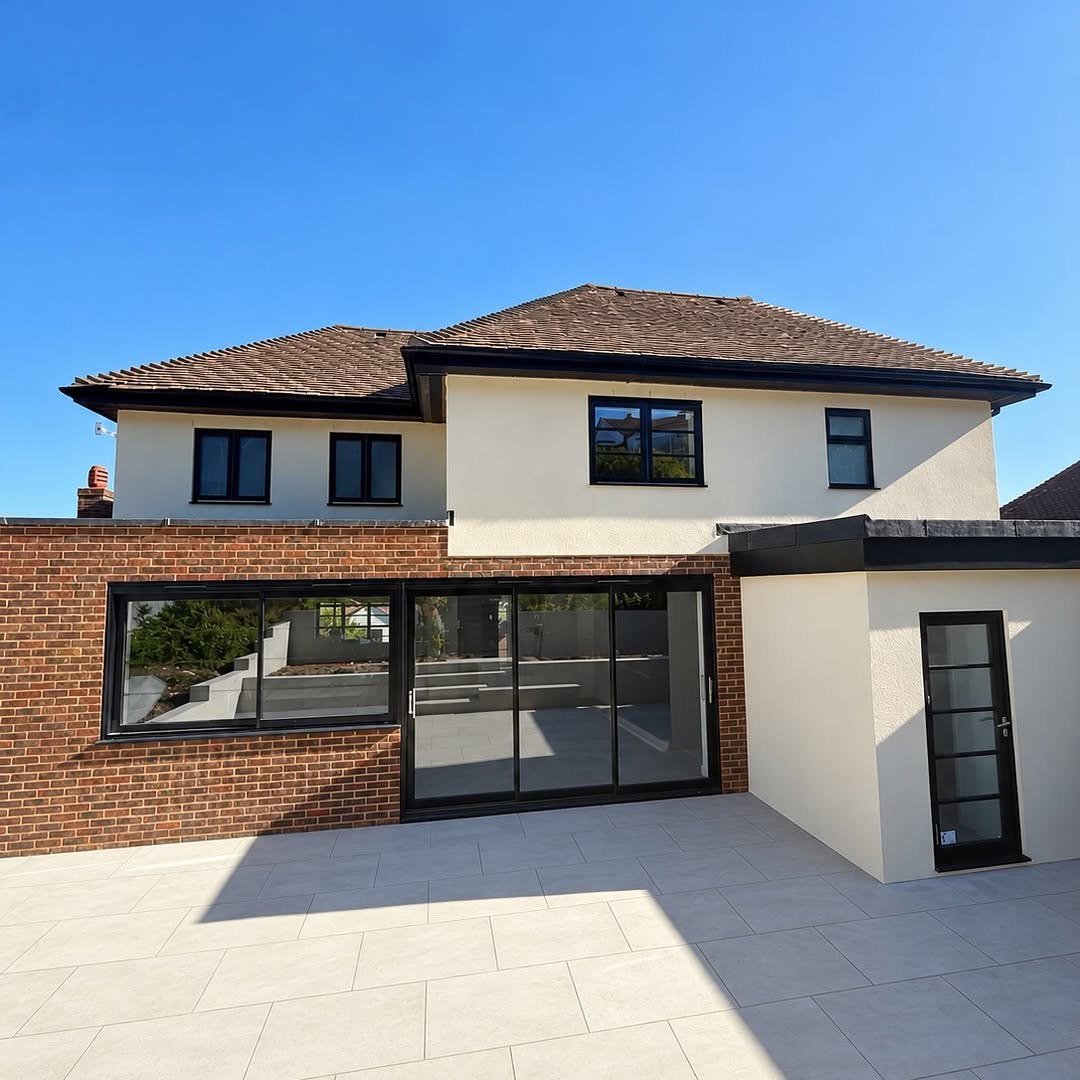
Away from the seafront, an interwar or post-war house with pebble dash or sand and cement render can have it patched, replaced or overcoated with a through-coloured finish. At Saltdean, on the city's eastern edge, our work on a reconfiguration and extension grew into a full replaster, and the house was finished outside in a silicone render system in the colour Prosecco, as described on our projects page. See silicone rendering in Brighton for how that system works, or external wall insulation in Brighton if you want the walls warmer as well.
Pro Finish Plastering covers the whole of Brighton. Our main rendering page lists every render we apply. Call 07824 165672 for free advice and a quote.