Heavy clay and slow drainage
Burgess Hill sits in a clay vale between two of the Adur streams, on the Weald Clay that underlies this part of the Low Weald, and the district's landscape character assessment notes alluvium along parts of the valley edges in this area. One Adur tributary, known locally as the Hambrook, winds through the town itself. Clay lets water through slowly, so after a wet spell it can lie in gardens and against the foot of a wall for longer than it would on sandy ground. West Sussex County Council's flood risk strategy, as quoted in the neighbouring Hassocks Neighbourhood Plan, names Burgess Hill as one of six places in Mid Sussex at risk of flooding. Plenty of houses here stay perfectly dry, but on clay it pays to check the outside of a building before treating the inside.
Victorian terraces and older brick
Fairfield, west of London Road, holds the largest concentration of small Victorian terraced houses in Mid Sussex, set behind low boundary walls and small front gardens, and the town's neighbourhood plan notes that almost all of its solid Victorian middle class houses survive. In houses of that age, a damp band low on a wall often traces back to an original damp proof course that has broken down, or one now sitting below a raised path, a flower bed or render carried down to the ground. Sorting those outside levels comes first. If tests then point to genuine rising damp, a new chemical damp proof course is injected into a mortar joint near the bottom of the wall. Plaster that has soaked up ground salts is stripped, since it would otherwise keep drawing moisture out of the air, and the wall is replastered with a salt-resistant system, often floated and set; our float and set plastering in Burgess Hill page explains that stage.
Rain getting in through the walls
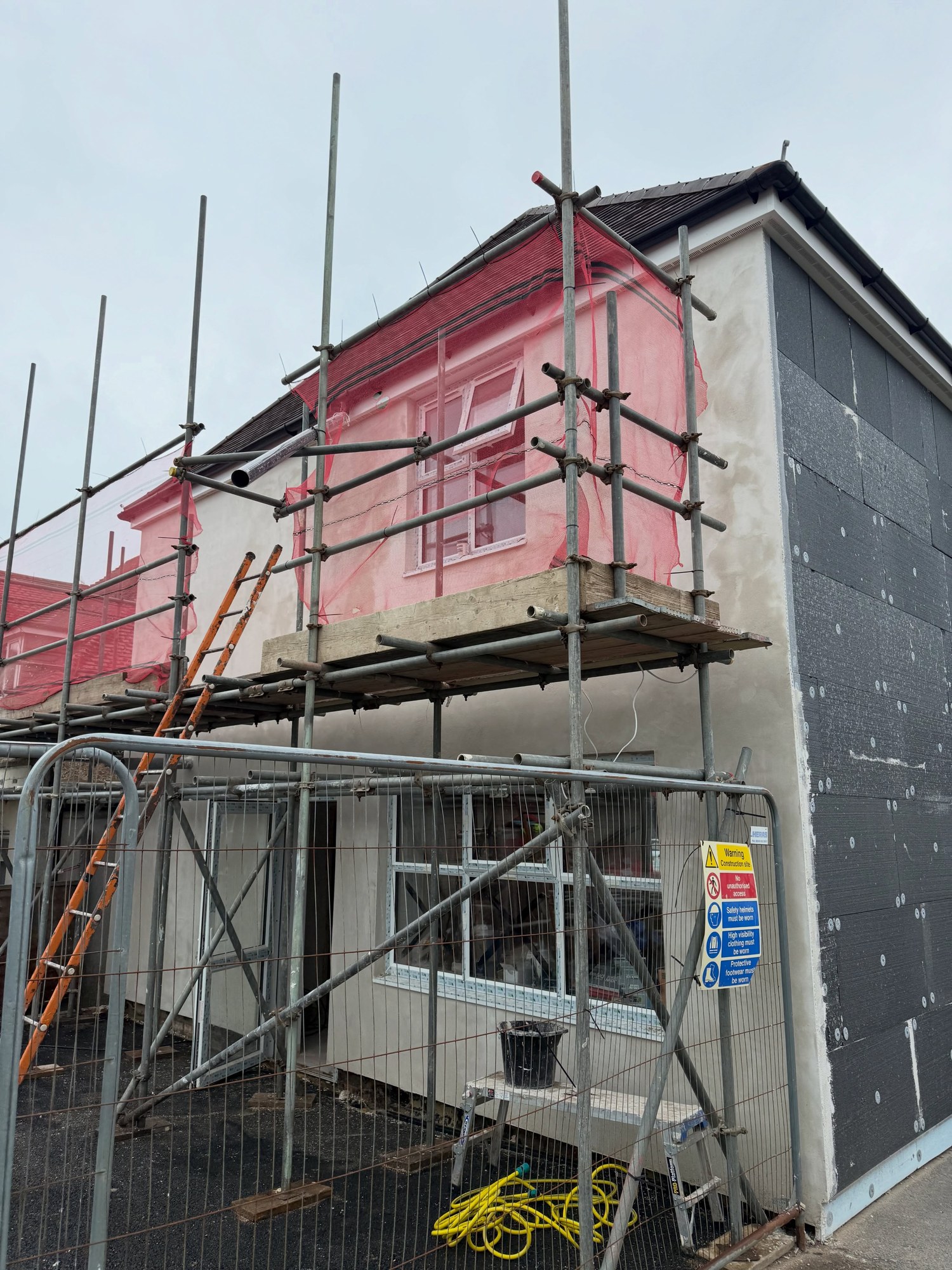
Penetrating damp shows as patches at any height that grow after rain. On brick houses the usual routes are eroded pointing, cracked sills, blocked or leaking gutters and split downpipes. On rendered houses it is often cracked or hollow render letting water in behind the surface. The repair starts outside, at the point of entry, and the inside wall is only made good once that is fixed and the wall has had time to dry. Where tired render is to blame, rendering in Burgess Hill covers putting it right.
Winter condensation and black mould
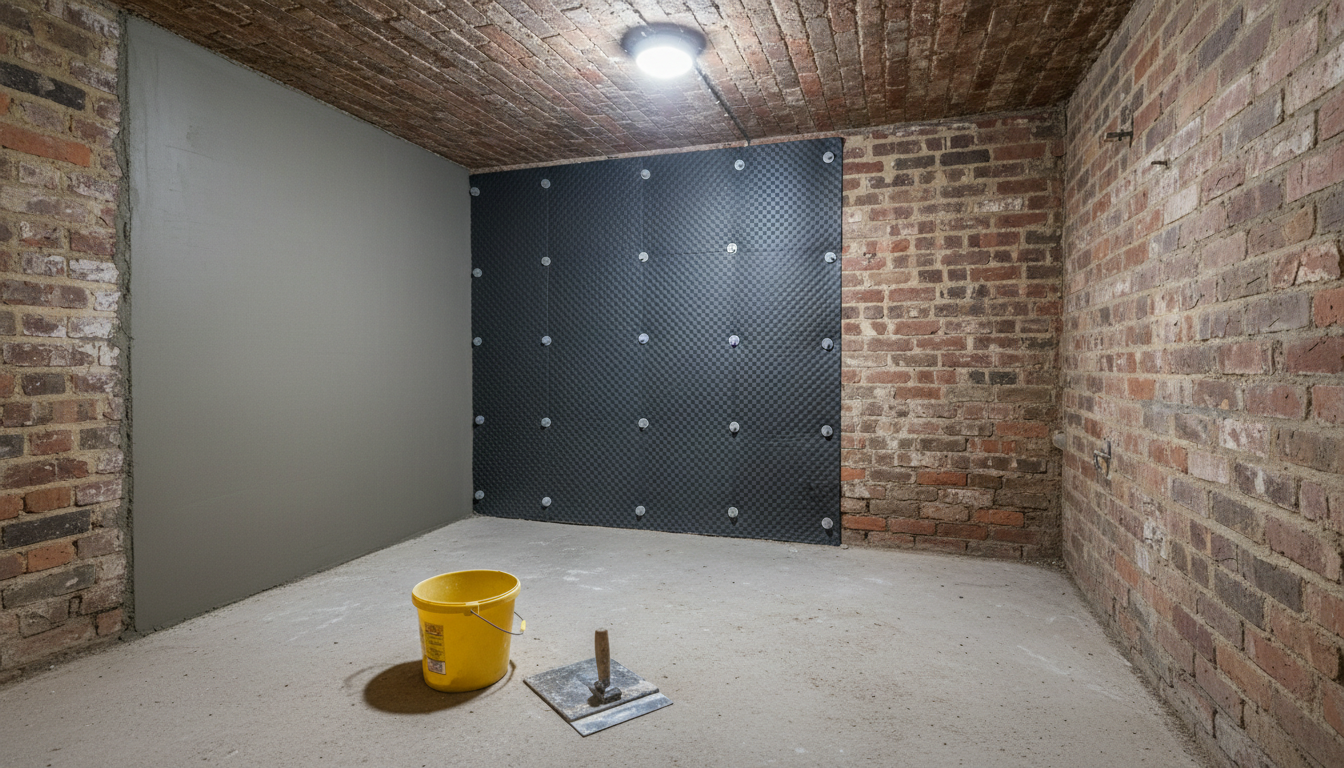
Mould that grows in winter on the coldest parts of a room, such as upper corners, window reveals and the ceiling above a shower, is usually condensation rather than rain or ground water. Flats in the town centre, and post-war or later houses with sealed windows, are prone to it when washing is dried indoors and fans are switched off. Clearing the mould is the easy part. Stopping it means getting moist air out, with extractors that run long enough and trickle vents left open, and raising the temperature of cold walls, which is where insulation or dry lining comes in. For a cellar or a room dug into a slope, the inside face of the wall needs a waterproof tanking coat or a studded drainage membrane before plaster or board goes on.
What helps us advise
A photo of the damp patch, its height on the wall, and a note of whether it changes with the weather tell us a lot before we visit. Each treatment is explained on our damp proofing and mould prevention service page, and the Burgess Hill area page shows what else we do in the town.