Victorian and Edwardian rooms
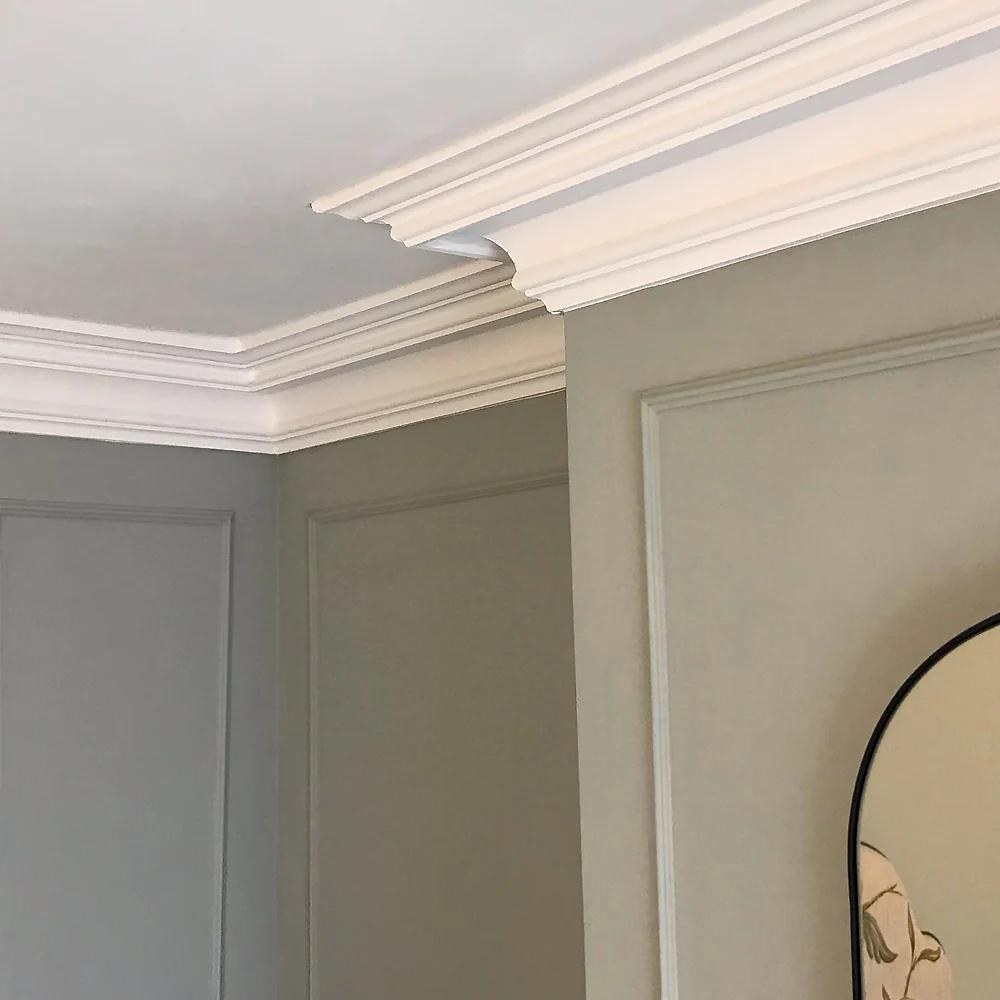
Burgess Hill's Victorian growth left it with houses built to impress. The town council's history records large family houses built for Brighton businessmen, and a health hydro at Wynnstay, built in 1876, when the town was known as a health resort. The Silverdale Road and Birchwood Grove Road conservation area is described by the district council as a group of substantial Victorian and Edwardian houses in spacious gardens, and the St John's conservation area includes well spaced, reasonably large town houses along Park Road and Crescent Road. Rooms in houses like these often have the height to carry a deeper cornice and a ceiling rose, and where an original cornice has been damaged or lost, a fibrous plaster profile can restore it.
Fairfield's smaller terraces
Fairfield, west of London Road, has the largest concentration of small Victorian terraced houses in Mid Sussex, many of them bay-fronted. Rooms here are smaller in scale, so a modest cornice sized to the room usually looks better than a grand profile, and the bay is the place to take care, because the cornice has to follow every angle cleanly. A dado rail in a narrow hallway, or a simple rose in the front room, suits these houses well. Where a chimney breast has been taken out or two rooms knocked through, the cornice line needs continuing across the new ceiling so the space still reads as one room.
Arts and Crafts and interwar touches
Not every older building is Victorian. The town's neighbourhood plan lists Arts and Crafts bungalows on Valebridge Road and the 1930s shop fronts of Church Road and Station Road among its buildings of merit, and the landscape character assessment records interwar ribbon development around Wivelsfield station and along Folders Lane. Interiors of that period tend to suit simpler, cleaner lines: a stepped cornice, a plain cove or a restrained picture rail rather than heavy Victorian enrichment.
Post-war and new homes
Most of the town's post-war houses have plainer rooms, and a standard 127mm cove is often the right finish, neat and understated. Panel mouldings are a way to give character to a hall, stairs or bedroom in a newer house, including the new homes going up at Brookleigh, without changing the structure. If a ceiling still has a textured finish, plastering it flat comes first; see plastering over Artex in Burgess Hill.
Fitting and finishing
When a room is being replastered, cornice is planned in from the start, so the walls, the ceiling and the mouldings are one job; plastering and skimming in Burgess Hill covers that part. Mitres are cut to meet cleanly, runs are kept straight where a ceiling is not quite level, and joints are filled and lightly sanded so they vanish under paint. Our range also takes in friezes, corbels, niches, columns, arches and fire surrounds. Once the adhesive and filler have set, new mouldings are decorated with the ceiling: a mist coat first, then emulsion or eggshell. A cornice painted a touch darker or warmer than the ceiling shows off its shape, whereas one colour for both makes the room feel quieter. See our main coving, cornice and mouldings page, and our Burgess Hill area page for everything else.