Water under and around the city
Chichester's damp problems have a local character because of the River Lavant. The Lavant is a chalk winterbourne that rises at East Dean, and as it passes the city centre it runs largely in culverts, following the course the Romans gave it around the southern walls. In the 1990s it burst its banks, causing what was described as the worst flooding in Chichester for 130 years and closing the A27 and A259. The St Pancras area is the part of the city most typically affected when it floods, and a permanent relief channel with sluices at Westhampnett can now divert excess water into the natural route of Pagham Rife.
South of the city, the Lavant reaches Chichester Harbour between Fishbourne and Apuldram, and around the harbour the sea is part of the picture too: in the harbour village of Bosham, spring tides flood the lower road. In and around Chichester, then, some walls have been soaked from below or by flood water at some point in their life, and that history matters when plaster starts to fail.
Finding the source before treating it
- Rising damp: a tide mark with salts at the base of the wall, where the damp proof course has failed, is missing or has been bridged by raised ground or render.
- Penetrating damp: patches that worsen after rain, from cracked render, failed pointing, blocked gutters or leaking downpipes.
- Condensation: black mould on cold walls, reveals and ceilings, worst in winter, especially in older homes with solid walls and little ventilation.
- Flood water: walls left saturated after water has come in, which need to dry out before anything permanent is done.
Injecting a damp course into a wall that is wet from outside, or from condensation, will not solve anything, which is why diagnosis comes first.
Below-ground rooms and tanking
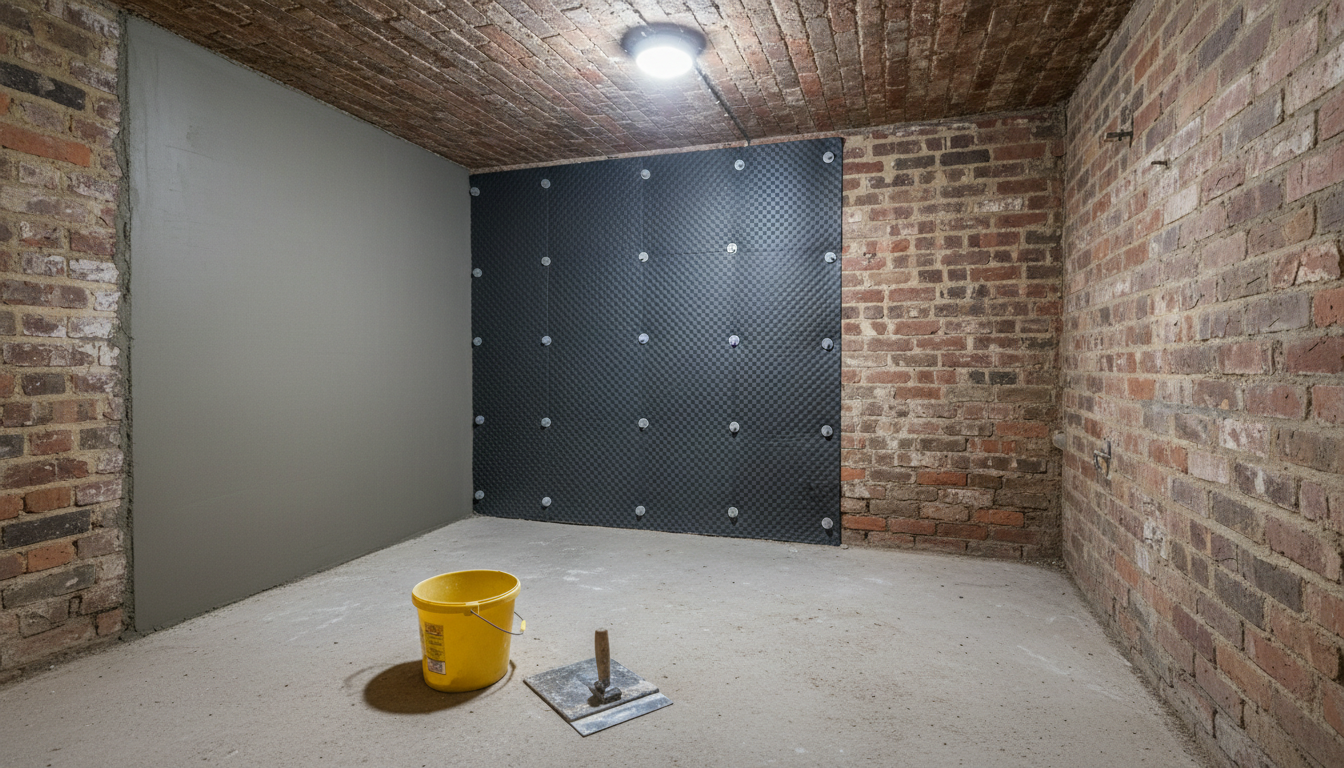
Where a room is below ground, or a wall holds back soil, it needs tanking on the inside face: a waterproof render or coating bonded to the wall, or a studded cavity drain membrane that carries water away behind a dry inner surface. The finished wall can then be plastered or dry lined.
The same principle, a render built to hold water back permanently, was used on the Bosham country home that Pro Finish plastered for architects Studio Fuse, where the work included waterproof render to the natural swimming pool. It is described on our projects page.
Putting the walls back
After flooding, walls should dry out thoroughly before any new plaster goes on, and thick solid walls can take a long time to do so. Checking moisture levels before work starts avoids replastering twice.
After treatment, salt-contaminated plaster is removed, because it keeps attracting moisture, and the wall is replastered with materials suited to a wall that has been damp. On older solid brick and flint, that often means a breathable backing coat; see float and set in Chichester. Where water is getting in through failed render, the outside is repaired first, as described on our Chichester rendering page.
Pro Finish Plastering carries out damp course injections, tanking, mould removal and ventilation, and the re-plastering afterwards, in homes and commercial premises. More detail is on our damp proofing and mould prevention page, and our Chichester page lists every service we cover in the city. Call 07824 165672 for free, no-obligation advice.