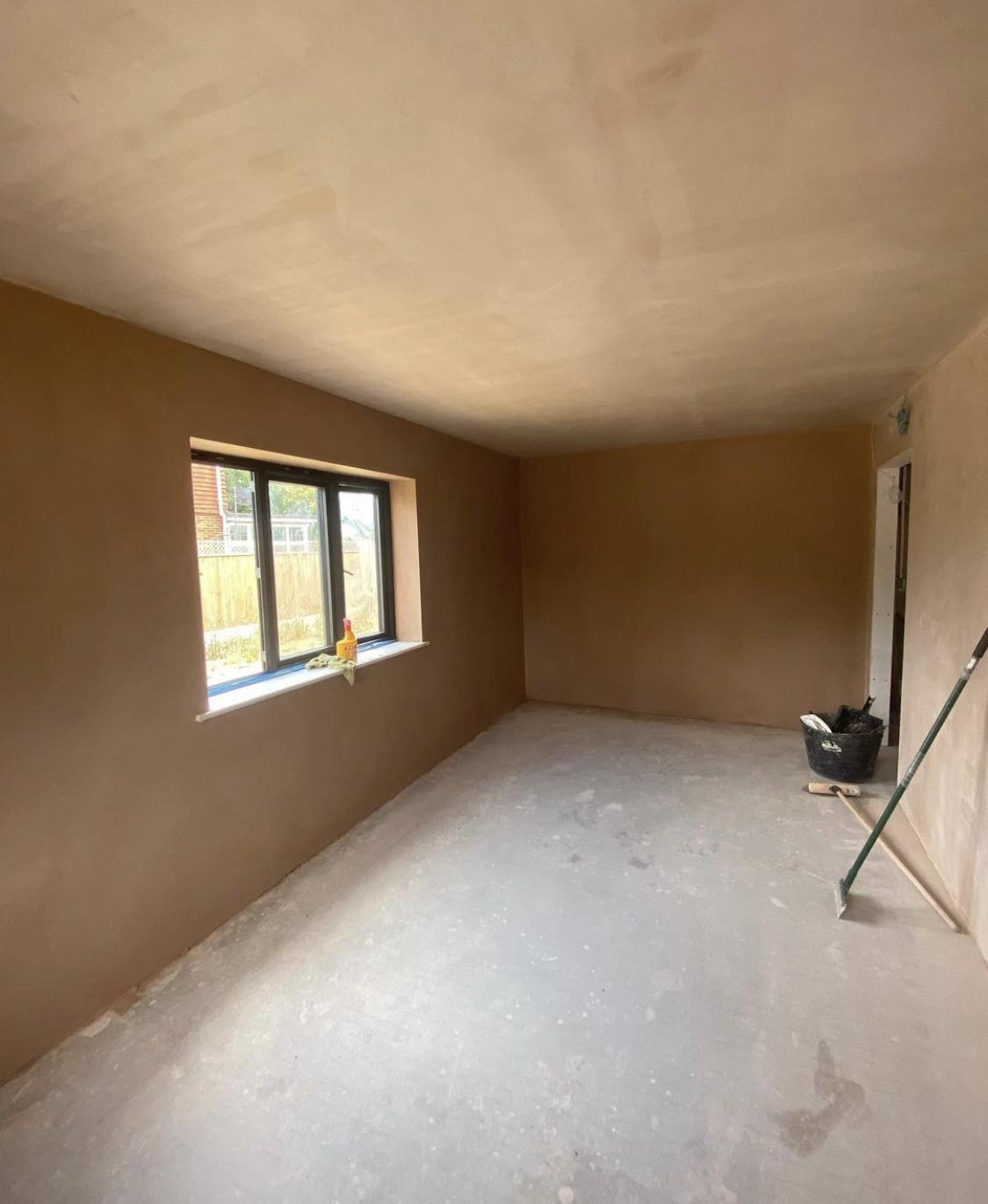
Solid walls from Georgian brick to Edwardian flint
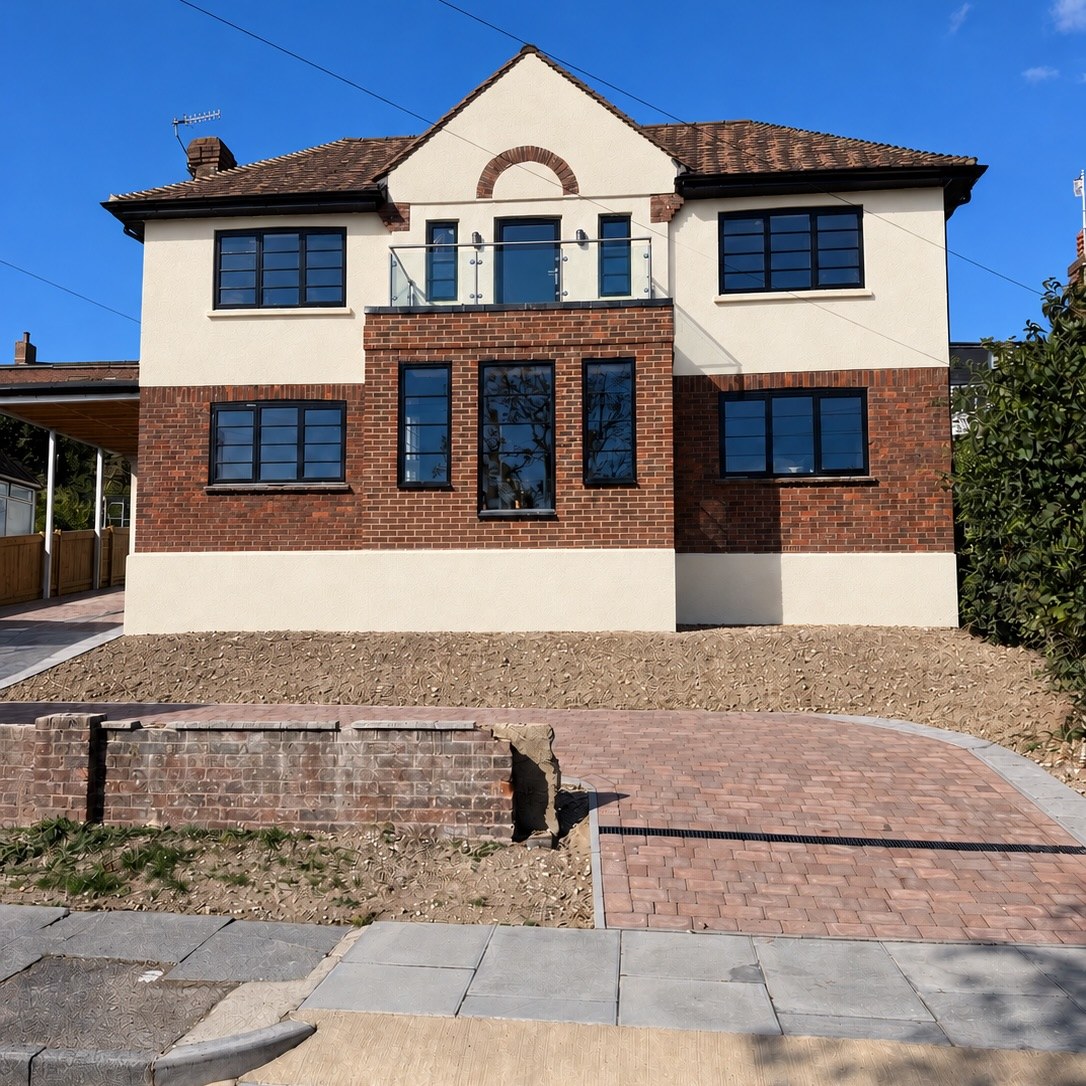
Float and set belongs to solid masonry, and Chichester has plenty of it. The Chichester Society describes how much of the city was rebuilt in brick in the Georgian period, giving rise to a flourishing brick industry, and how some older timber-framed houses in the Pallants were refronted in brick rather than rebuilt. Flint is the other local material: knapped flint with galletting, small chips of flint pressed into the mortar joints, appears on buildings in the centre, and in Summersdale the Edwardian pairs along The Broadway and Summersdale Road were built flint-faced.
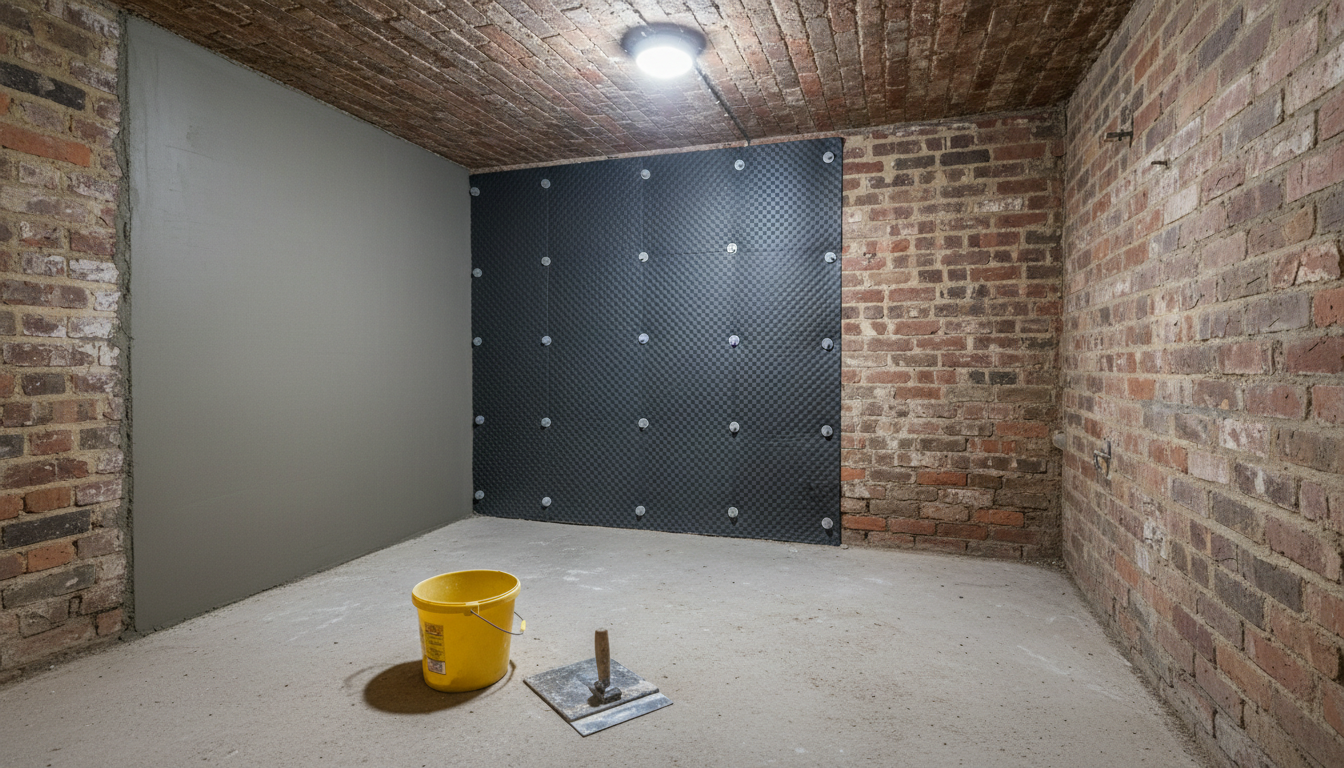
Those walls are why traditional floating still matters here. When old plaster is hacked off a Georgian brick wall or a flint-faced Edwardian one, there is nothing flat left to skim onto, and a backing coat has to rebuild the surface.
Mixed backgrounds in older houses
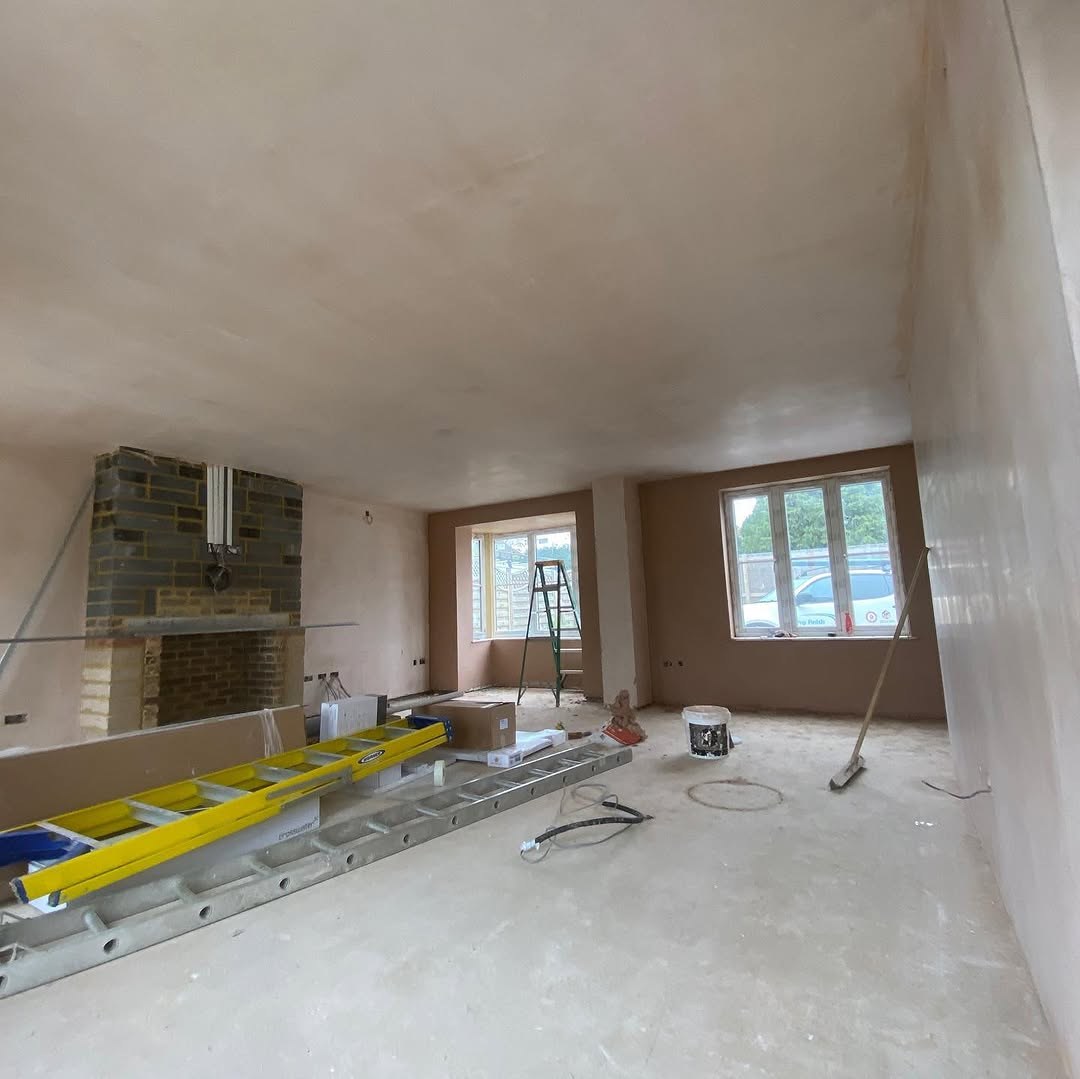
A house given a new brick front in the 18th century may still have timber framing behind or beside it, and an Edwardian villa can have brick, flint and later blockwork in the same room. Where two backgrounds meet, plaster tends to crack along the joint because they move differently. Good preparation deals with that before the float goes on: loose material out, joints reinforced, and timber sections boarded or lathed rather than floated directly. The backing material is chosen to suit the wall as well, because older solid brick and flint need to let moisture out, while modern block can take a standard gypsum system.
New blockwork in extensions and new homes
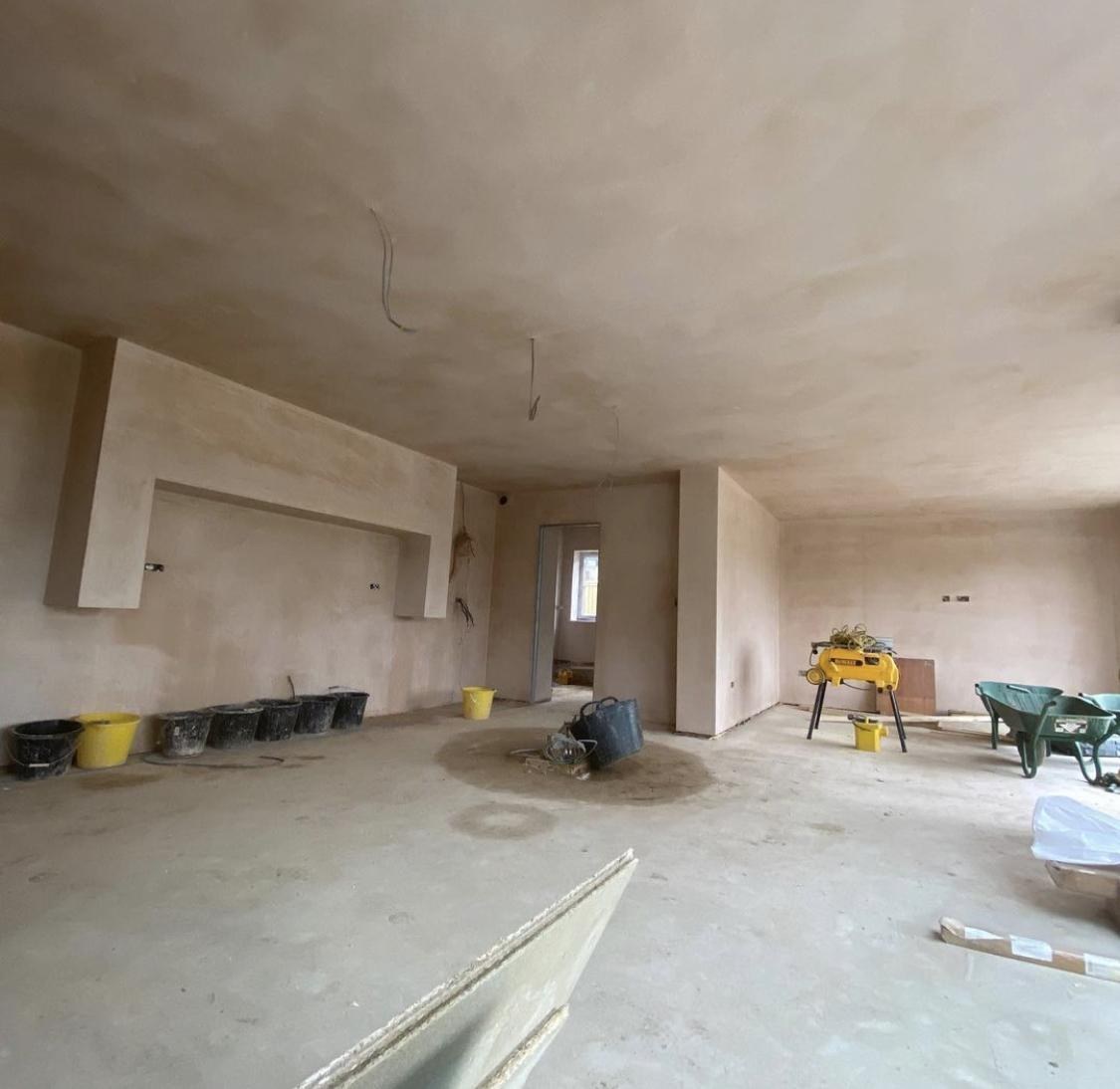
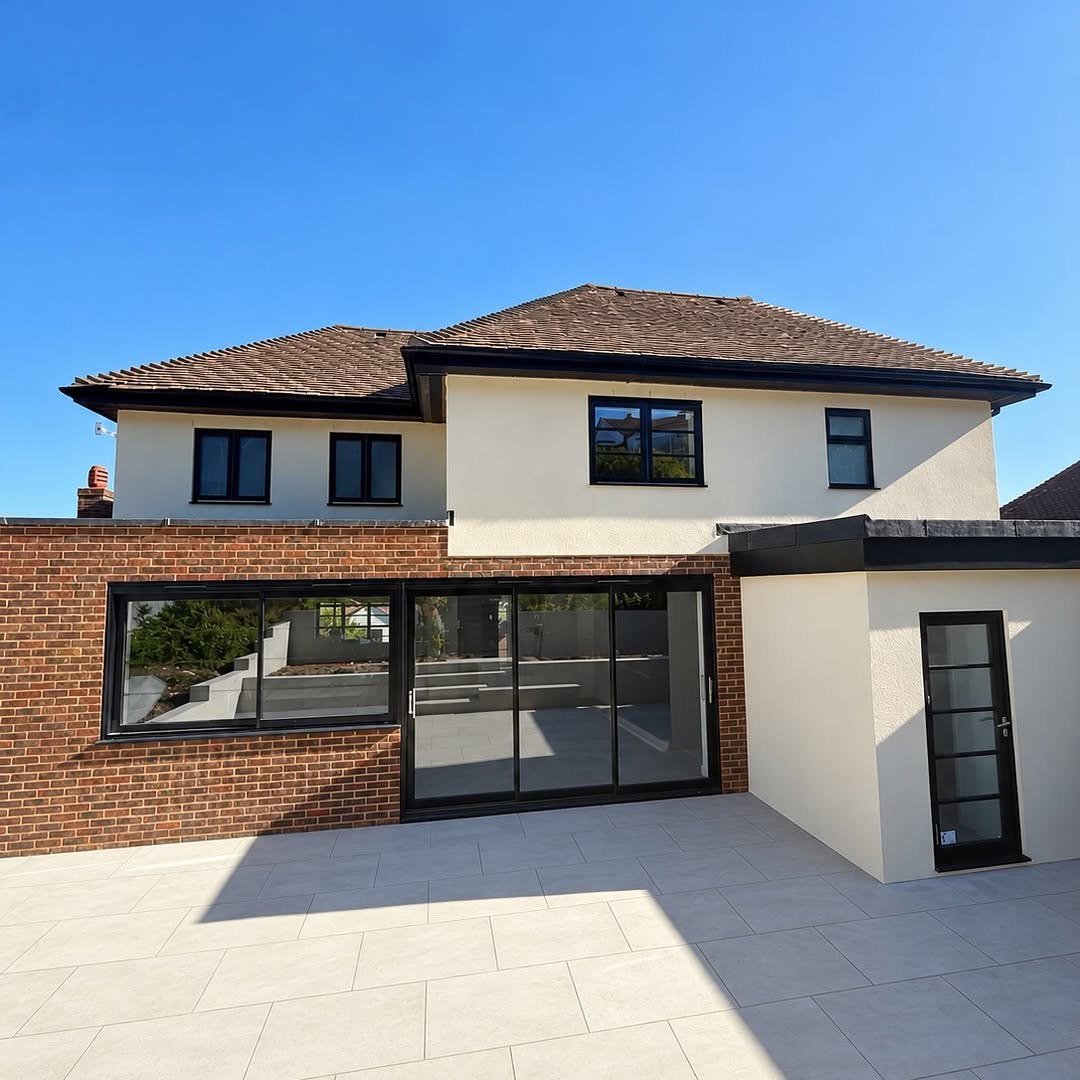
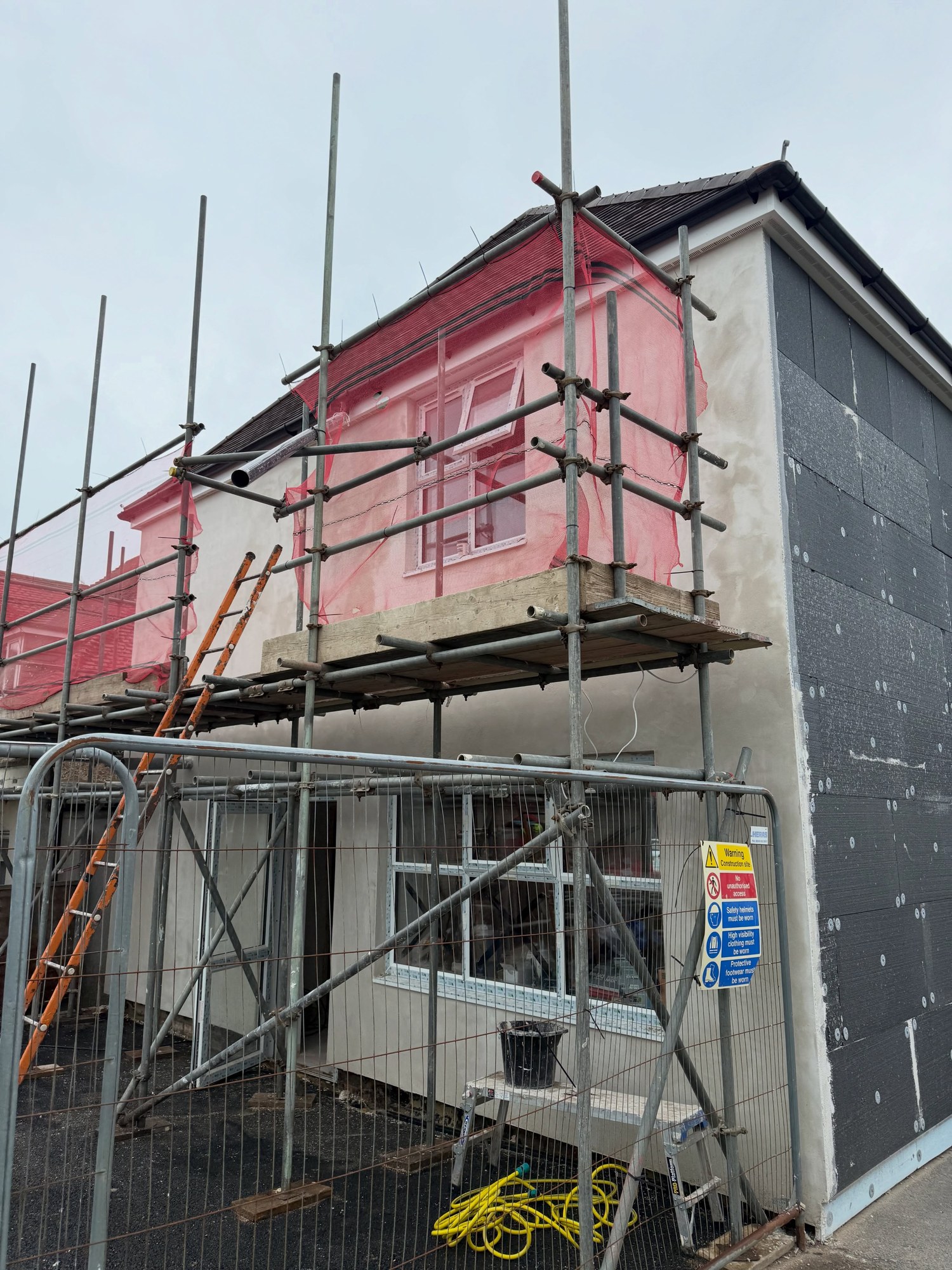
Not every floated wall is old. Rear extensions on Summersdale's generous plots, or on the 1960s and 70s houses of the East Broyle Estate, which a local history of the estate describes as ripe for extensions, are often built in block and finished with float and set for a hard, solid wall. Builders and developers putting up new homes around the city use the same method wherever block walls are not dry lined.
How the two coats go on
- Hack off failed plaster and clean the masonry back to a sound surface.
- Wet the wall or prime it, so absorbent old brick does not pull water out of the backing coat too quickly.
- Fix angle beads to corners and stop beads around openings.
- Lay on the float coat and rule it off with a straight edge, building deep hollows up in thinner layers.
- Scratch the surface for a key.
- Lay on the setting coat once the float has firmed, and trowel it smooth and tight.
Solid walls hold far more water than a skim, so allow extra drying time before decorating, particularly in winter.
When damp is behind the problem
Plaster that has blown low on a wall is often a sign of moisture rather than age. The cause needs fixing before any new plaster goes on, and the replacement must suit a wall that has been wet. Our page on damp proofing in Chichester explains how the source is traced. Once the wall is back to true, it takes the same smooth plaster skim used across the rest of the house.
More on the method is on our float and set plastering page, and everything we offer in the city is on our Chichester page. For free, no-obligation advice, call 07824 165672.