The old town's walls
The oldest houses in Littlehampton were not built with anything a plasterboard sheet would sit flat against. In the old village around Church Street and East Street, the Sussex Extensive Urban Survey records houses with knapped flint fronts and brick dressings: Hampton Cottage of around 1700 and Vine Cottage, dated 1727, both with rounded cobble flints on their other elevations. At 39 East Street a flint and brick exterior hides sixteenth-century timber framing, and Winterton Lodge at 34 East Street has an eighteenth-century core of flint cobbles. In Beach Town, the modest workers' cottages along the eastern part of Western Road were built mostly of flint cobble with brick dressings, while the grander houses of Surrey Street and the seafront went up in brick.
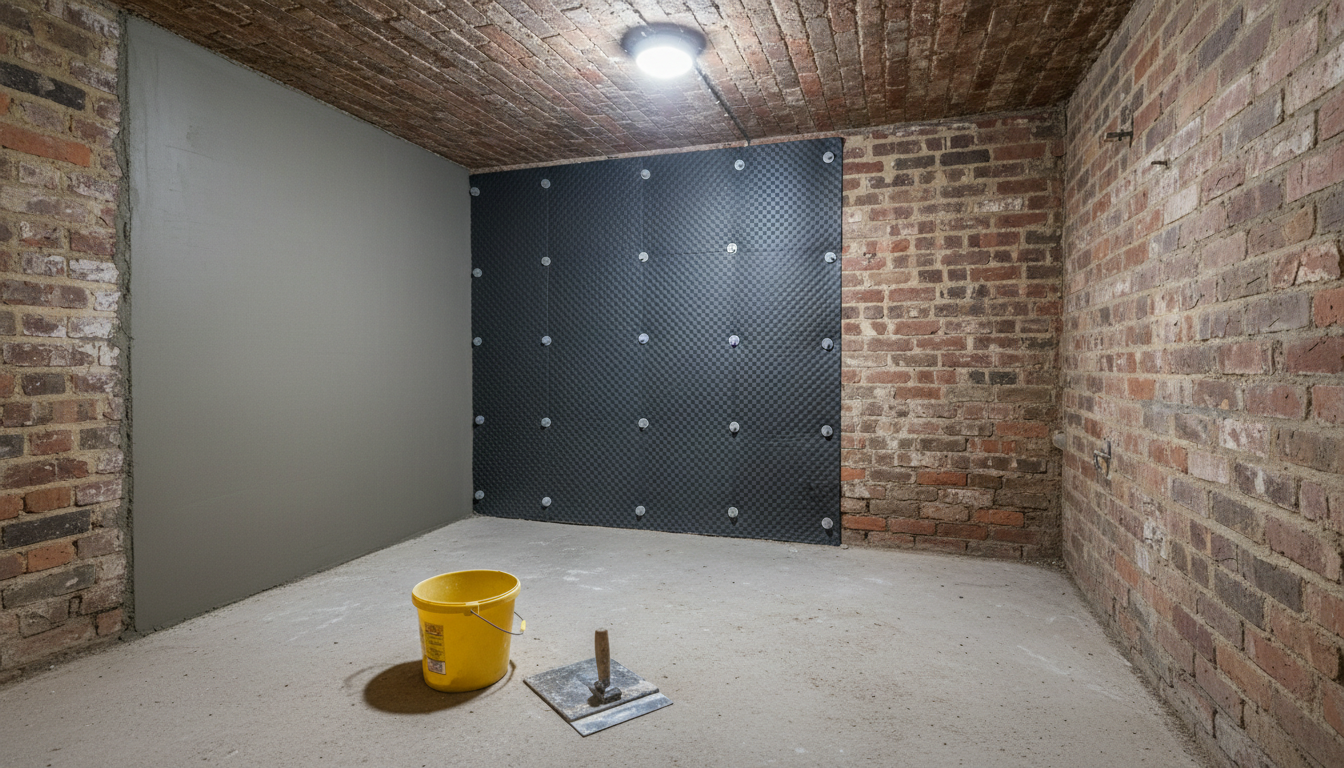
Flint is hard and irregular and was laid in generous beds of mortar, so the inside face of these walls is rarely anywhere near straight. A wall like that needs its hollows filled and its face ruled flat before any finish can go on, which is exactly what floating does.
Why the material matters on a solid wall
Older houses like these have solid walls with no cavity, and a solid wall needs to be able to give off moisture. When old plaster comes off, we look at what was there before choosing what goes back. A dense cement backing over soft old brick or flint can lock damp into the wall and push it out at the edges of the new work. If a wall failed because of damp in the first place, the cause has to be found and dealt with before replastering; our damp proofing service in Littlehampton explains how we approach that.
Building a floated wall
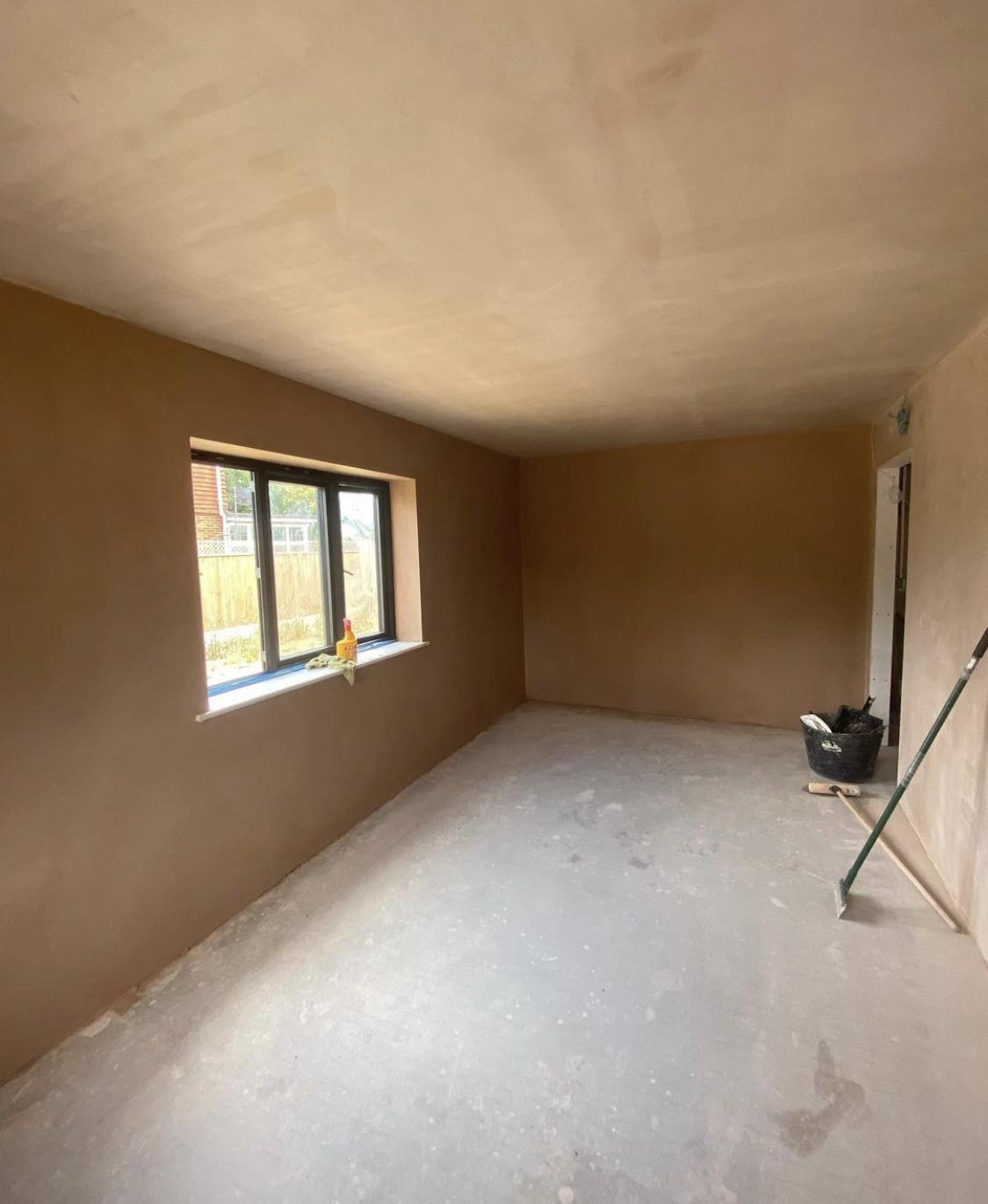
Preparation decides how the wall turns out. Loose material is raked out and brushed off, and the masonry is wetted or primed so the first coat does not lose its water to the wall too quickly. Corners and openings get beads. The backing coat is then spread and ruled off with a long straight edge, with deep hollows built up over two or three passes rather than one heavy layer, and the surface is scratched to give the next coat something to grip. When the backing has firmed, the setting coat is laid on and trowelled to a smooth, closed finish.
Extensions, new walls and repairs
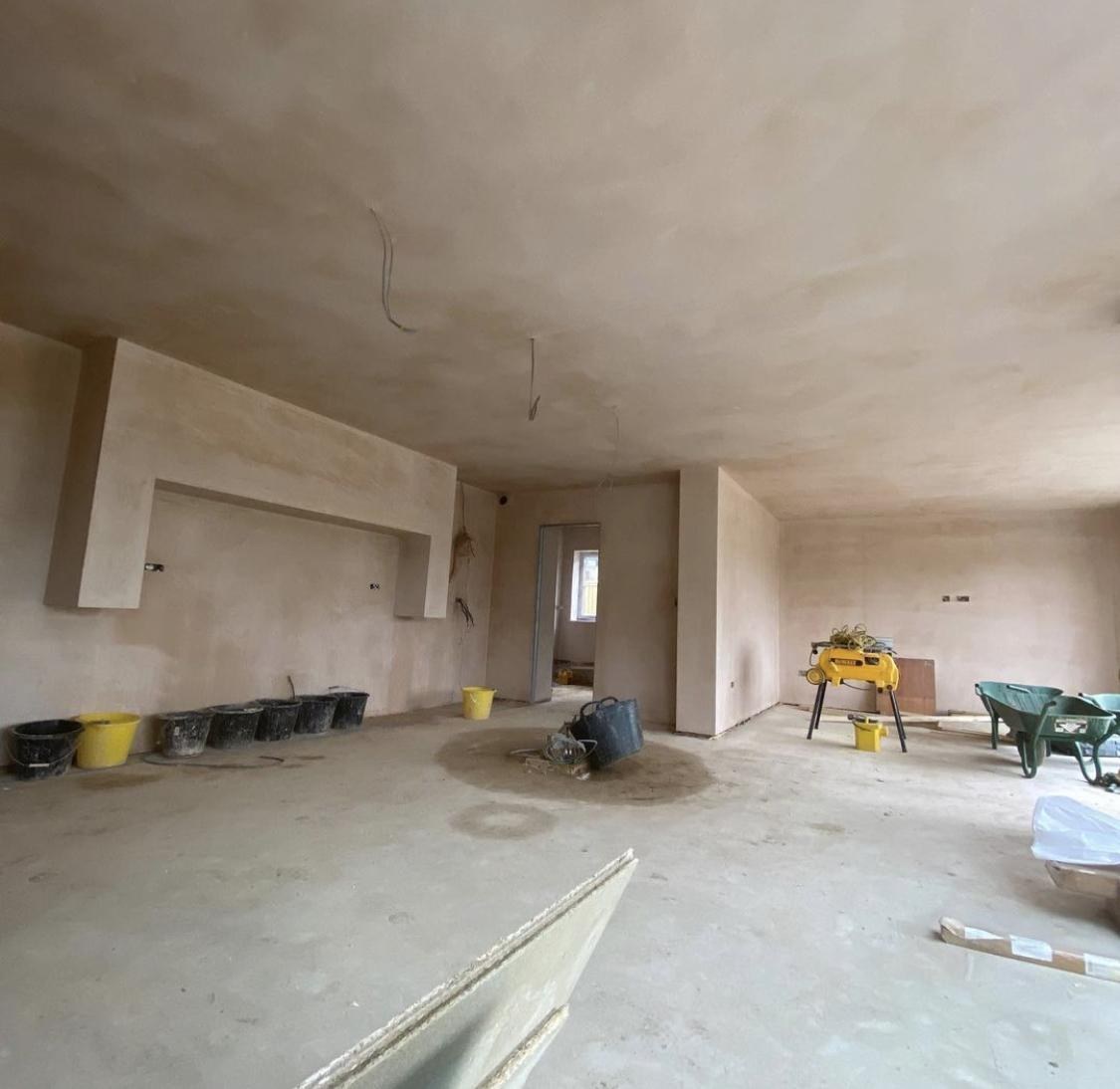
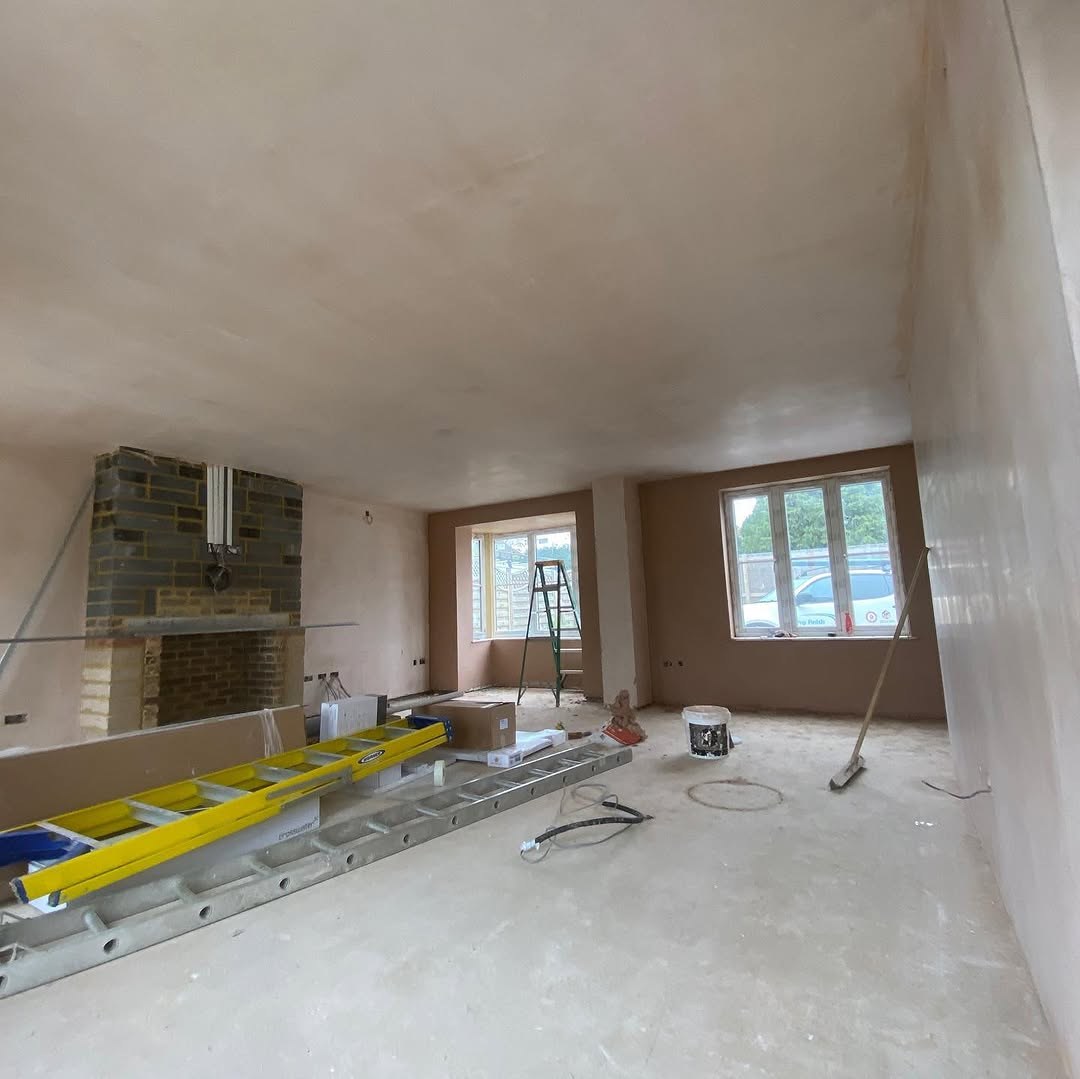
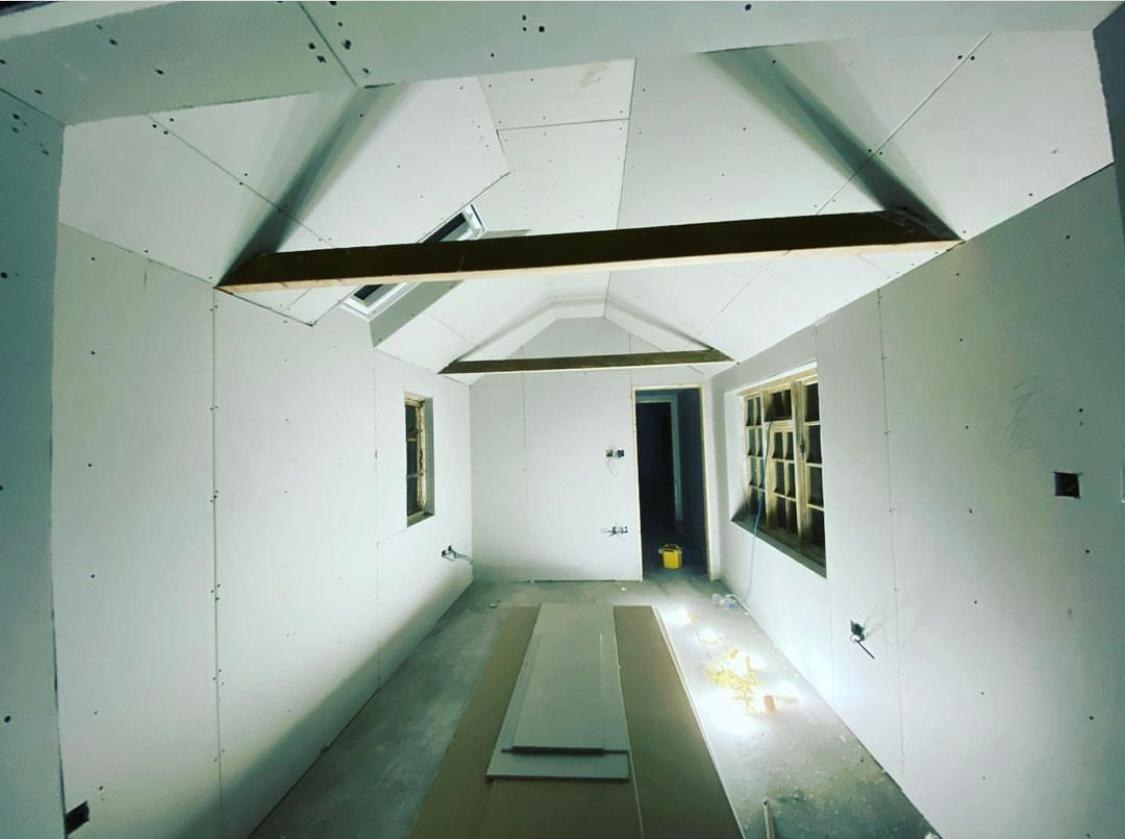
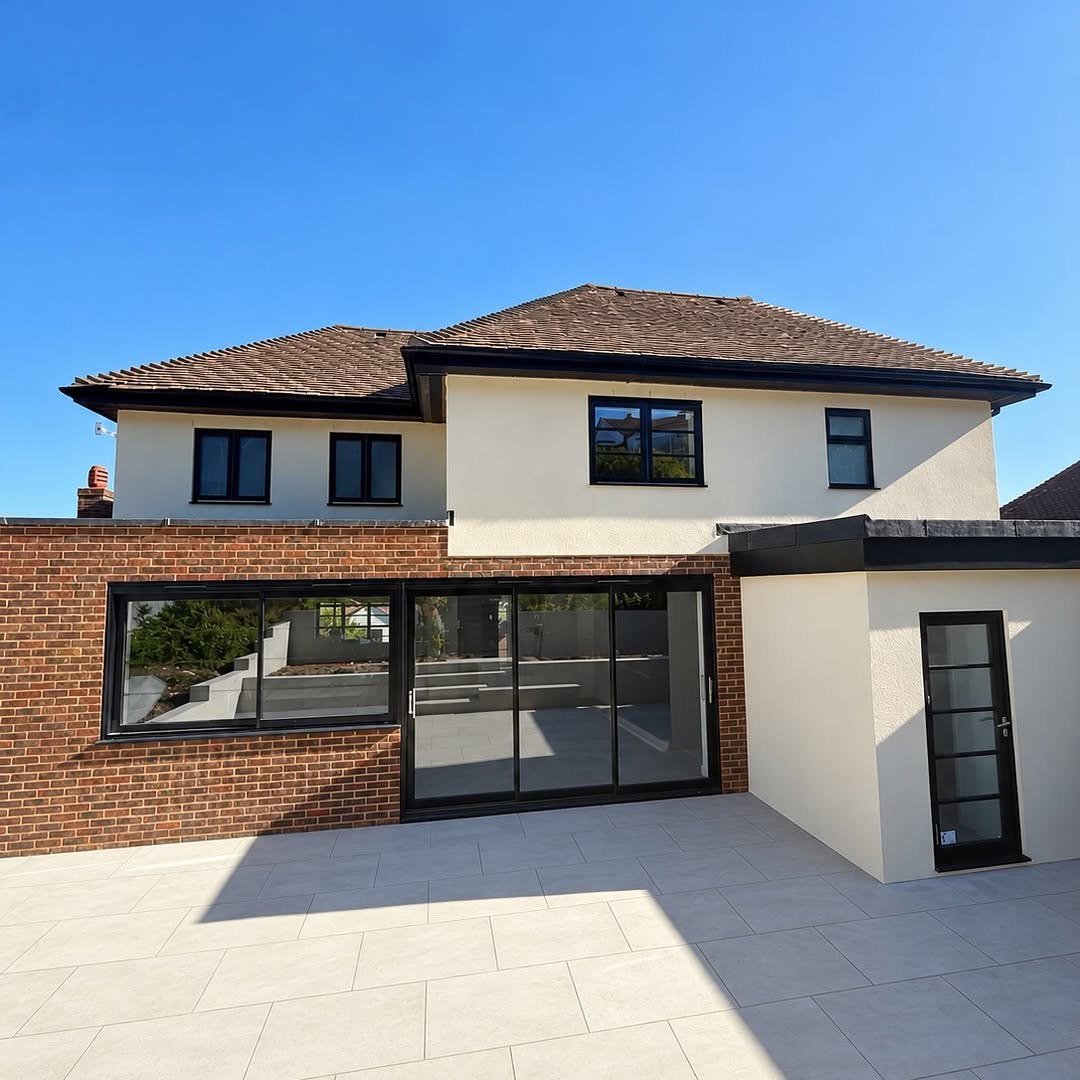
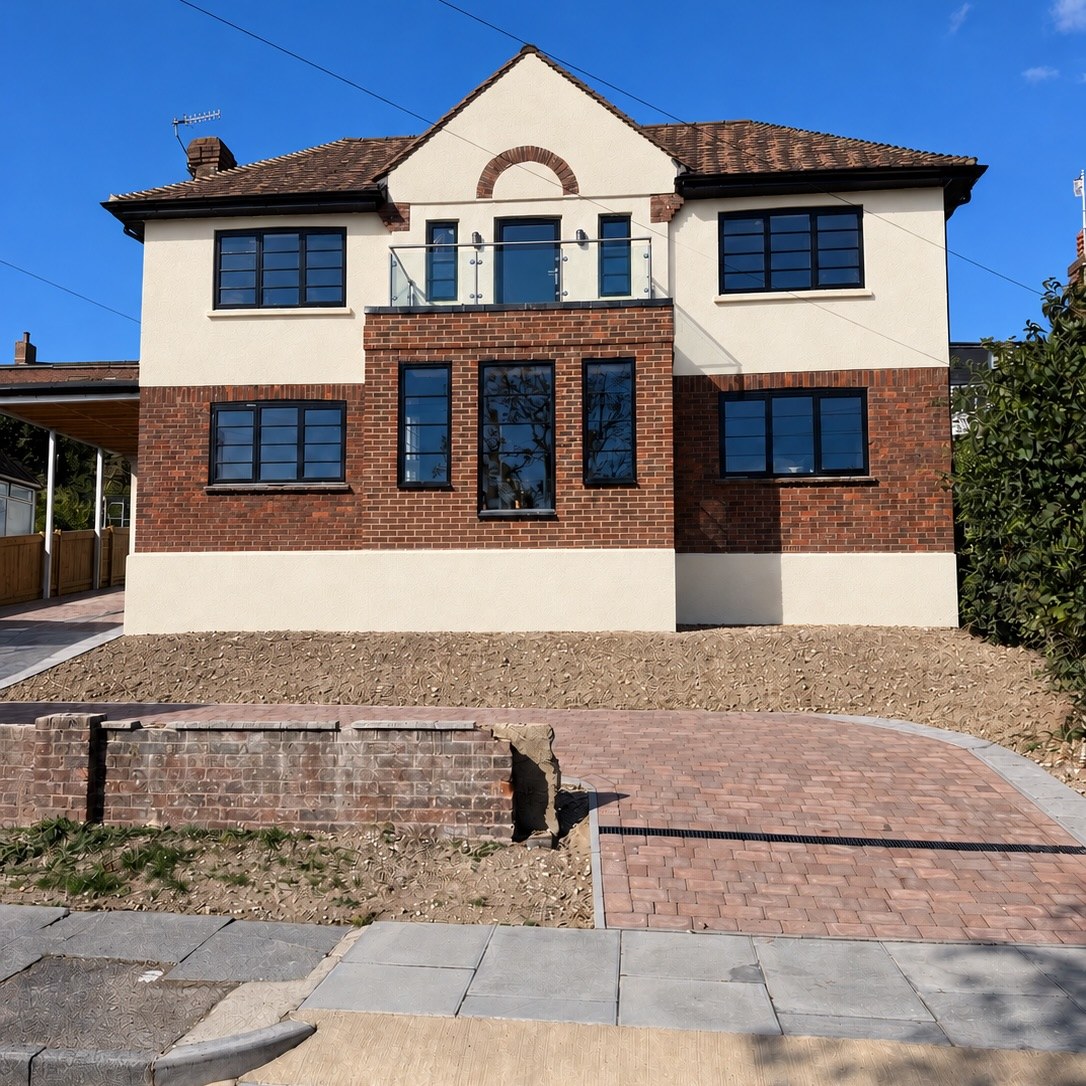
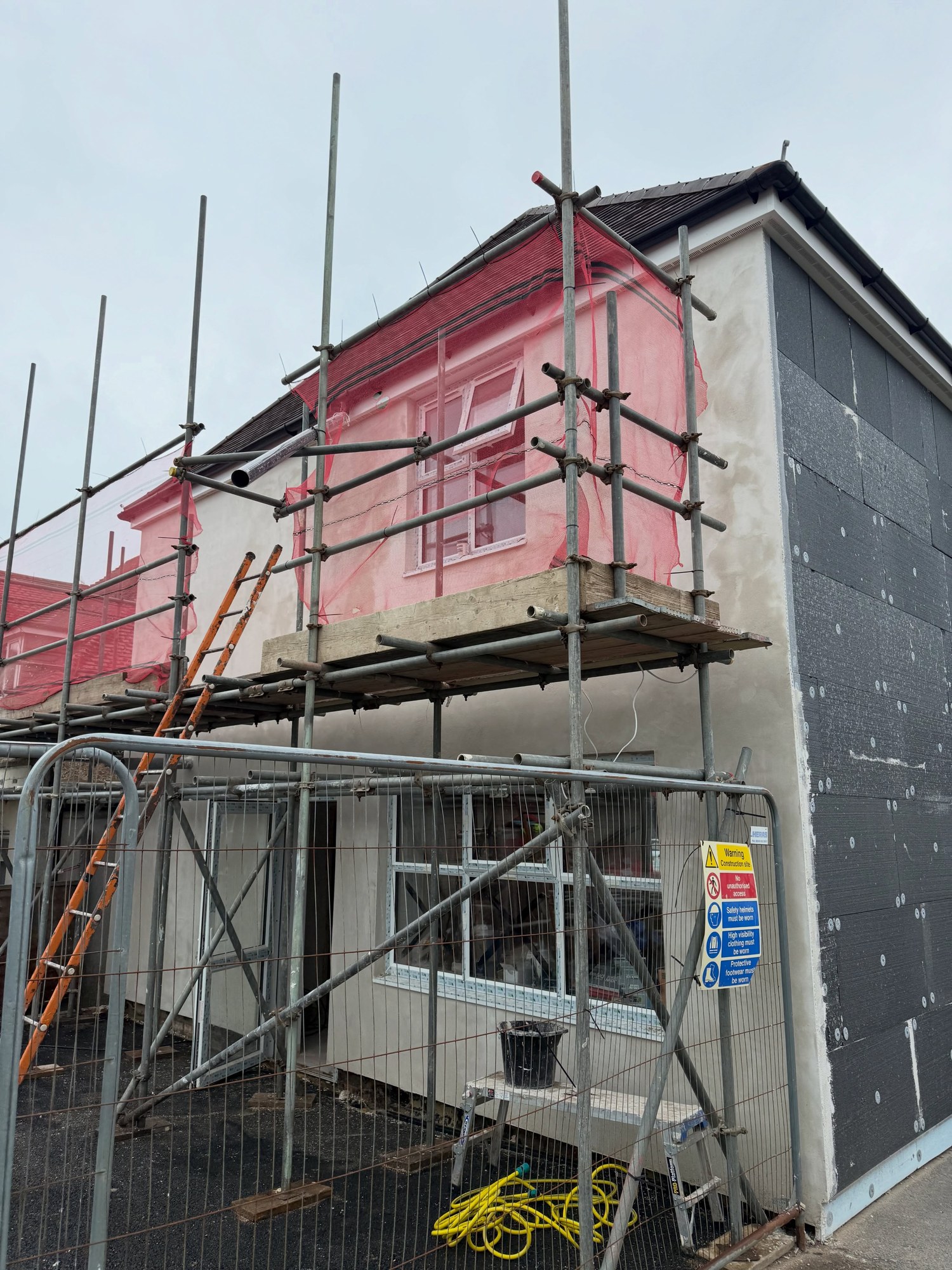
Float and set is not only for old houses. Blockwork extensions on the post-war streets around Wick and Courtwick, new internal block walls, and openings made for a knocked-through kitchen all need floating before they can be finished. On a new wall you can choose between floating and plasterboard: floating gives a hard, solid surface that holds heavy shelves and wall cupboards well, while boarding dries faster. Our page on plasterboarding and dry lining in Littlehampton covers the boarded route.
Planning ahead
Allow a floated wall plenty of drying time before painting, especially in winter in a house with solid walls. If the house is listed, or stands in the East Street or River Road conservation areas, talk to Arun District Council before work that alters historic fabric. See our float and set plastering page for more on the method, or the Littlehampton area page for everything we cover locally. Call 07824 165672 for free, no-obligation advice.