Solid plastering at Aldwick Bay
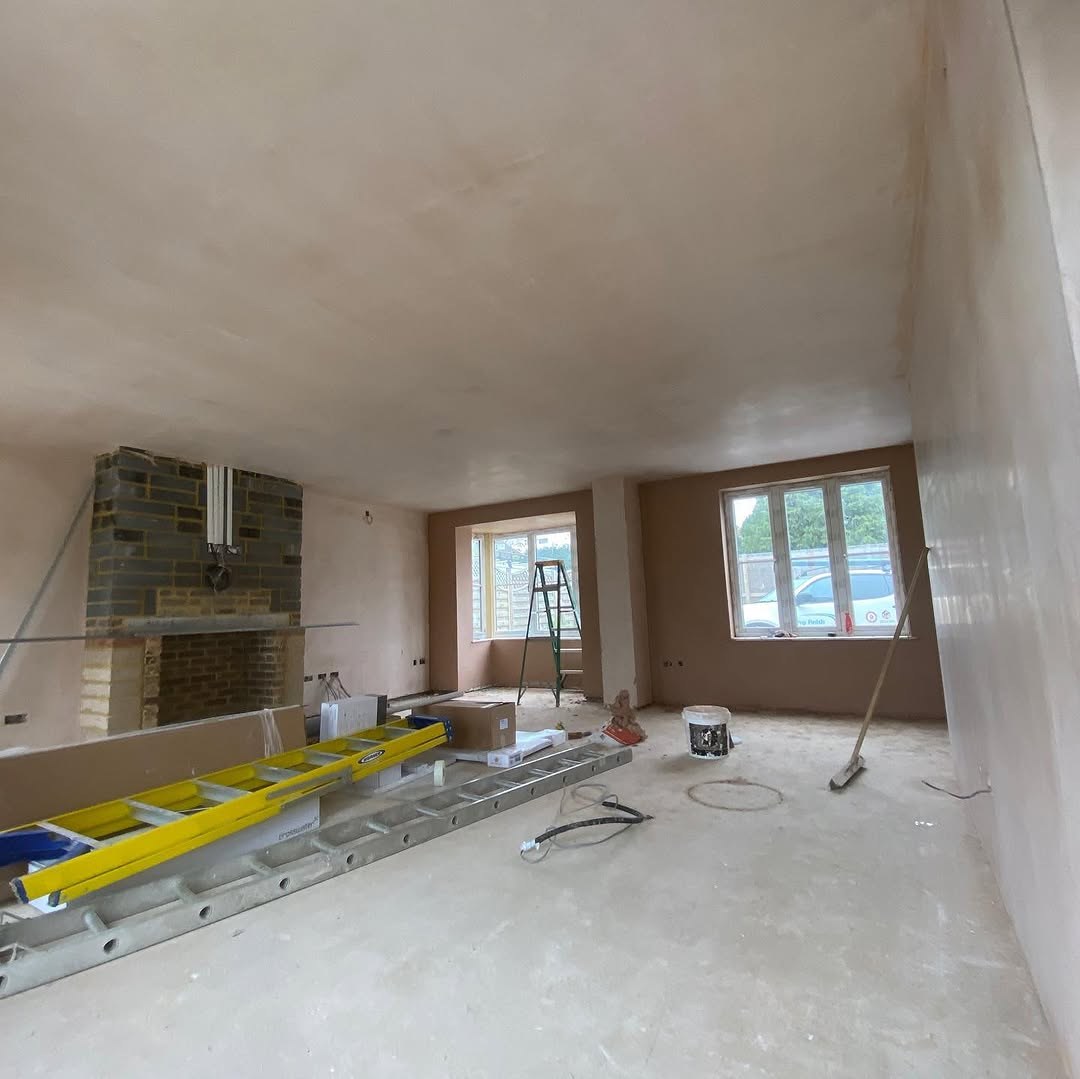
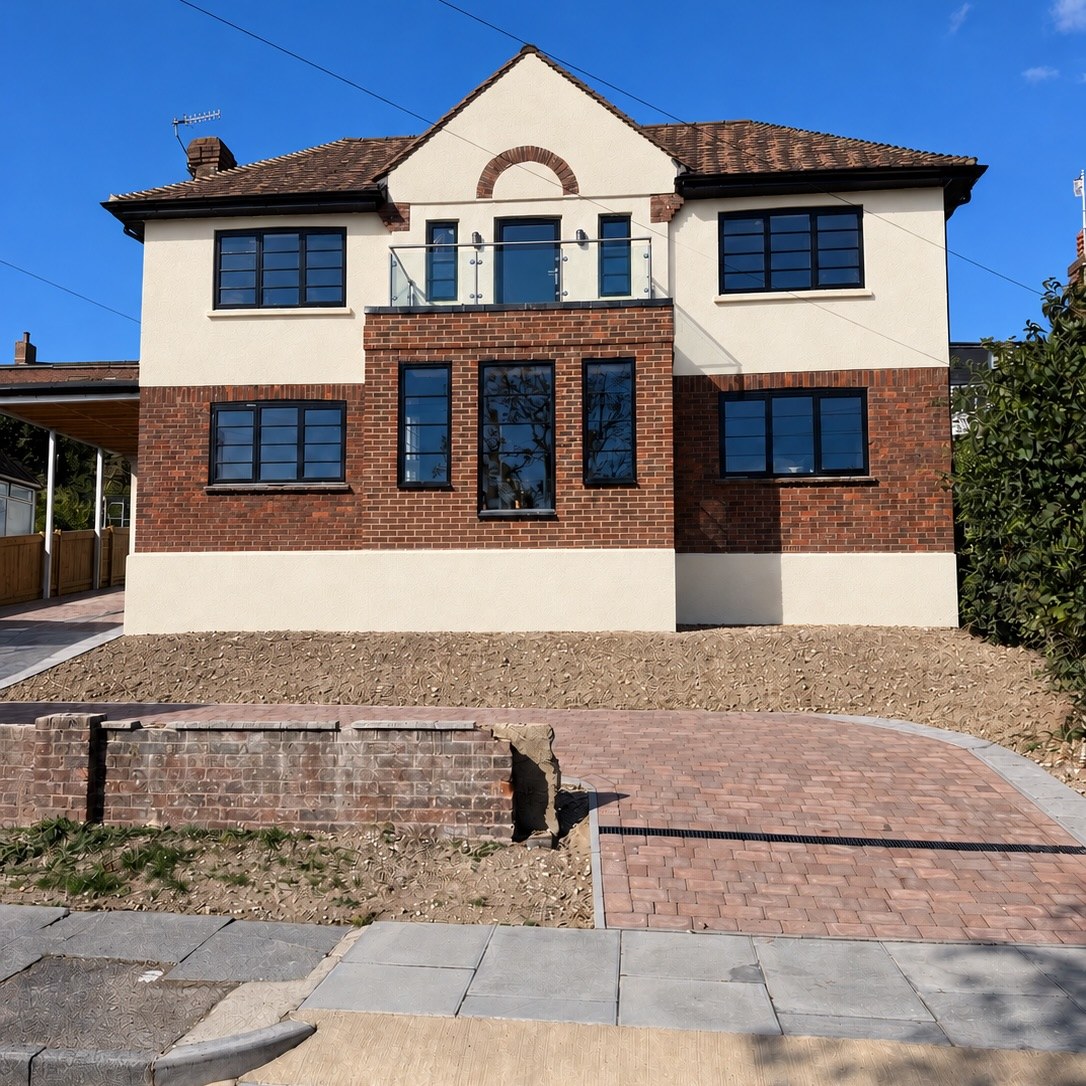
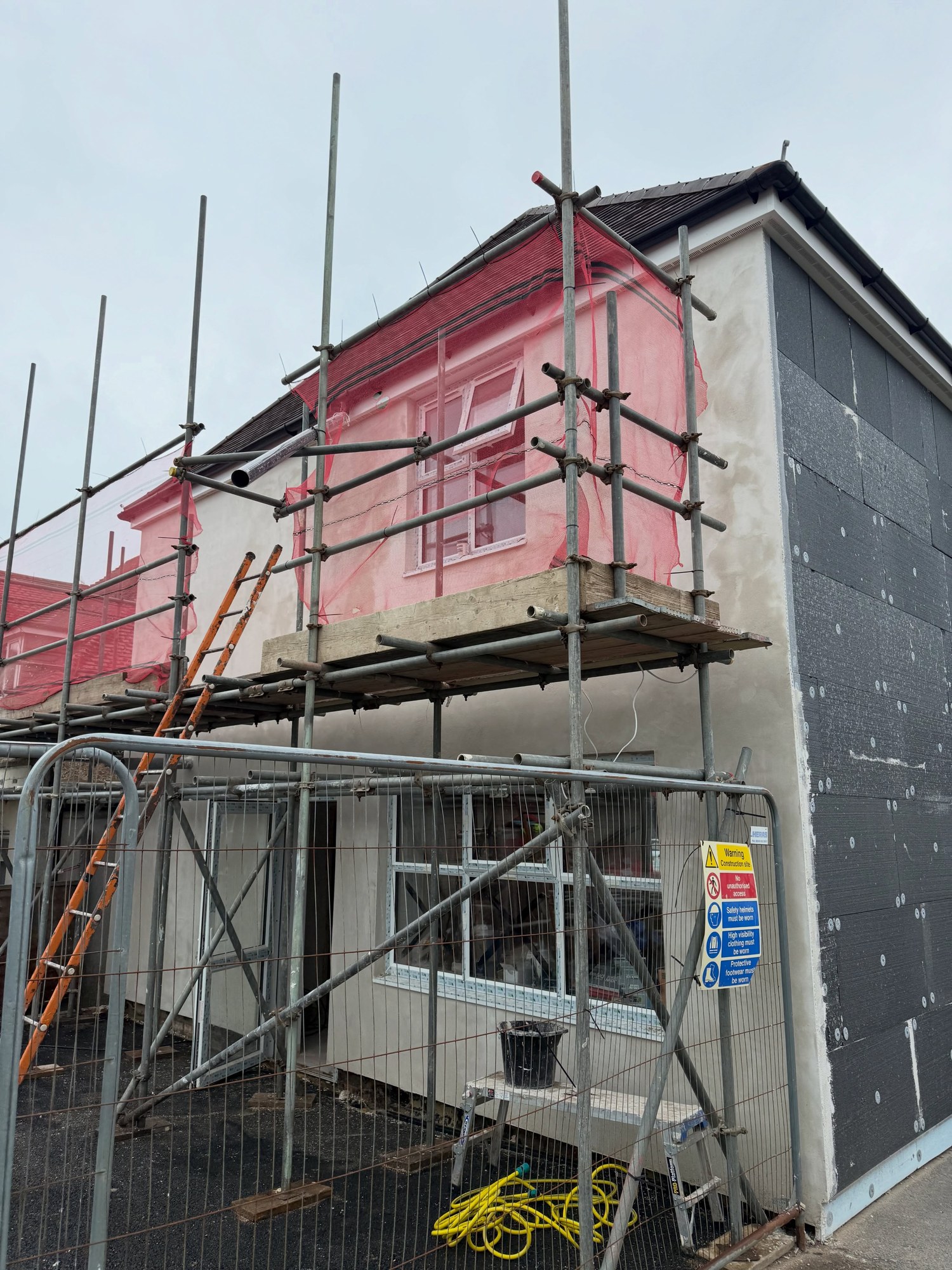
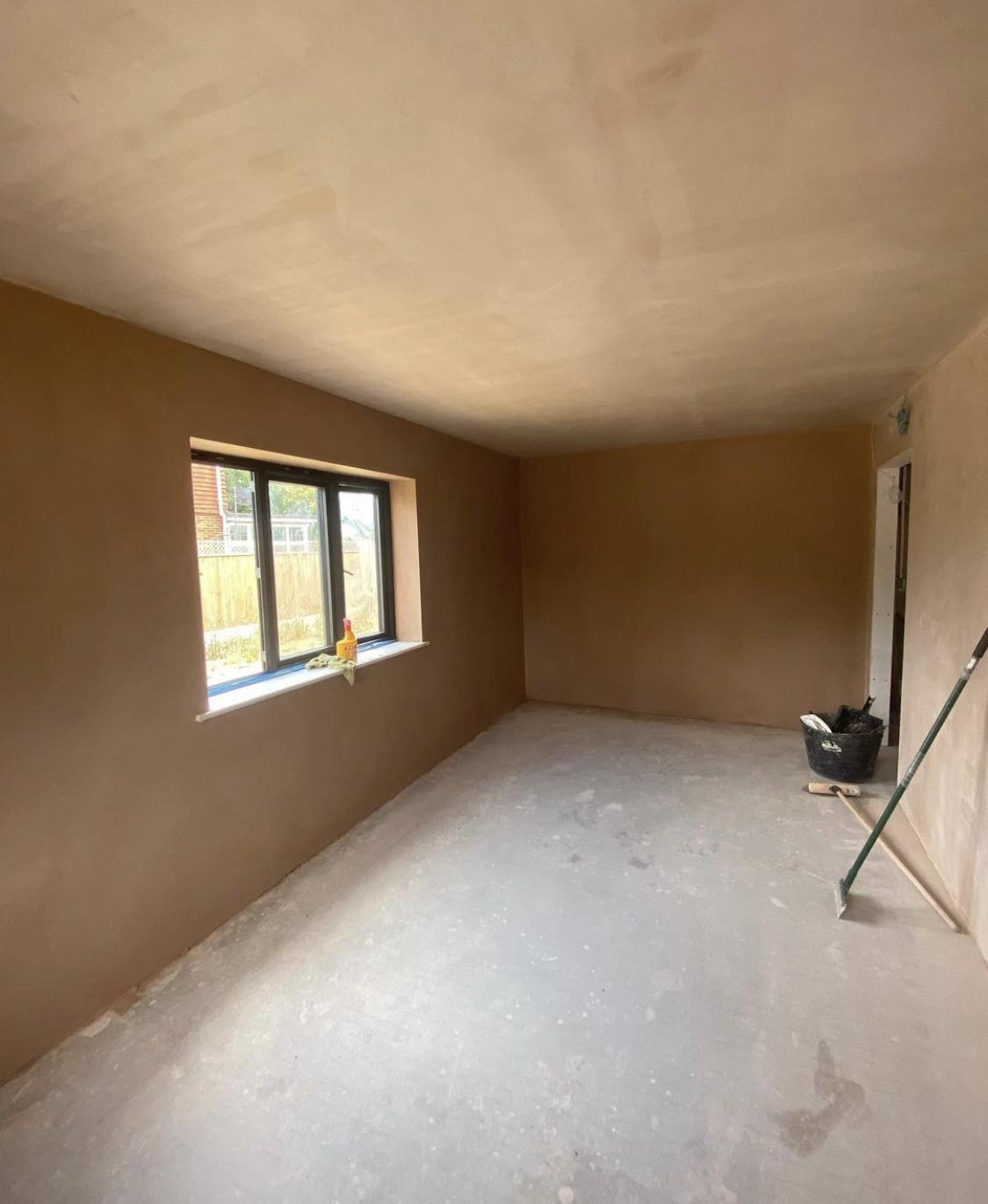
The clearest example of float and set work in Bognor Regis is our own. On a six bedroom new build at Aldwick Bay, on the western side of the town, every ground floor wall and the first floor external block walls were solid plastered: a backing coat applied to the blockwork and ruled flat, then a finish coat set over it. The loft and the first floor partitions and ceilings were tacked with plasterboard, and once the solid walls were in, every wall and ceiling was skimmed so the whole house finished to the same standard. There is more on that job, and on our other projects, on our projects page.
Why solid walls downstairs and boards upstairs? Each suits its place. A floated wall is hard, takes heavy fixings such as kitchen units and wall-hung radiators, and stands up to everyday knocks in busy ground floor rooms. Boards on timber or metal are lighter and quicker where that strength matters less. Our page on plasterboarding and dry lining in Bognor Regis covers the boarded side.
Older walls: brick, flint and Bognor Rock
Bognor's older buildings were not built in modern block. West Sussex County Council's historic survey of the town notes that eighteenth-century buildings here used flint, both as cobbles and carefully knapped, with brick dressings and local Bognor Rock, a calcareous sandstone. Surviving examples include cottages in the old village of South Bersted, such as those on Bersted Street, and a flint-cobble cottage on Mead Lane. From the Victorian period onwards, brick became the main material.
All of these are solid walls with no cavity, and they handle moisture differently from blockwork. A flint or rubble wall needs to breathe, so where old plaster has failed on one, we talk through the materials before anything goes on, and a lime-based backing is often the right choice rather than a hard modern mix. On Victorian and Edwardian brick terraces, such as those built south of the station on Southover Road and Gainsboro Road, a conventional float and set onto the brickwork usually works well once the wall is sound and dry.
When a wall has to be floated
In Bognor, the usual triggers for floating a wall are:
- Plaster removed after damp or flooding. Parts of the town were affected by flooding in June 2012 and again in autumn 2023. Once the cause is dealt with and the wall has dried, the bare masonry has to be floated before it can be finished.
- Opening up older houses. Knocking two rooms together, removing a chimney breast or forming a new doorway leaves raw brick that needs bringing back to a flat line.
- Walls too far out of true for a skim. Decades of patching in a period terrace can leave a wall that no skim will hide.
- New blockwork in extensions and new builds.
How long it takes to dry
A floated wall carries far more water than a skimmed one. In a seafront house in winter, with damp air and short days, it can take noticeably longer to dry than the same job in summer. Keep the room ventilated and gently warm, and wait for an even, pale colour across the whole wall before the mist coat goes on.
If damp was the reason the old plaster failed, deal with it first: our damp proofing page for Bognor Regis explains how. For more detail on the method itself, read about traditional float and set plastering, or see the full list of services we cover in Bognor Regis. Free advice and quotes on 07824 165672.