Old walls in the heart of the village
Rustington's oldest houses sit in the conservation area that runs from the south end of North Lane to The Lamb in The Street, which holds more listed buildings from before 1850 than anywhere else in the post town. Their listing descriptions show what the walls are made of. Walnut Tree House in The Street, of the 17th century or earlier, is faced with flints and red brick dressings and has a crow-stepped flint chimney breast. Mitchells Cottage and Pound Cottage are faced with cobbles. The Manor Club started life as a timber-framed building and was later refaced in flint. Further out, Woodbine Cottage in Mill Lane has the date 1708 scratched on a tile, and the north wing of Hobbs Farmhouse in Sea Lane carries a panel dated 1690.
Walls like these are solid, irregular and need to dry out to the inside as well as the outside. When old plaster has failed and been hacked off, the backing coat has to suit that masonry, so we talk through breathable options with you before anything goes on rather than reaching for whatever is quickest. Hard cement-based repairs from past decades can trap moisture against flint, which is one reason old cottage walls sometimes show damp patches after a modern patch. Where a cottage is listed, replacing historic plaster can need listed building consent from Arun District Council, so check before anyone starts stripping walls.
Brick houses, bungalows and new blockwork
Away from The Street, the walls are usually newer. The pre-war roads of bungalows, semis and terraces have brick walls that may have been patched by several owners, and a wall opened up for a new doorway, a removed chimney breast or a rewire can be too far out of true for a skim to hide. A backing coat ruled flat with a straight edge brings it back to a true surface.
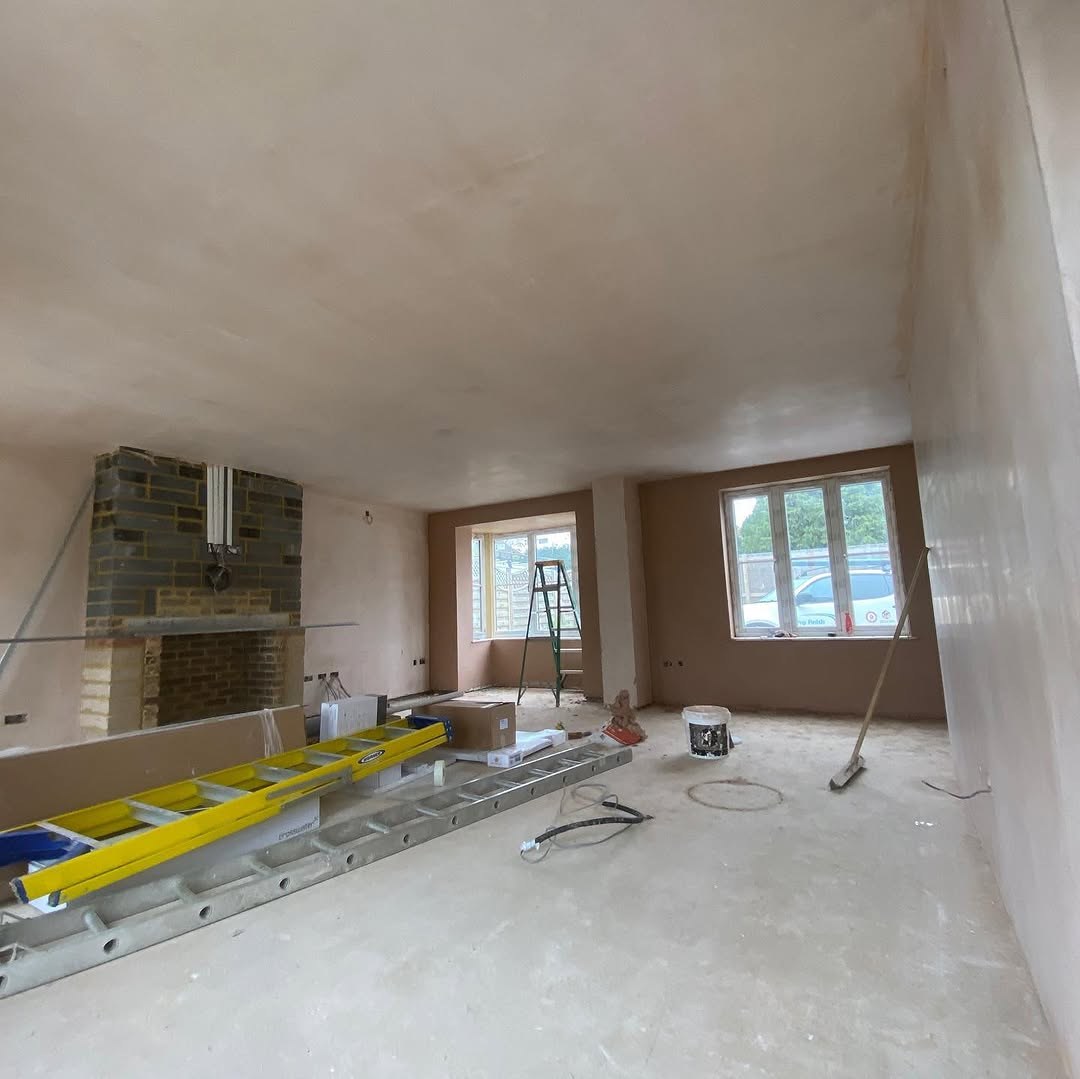
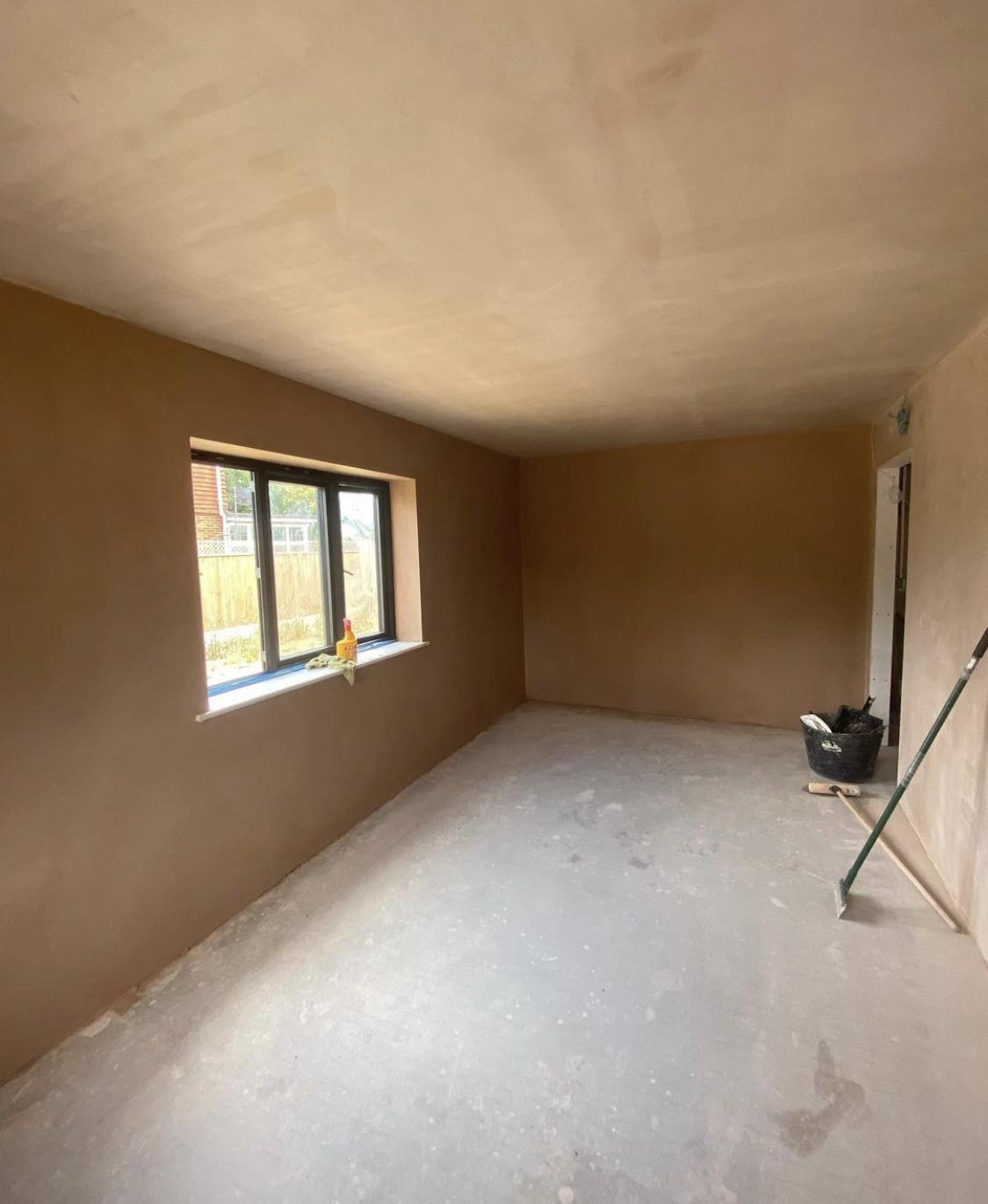
Extensions are the other common reason for floating. When a bungalow or family house gains a new room at the back or side, its blockwork walls are floated and set to give a hard, solid finish that takes heavy fixings such as kitchen units, radiators and shelving.
How the job goes
- The wall is cleared, loose material is removed and the background is wetted or primed so the backing coat does not dry too fast.
- Beads go on corners and around openings so the edges finish crisp.
- The float coat is applied and ruled off flat and plumb, building up deep hollows in layers.
- Its surface is keyed, and once it has firmed up the finish coat is trowelled smooth.
- The wall is left to dry through before decorating, which takes longer than a skim.
Where a newly floated wall meets an existing plastered one, the junction is feathered in so the line disappears once the room is painted.
Choosing between methods
If the wall is sound and already flat, a skim may be all it needs, which our plastering and skimming page for Rustington covers. On new stud walls or where speed matters, plasterboard and dry lining in Rustington may suit better. For the full method, see our float and set service, and for other trades we cover in the village, the Rustington page. To arrange a visit, call 07824 165672; advice and quotes are free and carry no obligation.