A century of building in one village
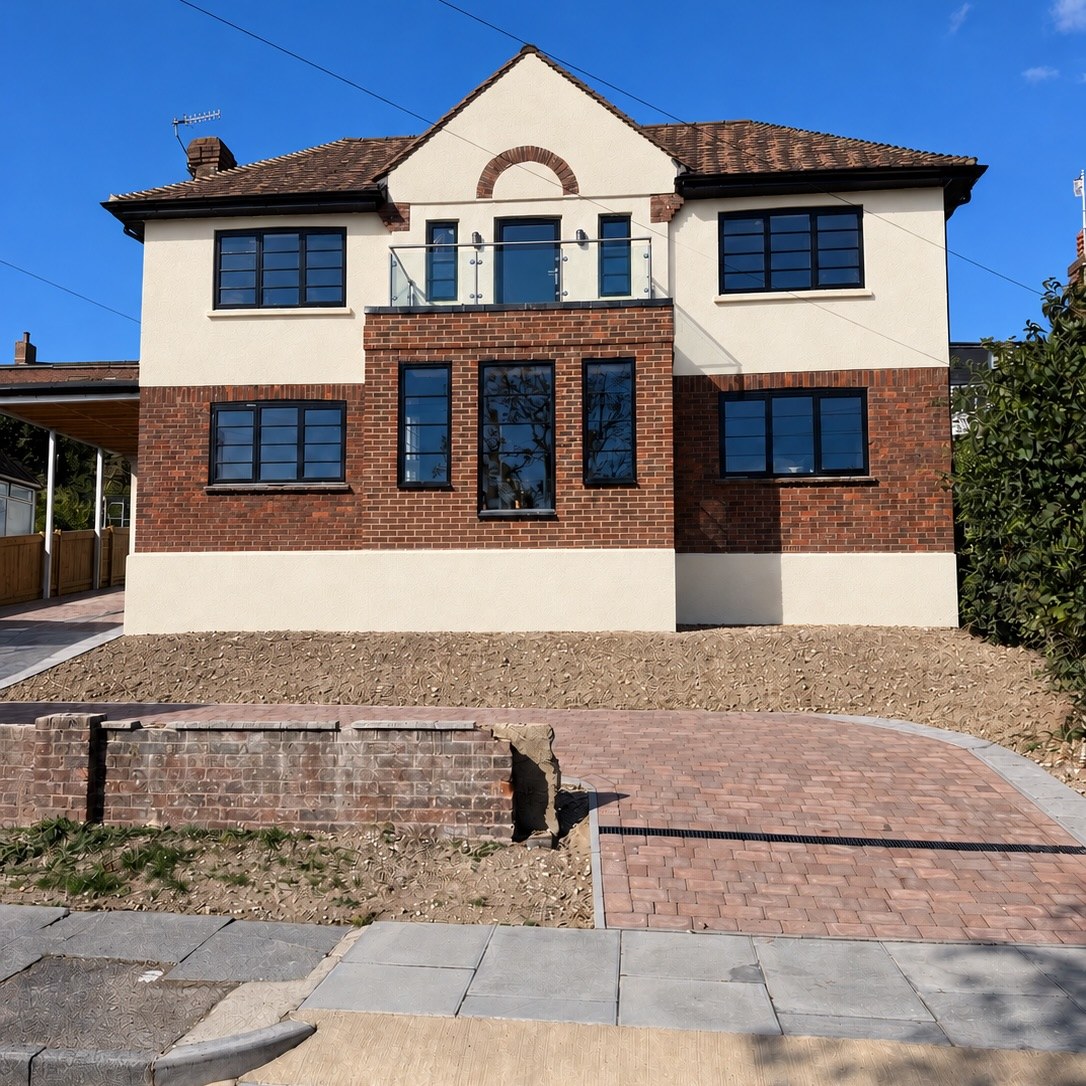
Angmering's walls tell the story of its growth. Arun District Council's 2026 conservation area appraisal records a population of 1,232 in 1931, rising from 2,850 in 1961 to 4,816 in 1971, and by 2023 it had reached about 10,100. The Angmering Neighbourhood Plan maps what that growth left behind: 1930s council houses and bungalows around Palmer Road and Arundel Road, 1930s Garden City style homes on Mill Road and Lansdowne Road, the 1960s and 1970s estates of North and South Angmering, the 1980s bungalows and chalet houses of The Dell, and Bramley Green with around 600 homes. More recent building has spread along Roundstone Lane, Weavers Hill and either side of Water Lane. A plasterer working across the village meets almost every kind of wall and ceiling within a mile.
What each generation of house tends to need
The 1930s houses are the most variable. Many have been rewired, re-plumbed and knocked through more than once, so walls carry a patchwork of old plaster, filler and newer repairs. A wall like that may take a skim if it is sound, or need taking back and floating if it is hollow or badly out of line; our page on float and set plastering in Angmering explains the difference. Homes from the 1960s and 1970s usually have plasterboard ceilings, and the common jobs there are cracked joints, old textures and rooms reshaped when a kitchen or bathroom is moved.
On Bramley Green, plasterboard is generally in good order, and most requests are for a fresh skim after an alteration, a garage conversion or an extension. On the newest developments, the usual job is making good the small cracks and popped screws that appear as a house settles in its first few years.
Landlords, builders and developers
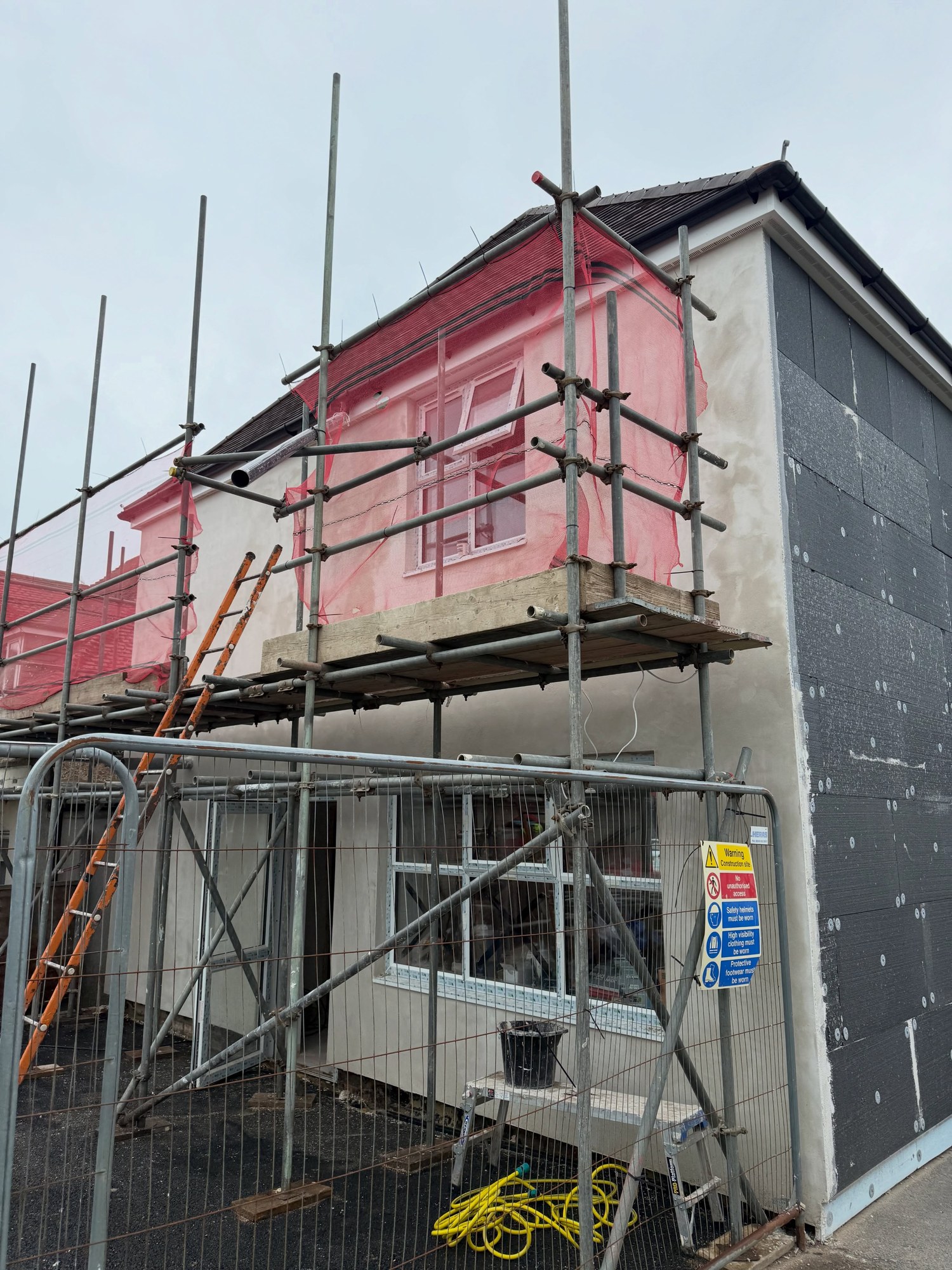
We work for homeowners, landlords, builders, developers and architects. A landlord between tenancies usually needs rooms made good and ready to paint with as little downtime as possible, while a builder on an extension needs the plastering to fit in with the other trades. New partitions and lofts are often boarded first, which our page on plasterboarding and dry lining in Angmering covers.
How a job is organised
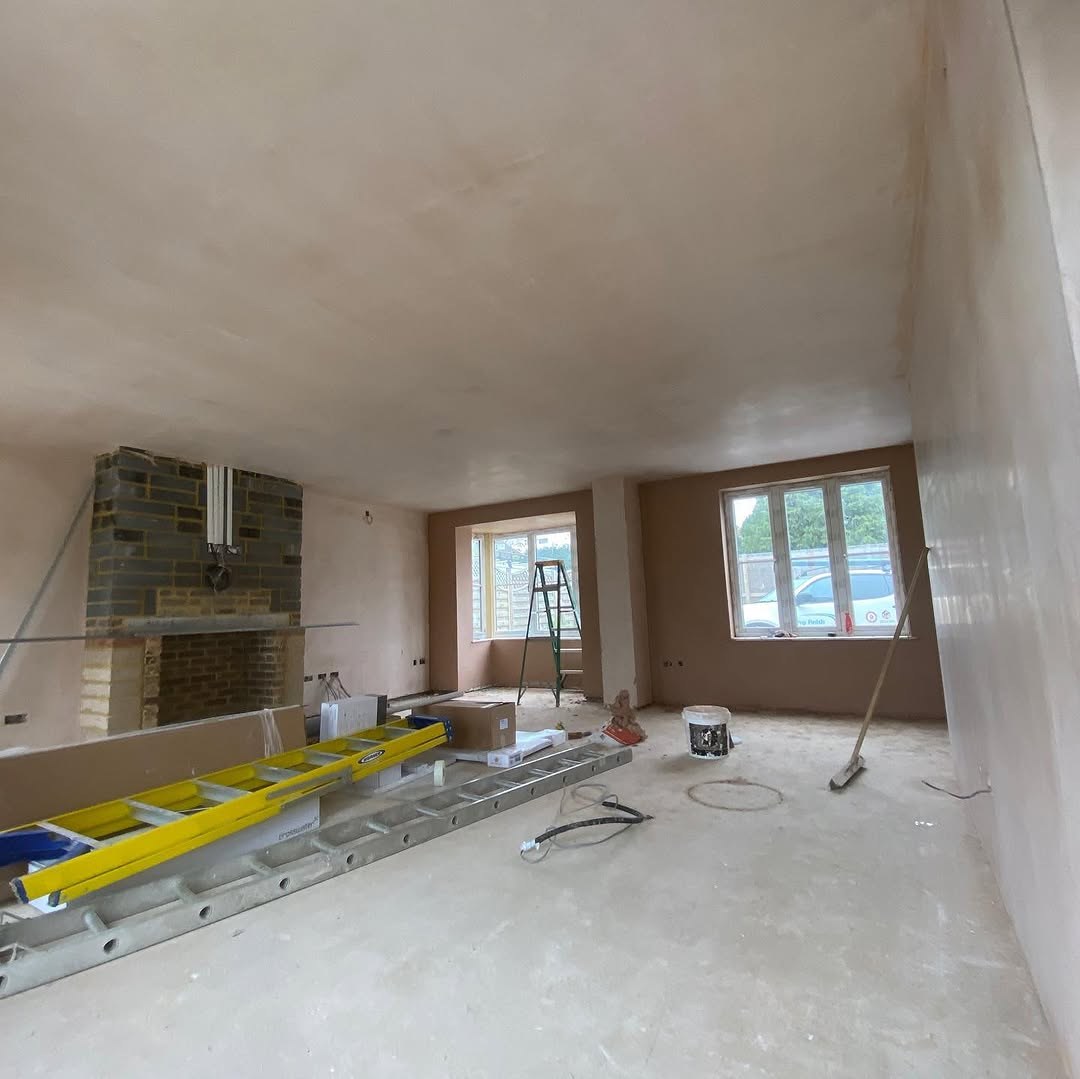
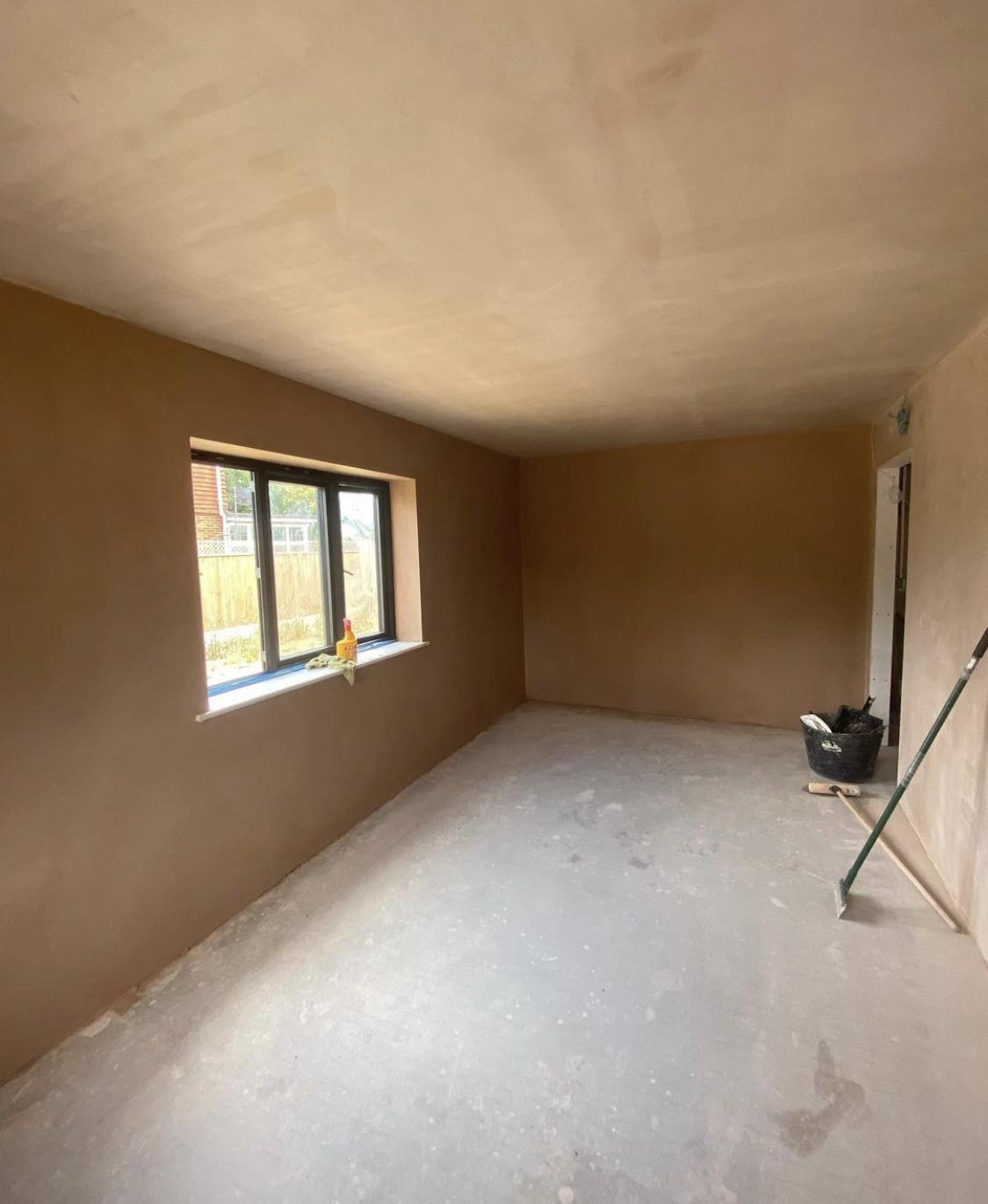
After a look at the rooms, in person or from photographs, we agree exactly what is being skimmed, patched or replaced. On the day, floors and fittings are protected, loose and hollow plaster is cut out, cracks are filled and corners beaded. The finish is two coats of British Gypsum plaster, trowelled flat and smooth. The room then needs to dry right through, ideally with a window open and gentle heat, before a thinned mist coat and decorating.
Before you ring
If your house is within the Angmering Conservation Area, which covers the historic core around The Square, Arundel Road and the High Street, it may be listed; check with Arun District Council before removing historic plaster. Roughly two-thirds of the parish, mostly north of the A27, lies in the South Downs National Park, where the National Park Authority handles planning. For ordinary skimming none of this usually matters, but it is worth knowing. Read more about our plastering and skimming service, see our other work in the village on the Angmering page, or call 07824 165672 for a free quote with no obligation.